10 Best Ghost Towns to Visit in the USA: Abandoned Towns You Can Actually Explore
The 10 best ghost towns to visit in the USA, from Bodie to Bannack — with legality, costs, and tips for planning your abandoned-town road trip.
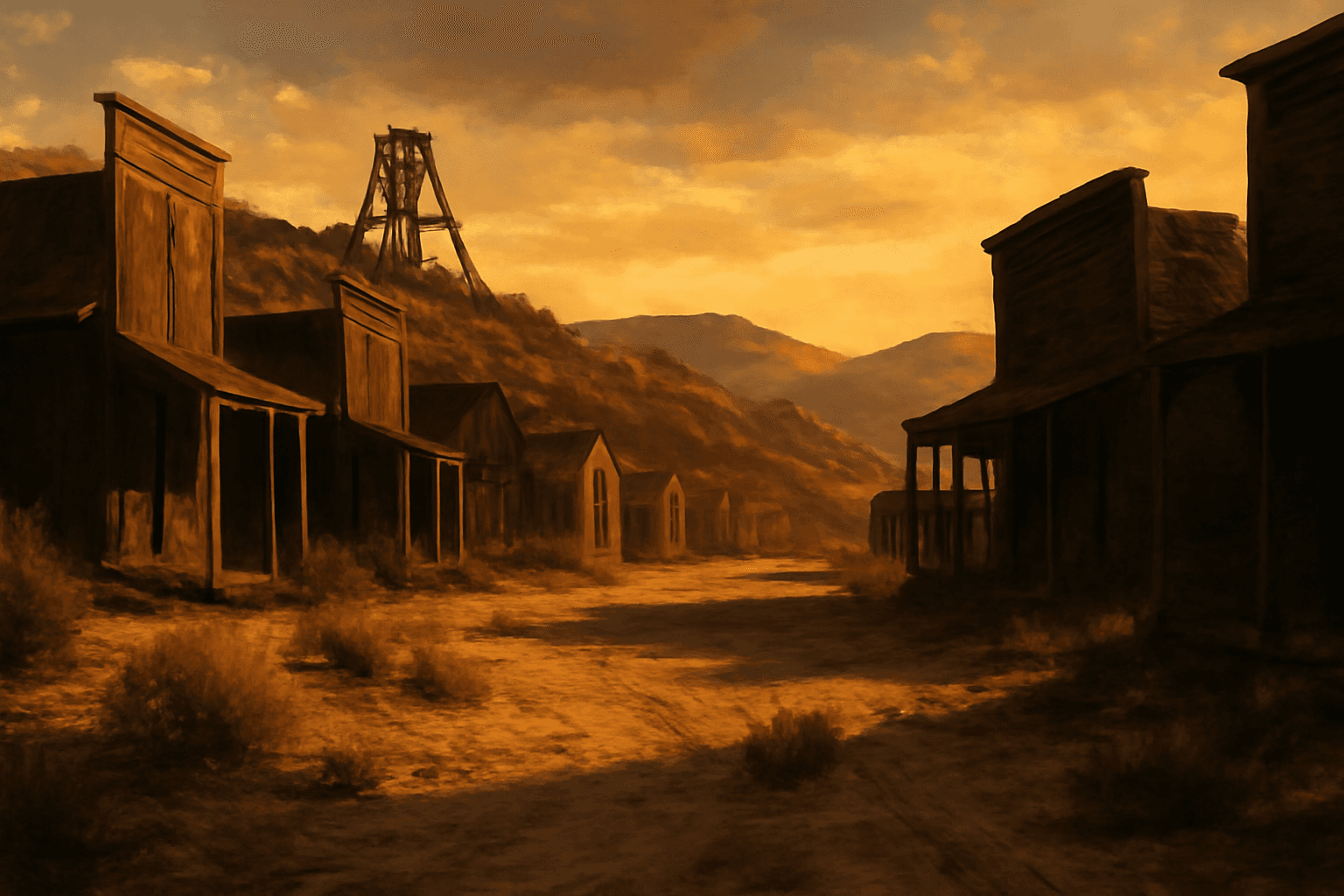
There's something quietly magnetic about a town the world walked away from. In the American West alone, thousands of settlements boomed during the 19th-century mining rush — then emptied within a generation when the gold, silver, or copper ran out. A fortunate handful survive today as haunting, walkable open-air museums.
If you want the short answer to "what are the best ghost towns to visit in the USA," it's this: start with Bodie, California — the most complete and atmospheric of them all — then work through Bannack (Montana), Rhyolite (Nevada), and the other standouts below. Every town on this list is legal to visit, either because it's a state park, sits on Bureau of Land Management (BLM) or National Park land, or is openly maintained as a tourist site.
Here are the 10 best ghost towns in the USA to visit, with what makes each one special, how to get there, what it costs, and how to explore without getting yourself in trouble.
What Is a Ghost Town — and Is It Legal to Visit One?
A "ghost town" isn't a haunted village. The term simply means an abandoned settlement that once had a permanent population and then emptied out. Most American ghost towns date from roughly 1880 to 1940, the era of westward expansion, mining booms, and railroad fever. Gold and silver in the Rockies, copper in Alaska and Arizona, oil in Texas — each boom built a town overnight, and each bust abandoned it just as fast.
Is it legal to go to a ghost town? The honest answer is: it depends on who owns the land.
- State parks — like Bodie and Bannack — are open to the public with a small entry fee and posted hours. Fully legal, and usually the most maintained.
- BLM or National Park land — like Rhyolite and Kennicott — is public land, generally free or low-cost to visit.
- Private property — like much of Centralia, Pennsylvania, or countless unmarked ruins — requires the owner's permission. A "No Trespassing" sign means exactly that, even in a town that looks empty.
Wherever you go, follow the golden rule of ghost-towning: take only photos, leave only footprints. Never pry artifacts off buildings or out of the ground — on public land that's a violation of the Antiquities Act, and everywhere else it's simply wrong. Don't enter unstable structures, don't open closed gates, and leave every site the way you found it.
The 10 Best Ghost Towns to Visit in the USA
| # | Town (State) | Why go | Access & cost |
|---|---|---|---|
| 1 | Bodie, California | Best-preserved ghost town in America | State park, ~$8 adult |
| 2 | St. Elmo, Colorado | Picture-perfect Rockies time capsule | Free, seasonal road |
| 3 | Bannack, Montana | Wild West vigilante history | State park, ~$8 vehicle |
| 4 | Rhyolite, Nevada | Stone ruins + bottle house near Death Valley | Free, BLM land |
| 5 | Goldfield, Arizona | Living Wild West attractions | Free entry, activities ticketed |
| 6 | South Pass City, Wyoming | Women's-suffrage landmark | ~$8 adult, seasonal |
| 7 | Kennicott, Alaska | Copper empire in a national park | Park access + tour fees |
| 8 | Terlingua, Texas | Chili, stars & Big Bend | Free to wander |
| 9 | Centralia, Pennsylvania | Town on fire since 1962 | Public streets, private lots |
| 10 | Spokane, South Dakota | Black Hills ruins near Rushmore | Free, short hike |
1. Bodie, California — the best-preserved ghost town in America
If you only ever visit one ghost town in the USA, make it Bodie. It's the most complete, most atmospheric, and most authentic of them all.
Bodie started as a mining camp in 1859 and exploded after rich gold discoveries in the 1870s. At its peak, roughly 10,000 people crammed into this wind-blasted plateau at 8,375 feet — and it earned a reputation so rough that newspapers coined the phrase "the Badman from Bodie." When the mines finally closed in 1942, the town simply froze.
Today, more than 100 buildings stand in a state of "arrested decay" — the California State Parks philosophy of preserving structures exactly as they were found rather than restoring them. You'll wander past a schoolhouse with lessons still chalked on the board, a general store still stocked with tins, a church, a firehouse, and a hillside cemetery with headstones dating to the 1870s.
Access & cost: Bodie State Historic Park sits off Highway 395 near Bridgeport, California. Entry runs about $8 for adults and $5 for kids (4–17). The last three miles of road are unpaved, and snow can close access in winter — June through October is the sweet spot.
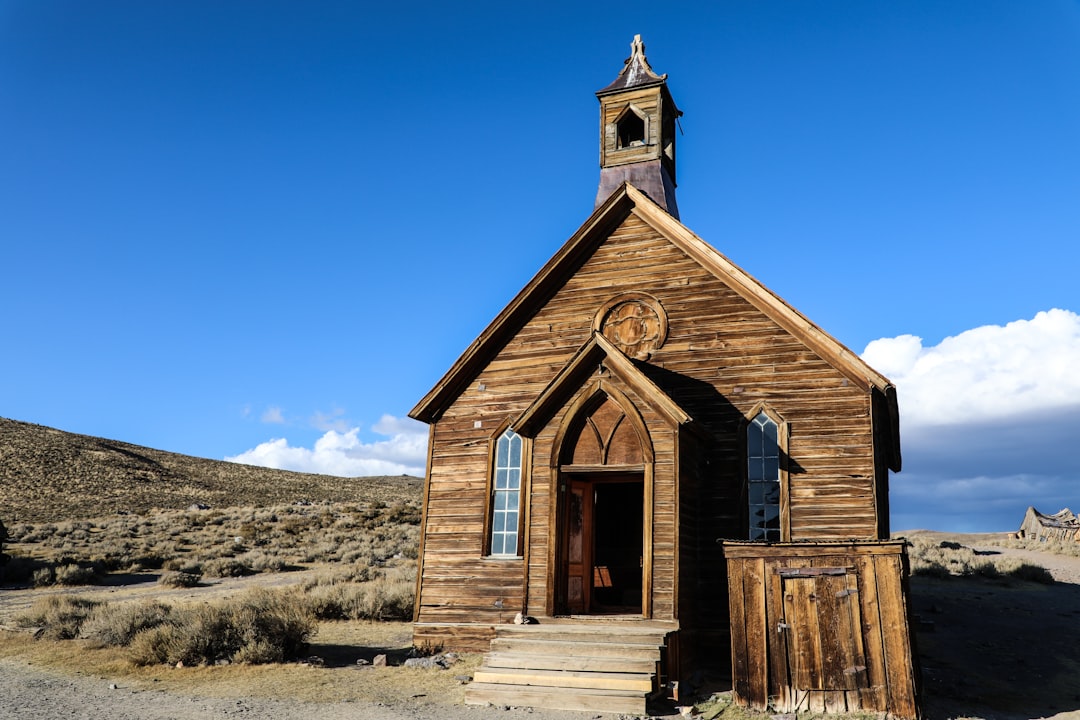
Photo by Michael & Diane Weidner on Unsplash
2. St. Elmo, Colorado — a picture-perfect Rockies time capsule
St. Elmo sits high in the Sawatch Range of central Colorado, and it looks like the set of a Western that everyone simply forgot to strike. Founded in 1880, the town swelled to around 2,000 residents during the gold-and-silver boom, then emptied as the ore played out — legend has it the last residents took the final train out in 1922 and never came back.
What makes St. Elmo special is how alive it still feels. The 1880s general store still opens in summer, selling candy and souvenirs to hikers and off-roaders. A row of weathered wooden storefronts lines the main street, and visitors can rent a log cabin for a night in the mountains. The equally eerie ghost town of Tin Cup — once notorious for its Wild West outlaws — sits just down the road.
Access & cost: St. Elmo is free to visit. It's about 20 minutes from Buena Vista and reachable in summer by standard car (a high-clearance vehicle helps in early season). High country means a short window — late June through September is ideal.
3. Bannack, Montana — the Wild West's most notorious ghost town
Bannack is where Montana began. Founded in 1862 after gold was struck on Grasshopper Creek, it briefly served as the territory's first capital. At its height, up to 10,000 people lived in the surrounding area — and with them came one of the West's bloodiest chapters.
The town's first sheriff, Henry Plummer, was secretly running a gang of "road agents" that robbed and murdered miners on the trails. In 1864, vigilantes captured and hanged Plummer and many of his men from a gallows that, rebuilt, still stands today. That raw history is why Bannack feels heavier than almost any other ghost town in the USA.
Roughly 60 structures remain — a hotel, schoolhouse, church, and rows of log and frame buildings — and they're remarkably intact. If your timing allows, go for Bannack Days (usually the third weekend of July), when the town fills with gold panning, blacksmithing, and living-history reenactments.
Access & cost: Bannack State Park is open year-round and charges a small day-use fee (about $8 for a non-resident vehicle). It's a scenic 25-mile drive from Dillon, Montana.
4. Rhyolite, Nevada — a Death Valley ghost town frozen in stone
Rhyolite proves how fast a boomtown could rise — and fall. Gold was discovered in the Bullfrog Hills in 1904, and within a year the town had banks, hotels, an opera house, and around 5,000 residents. By 1916 the mines had failed and Rhyolite was essentially empty.
What remains is some of the most photogenic ruin-scape in America. The three-story skeleton of the Cook Bank building, a roofless train depot, and the famous Bottle House — built in 1906 from roughly 50,000 glass bottles — stand against the bare Amargosa Desert. Just down the road, the outdoor Goldwell Open Air Museum adds a surreal twist: ghostly, life-size sculptures (including a reimagined Last Supper) that seem to haunt the landscape.
Access & cost: Rhyolite is on BLM land and free to visit. It's about 35 miles from Beatty, Nevada, right on the doorstep of Death Valley National Park — an easy add-on to any desert road trip.
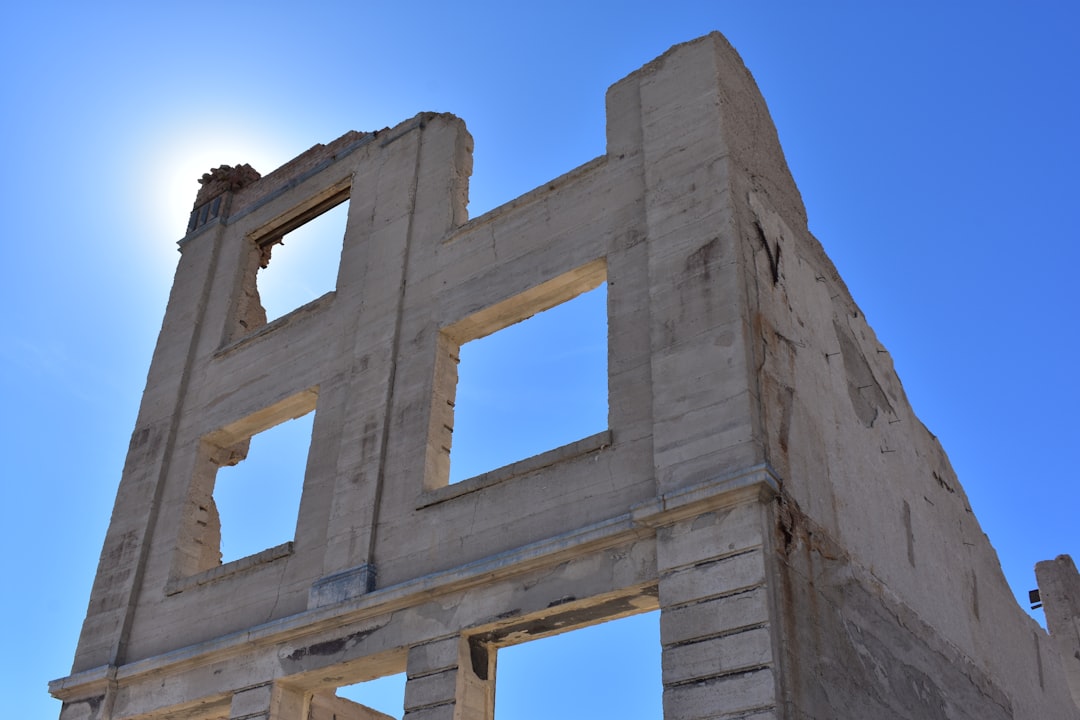
Photo by Adam Young on Unsplash
5. Goldfield, Arizona — a ghost town that's still having fun
Not every ghost town has to feel mournful. Goldfield, tucked along the historic Apache Trail about 40 miles east of Phoenix, leans hard into the fun side of the Wild West — which makes it the best ghost town in the USA for families.
The 1890s gold town once supported saloons, a boarding house, a blacksmith shop, a general store, and a schoolhouse. Today those buildings have been revived as an Old West attraction: watch a live gunfight reenactment, ride Arizona's only narrow-gauge railroad, tour a gold mine, or pan for gold in the same dirt that started the rush. There's even zip lining, horseback riding, and target shooting on site.
Access & cost: Walking the town is free; individual activities are ticketed separately. Goldfield is the "gateway to the Superstition Mountains," so it pairs perfectly with a day of desert hiking in the same area as some of the Southwest's most under-the-radar gems.
6. South Pass City, Wyoming — the ghost town that changed women's history
South Pass City is proof that ghost towns hold more than gold. This 1867 mining town was the site of a genuine American first: in 1869, Wyoming Territory passed the first law in the nation giving women the right to vote and hold office — and in 1870, Esther Hobart Morris became the country's first female justice of the peace here.
Today, 24 restored 19th-century buildings spread across the sagebrush, including the Carissa Mine, original cabins, and a well-done museum that tells both the mining and the suffrage stories. It's one of Wyoming's largest historic sites, and one of the most quietly inspiring ghost towns in the USA.
Access & cost: Open roughly mid-May to mid-October. Entry is about $8 for adults and free for kids 17 and under. It's 34 miles from Lander, Wyoming.
7. Kennicott, Alaska — a copper empire inside a national park
Kennicott is the ghost town that feels most like a movie set. Founded in 1903, this remote Alaskan company town grew rich on copper — the metal that suddenly mattered once electricity began spreading across America. The mines were exhausted by 1938, and the whole operation was abandoned almost overnight.
The star is the 14-story red mill building, a National Historic Landmark that clings to a mountainside inside Wrangell-St. Elias National Park, the largest national park in the country. Guided mill tours run in summer, and you can wander the abandoned bunkhouses, hospital, and company store with mountains towering on every side. If national-park ghost towns intrigue you, it belongs right beside America's best national parks on your list.
Access & cost: This is the most remote town on this list. Drive the 60-mile gravel McCarthy Road from Chitina, park at the river, and cross a footbridge to McCarthy, then take a shuttle or walk the few miles to Kennicott. Mill tours are ticketed; give yourself at least a full day.
8. Terlingua, Texas — chili, stars, and Big Bend's ghost town
Terlingua turns the ghost town concept on its head: part ruins, part living community, and 100% Texas. A mercury (quicksilver) mining town founded in the early 1900s, it boomed through World War I and then emptied in the 1940s when the mines closed.
Today, its old stone ruins and famous cemetery sit alongside a handful of quirky businesses — most famously the Starlight Theatre, a former movie house turned saloon and music venue. Every November, Terlingua hosts the International Chili Championship, drawing thousands of cooks and spectators to this speck on the map. It's also the closest jumping-off point for Big Bend National Park, and after dark, the skies are among the darkest and starriest in the continental United States.
Access & cost: Free to wander. Terlingua is remote — roughly 2.5 hours from the nearest mid-size town — so plan fuel and lodging ahead.
9. Centralia, Pennsylvania — the town that's been on fire since 1962
Centralia is the one ghost town on this list not born of the frontier. This was a thriving Pennsylvania coal town of roughly 1,000–2,000 people until 1962, when a fire set to burn a landfill ignited an underground coal seam. That fire is still burning more than six decades later.
The federal and state government spent years buying out and relocating residents, and today fewer than 10 people remain. What's left is surreal: an almost-empty grid of streets, sidewalks and foundations reclaimed by grass, wisps of smoke rising from vents in the hillside, and a handful of lonely buildings, including a still-standing church. The town's eerie emptiness famously helped inspire the horror franchise Silent Hill.
Access & legality: You can drive and walk the public streets, but much of the land is now private or state-owned — respect signs, don't cross fences, and never approach the smoke vents. The famous "Graffiti Highway" was covered over and closed in 2020, so don't plan on it.
10. Spokane, South Dakota — the Black Hills ghost town most people miss
Tucked about 10 miles southeast of Mount Rushmore, Spokane (South Dakota, not Washington) is the quiet achiever of this list — and it stays quiet precisely because most tourists rush straight to the monuments. Their loss.
Built in 1890 near a mine pulling gold, silver, and copper, Spokane holds one of the Black Hills' largest collections of original ghost-town buildings. You reach it via an easy 1.5-mile loop hike, then wander past a large schoolhouse, rusting old cars, and the grave of a prospector said to have been shot and killed here — a story that sets the town's mood. Keep to the outside of the crumbling structures, and when you're done, head back to a hotel in nearby Keystone.
Access & cost: Free, year-round (the hike is short and easy). It's an easy add-on to any South Dakota road trip through the Black Hills.
Which Ghost Town Is the Best? And Which Is the Biggest?
These are the two questions people ask most — and they deserve straight answers.
The best ghost town in the USA is Bodie, California. It wins on authenticity: no souvenir stand, no reenactments, just 100-plus original buildings preserved in arrested decay on a high, windblown plateau. Bannack (Montana) is the strongest runner-up for pure Wild West atmosphere.
The biggest is a trickier question. By the number of preserved buildings, Bodie is again the largest authentic ghost town you can actually walk through. Jerome, Arizona, advertises itself as "America's largest ghost town," but it's a living artist community, not an abandoned one. And Rhyolite, Nevada, had one of the biggest boomtown populations (around 5,000) yet left relatively few standing buildings. So: Bodie for buildings, Jerome for the self-proclaimed title, Rhyolite for the fastest rise and fall.
How to Plan Your Ghost Town Road Trip
When to go. Most western ghost towns sit at altitude and are at their best from late spring through early fall (roughly May–October). Bannack and Bodie are open in winter but can be snowbound; Kennicott and many Alaskan sites are strictly summer. Avoid the hottest months for low-desert towns like Rhyolite and Goldfield — spring and fall are ideal.
What to bring. More than you think. Many of these towns are remote: carry water, snacks, a full tank, layers (desert and high-country towns swing wildly between day and night temperatures), sturdy shoes, sunscreen, and a paper map or offline downloads — cell service vanishes around most ruins.
What it costs. Budget-friendly by nature: Bodie and South Pass City run about $8 per adult; Bannack is similar for a vehicle; Rhyolite, St. Elmo, Terlingua, and Spokane are free; Goldfield and Kennicott charge per activity or tour. A multi-town loop can easily be one of the cheapest road trips in the country.
Safety & etiquette. Stay out of buildings unless a site explicitly invites you in — floors and roofs are decades past safe. Watch your step around mine shafts and tailings. Respect "No Trespassing" signs on private land, and never take anything with you. If you're new to piecing a multi-day route together, start with a solid guide to planning a US road trip before you map the stops.
More Ghost Towns Worth a Detour
Can't get enough? These honorable mentions didn't make the top 10 but are worth a stop if you're already in the neighborhood:
- Nevada City, Montana — a restored gold town with a steam train to nearby Virginia City and live history weekends (open Memorial Day to Labor Day).
- Garnet, Montana — a beautifully preserved mining town of about 30 buildings near Missoula, with an annual Garnet Day festival.
- Berlin, Nevada — a company mining town that doubles as Berlin-Ichthyosaur State Park, home to fossils of a prehistoric marine reptile.
- Calico, California — a restored silver town off I-15 in the Mojave, commercial but fun for kids.
- Jerome, Arizona — a copper town turned cliffside artist colony that brands itself "America's largest ghost town."
- Castle Dome, Arizona — a 3,000-resident mining camp near Yuma, now a sprawling open-air museum.
FAQ: Ghost Towns in the USA
What is the best ghost town in the United States? Bodie, California. It's the most complete and authentic — more than 100 original buildings preserved in "arrested decay" as a state historic park, with no gift-shop gloss.
What is America's biggest ghost town? By preserved buildings, Bodie is the largest authentic ghost town you can visit. Jerome, Arizona holds the self-proclaimed "America's largest ghost town" title, but it's a living community rather than a true abandoned town.
Is it legal to go to ghost towns? It depends on land ownership. Ghost towns in state parks, on BLM land, or in national parks are legal to visit (sometimes with a fee). Ghost towns on private land require the owner's permission — "No Trespassing" signs are legally enforceable.
What U.S. cities might become ghost towns? This is speculation, not settled fact. The term usually refers to smaller towns, not big cities; in practice, deindustrialized towns with shrinking populations and failing infrastructure are the ones commentators most often predict could hollow out over decades. No major city is realistically at risk of becoming an abandoned ghost town.
Are ghost towns safe to visit? Mostly, with common sense. The main risks are unstable structures, open mine shafts, extreme weather, and remoteness (no cell service, long distances to help). Stay out of buildings, keep kids close, and come prepared with water, fuel, and layers.
Go Before They're Gone
Ghost towns don't change fast — that's the point — but they do keep weathering, and the truly fragile ones lose a little more every year. The best time to see Bodie's chalk-dusted classrooms or Rhyolite's bottle house is now, while they're still standing.
Pick one anchor town, build a loose route around it, and you'll come home with something no ordinary sightseeing trip offers: the strange, still feeling of standing in a place that the rest of the world walked away from. Take only photos, leave only footprints, and let the silence do the talking.
Want to build your own spot list?
Join Spotli.st and share your favorite places with the world.
Create my free account