Best US Cities to Visit in Fall 2026: Foliage, Festivals & Perfect Weather
Discover the best US cities to visit in fall 2026 — from Salem's Halloween magic to Napa's harvest season. Expert picks for foliage, festivals & perfect weather.
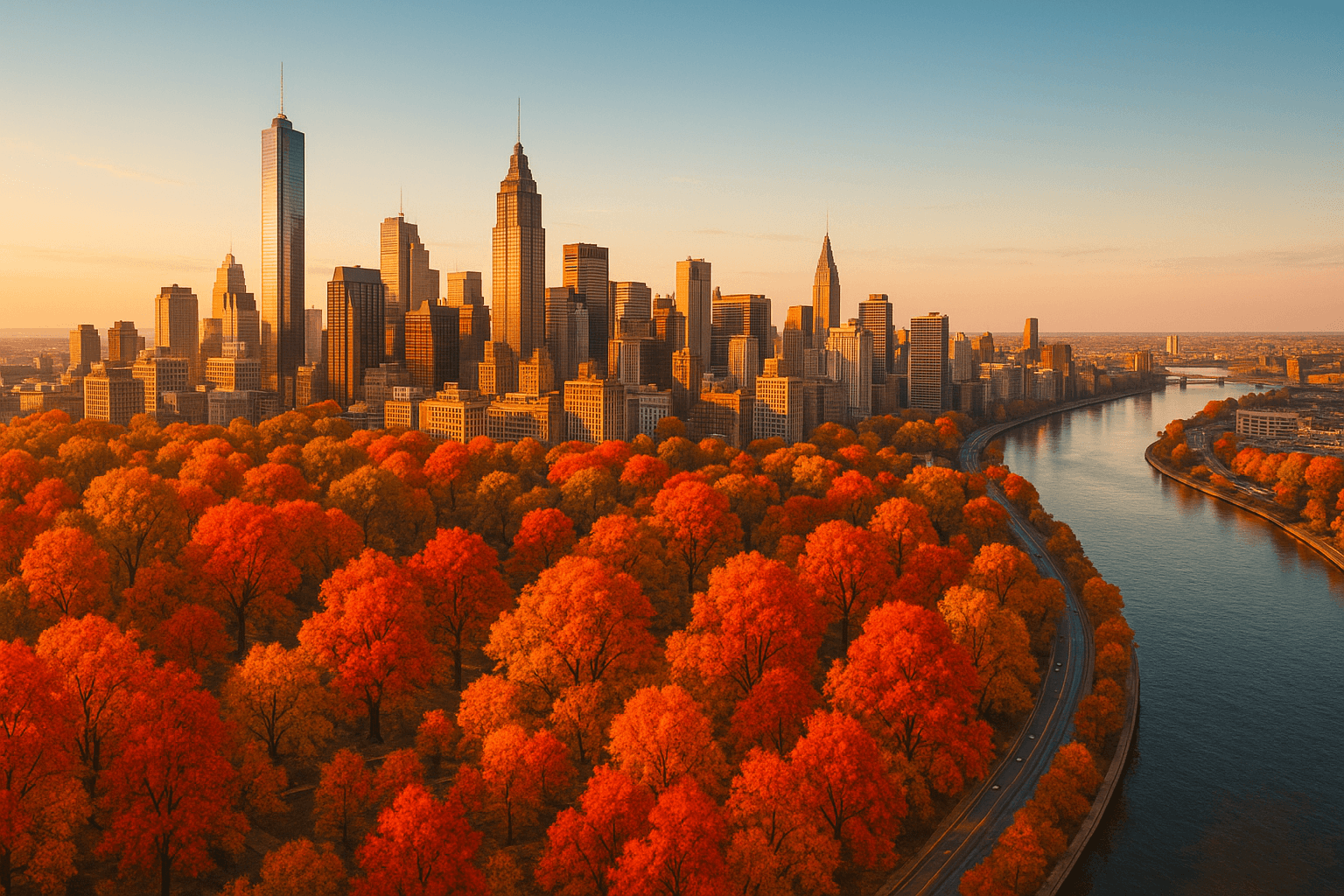
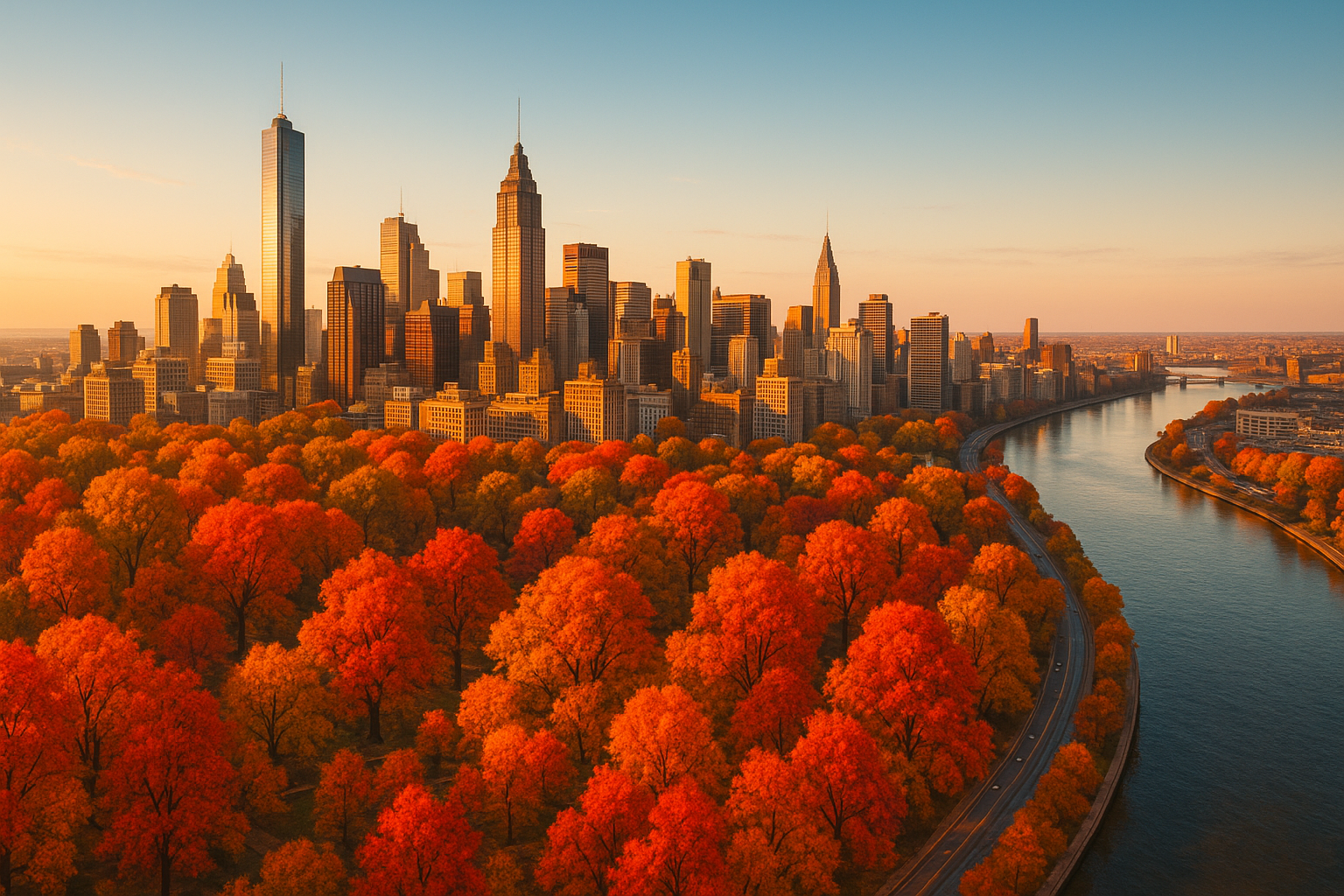
There's a six-week window when the United States is simply at its best. The summer crowds have gone home. Hotel rates drop 20–40% from their peak. A slant of golden light hits the leaves at an angle that makes even an ordinary street look cinematic. That window is fall — roughly mid-September through early November — and it's the smartest time to explore America.
But fall travel is not one-size-fits-all. In New England, it means fiery foliage peaking in mid-October. In the Southwest, it means the first comfortable outdoor days after months of brutal heat. In California's wine country, it means harvest season and vine-lined valleys turning gold. Each of the destinations below has a specific, seasonal reason to visit — an event, a landscape, a vibe that autumn uniquely unlocks.
Whether you're chasing leaf color, festival energy, or simply escaping the heat, here's where to be in the US this fall.
Salem, Massachusetts — October's Most Atmospheric City
No American city owns its season more completely than Salem owns October. The city that became infamous for its 1692 witch trials has transformed that dark history into the country's most theatrical Halloween celebration: Haunted Happenings, a month-long festival running throughout October. Expect ghost tours by lantern light, psychic readings, pumpkin carving competitions, a costume parade that draws tens of thousands, and wandering performers in period dress on nearly every corner.
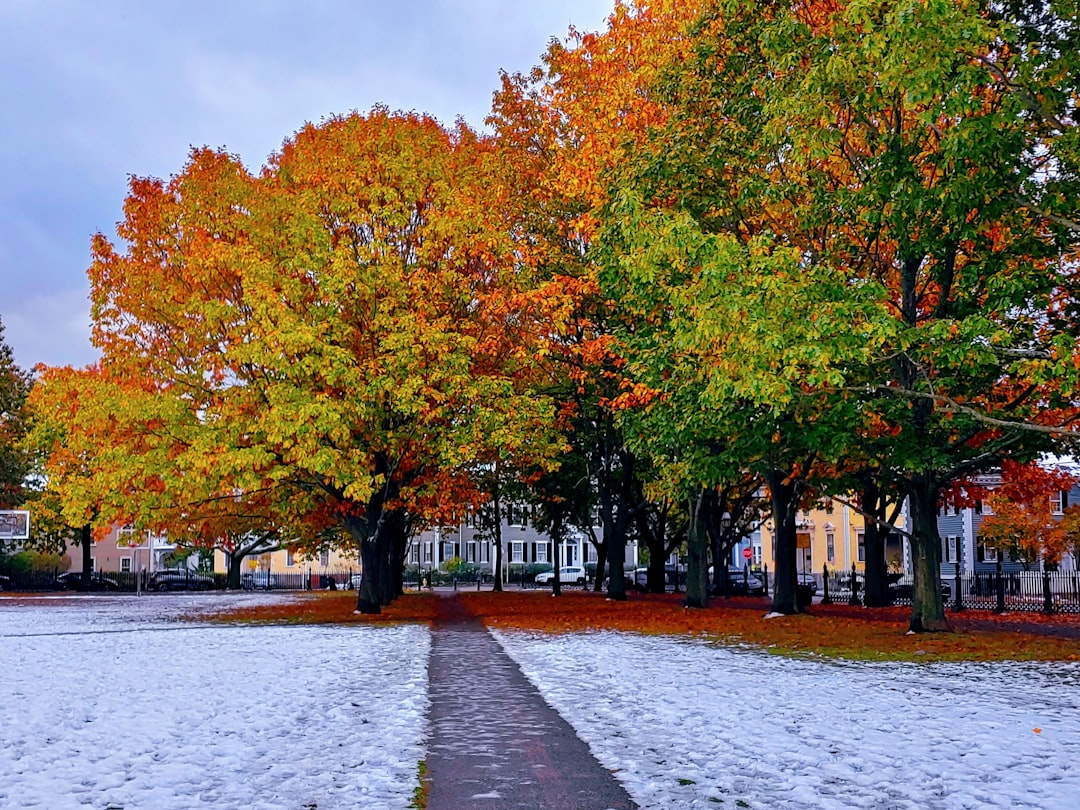 Photo by Laura Michalski on Unsplash
Beyond the theatrical atmosphere, Salem has genuine cultural depth. The Peabody Essex Museum houses one of the country's finest collections of maritime art and Asian export art — consistently underrated even among experienced travelers. The House of the Seven Gables (the real building that inspired Hawthorne's novel) sits right on the harbor. The Derby Wharf Historic District offers an authentic window into 18th-century New England merchant life.
Peak foliage here runs mid-October, overlapping with the festival's most intense programming. For maximum atmosphere with manageable crowds, aim for a weekday — weekends in late October rival New Year's Eve for intensity.
Practical info: Most outdoor Haunted Happenings events are free. Museum admission runs ~$25 per adult. Book accommodation at least 2–3 months ahead for any October stay — the city fills completely.
Stowe, Vermont — The Gold Standard of New England Foliage
If Salem is fall's most theatrical destination, Stowe is its most beautiful. Vermont's maple-dominated forests produce foliage in a specific, luminous orange-red that exists nowhere else on earth, and the small mountain town of Stowe sits at the epicenter of it. The surrounding Green Mountains peak around the first two weeks of October, and the views from the Stowe Recreation Path or the drive up to Mount Mansfield (Vermont's highest peak at 4,395 ft) are genuinely stop-the-car spectacular.
Stowe itself is a well-developed resort town with excellent independent restaurants, the famous Alchemist Brewery (producer of the legendary Heady Topper), and a core of old Vermont character that larger ski towns have lost. The surrounding hills are dotted with apple orchards and sugar shacks selling fresh cider and maple products through harvest season.
Route 100 south from Stowe through the Mad River Valley is one of the most scenic drives in America — free, unhurried, and best done on a clear October weekday morning.
Practical info: There are no admission fees for the main foliage experience — the scenery is the destination. Budget $150–$300/night for mid-range lodging in peak foliage weeks. Arrive by car; public transit options here are limited.
Asheville, North Carolina — Blue Ridge Foliage & Craft Beer Country
Asheville delivers something rare: a genuinely creative, independent city wrapped inside one of the most dramatic fall landscapes in the country. The Blue Ridge Parkway — a free, 469-mile scenic road tracing the edge of the Southern Appalachians — turns into a corridor of fire from late September through late October, starting at higher elevations and descending to valley floors.
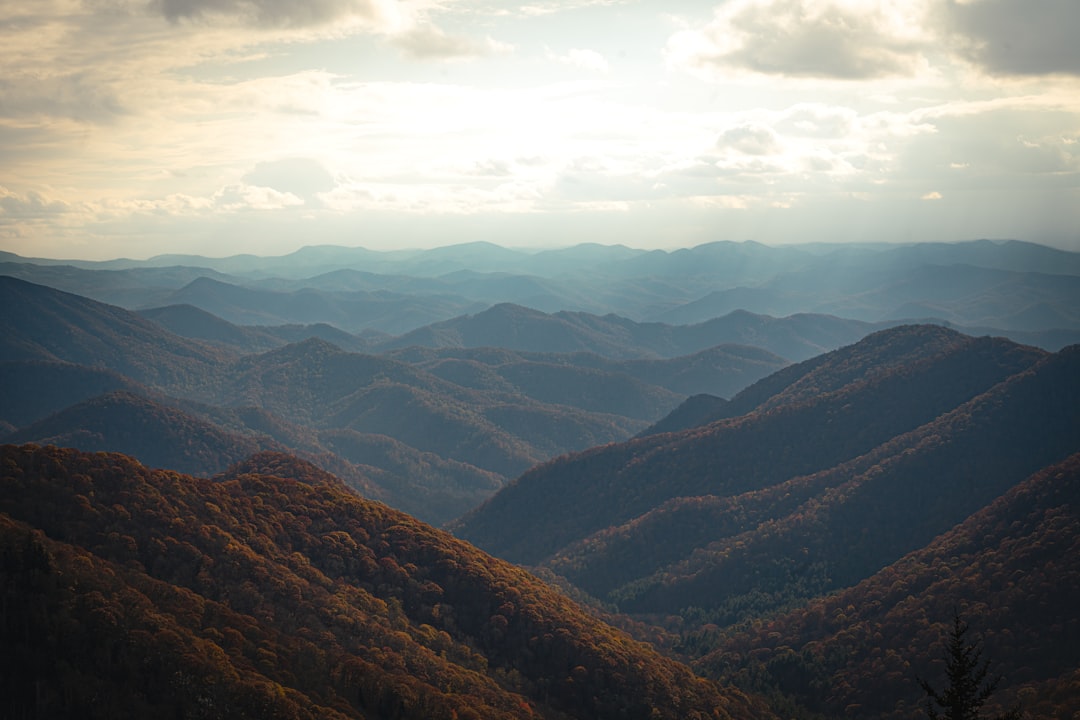 Photo by Trevor Neely on Unsplash
The city adds essential texture. Asheville has over 50 craft breweries — more per capita than almost any other US city — and the River Arts District is a working artist neighborhood with open studios you can actually walk into. The Biltmore Estate, America's largest private home set on 8,000 acres of grounds, is stunning in fall color, with its own winery and vineyard tours on-site.
Foliage peaks at elevation (above 5,000 ft) around late September, then descends to Asheville's valley floor (2,100 ft) by mid-to-late October. If the best US national parks are on your radar, Great Smoky Mountains National Park is just 60 miles east — a natural extension of the Asheville trip in October.
Practical info: Biltmore Estate admission ~$75–$90 per adult (book online for ~15% off). The Parkway is free. Asheville's food hall scene — the Asheville Public Market and others — offers excellent budget meals from $10–$15.
Albuquerque, New Mexico — Hundreds of Balloons Against a Desert Sky
Every October, Albuquerque becomes the most visually spectacular city in America for nine days. The Albuquerque International Balloon Fiesta — the world's largest hot air balloon festival — fills the skies with 500–600 balloons during Mass Ascension events at dawn, when they inflate and lift simultaneously in a sequence that is simply unlike anything else on earth. The event runs approximately October 4–12, 2026.
Beyond the festival, fall is objectively Albuquerque's best season. Temperatures drop from summer's brutal mid-90s to a comfortable mid-70s. The Sandia Mountains to the east light up gold with autumn aspen groves. The city's Old Town and its celebrated New Mexican cuisine — specifically green chile harvest season, which runs September through October — are at their most vibrant. The smell of roasting Hatch green chiles at roadside stands is one of the great regional sensory experiences in the US.
Practical info: Balloon Fiesta general admission ~$15–$20 per day purchased online; ~$25–$30 at the gate. Events typically begin before 6 a.m. — plan accommodation within 20 minutes of the park. Book at least 6 months ahead; the city fills completely during Fiesta week.
Chicago, Illinois — World-Class Culture Without the Summer Crowds
Chicago's fall window runs from early September to mid-November — after the humidity breaks and before the Lake Michigan wind turns brutal. In that stretch, the city is at its most liveable: the lakefront path is peaceful, the architecture boat tours run with smaller groups, and the cultural calendar operates at full capacity.
The Chicago Architecture Foundation Center river cruise is a world-class experience — no other American city offers anything comparable for understanding urban design and skyscraper history. The Art Institute of Chicago and the Museum of Science and Industry are among the country's finest. The Chicago International Film Festival (October) is North America's oldest competitive film festival. And the restaurant scene here — legitimately among the top five in the US — is firing on all cylinders year-round.
See our complete Chicago travel guide for a deep dive into what the Windy City offers.
Practical info: Architecture boat tours ~$50 per adult (book ahead). Hotel rates drop ~25–30% from summer peak in October. The Chicago transit card (CTA) covers the entire city efficiently for ~$2.50 per ride.
Nashville, Tennessee — Live Music, Fall Color & the Americana Festival
Nashville in July is 95°F and packed. Nashville in October is 65°F, golden-leafed, and hosting the Americana Music Festival — four days in September of roots, folk, and country that draws legends and emerging artists to intimate venues across the city. It's one of the most authentic music gatherings in America, grounded in tradition rather than spectacle.
Fall also unlocks Nashville's outdoor side. The Natchez Trace Parkway begins just outside the city and runs 444 miles through some of the South's most beautiful fall scenery — no commercial traffic, no billboards, free. Radnor Lake State Park, 6 miles from downtown, offers quiet hardwood forest hiking in fall color. And the honky-tonks of Broadway, which are free to enter any night of the year, feel particularly atmospheric against cool October evenings.
Our Nashville guide covers everything worth doing in Music City.
Practical info: Broadway live music is free entry (tip-based). Americana Festival wristbands ~$75–$150. Natchez Trace and state parks are free.
New Orleans, Louisiana — Festival Season Returns to the Bayou
October is New Orleans at its most genuinely liveable. The summer's crushing heat and humidity — regularly 95°F and 90% humidity — finally breaks, and the city's extraordinary capacity for outdoor life comes back online. The Voodoo Music + Arts Experience (late October, City Park) brings major headliners to a festival that blends music, art installations, and New Orleans culture in a way only this city could produce.
The New Orleans Film Festival runs the same month. French Quarter streets are walkable without the punishing heat. Raw oyster season peaks from October through March — the Gulf Coast oysters at Acme or Drago's are at their absolute best right now. And the overall atmosphere of this city — which is genuinely unlike anywhere else in America regardless of season — deepens in the softer fall light.
Our New Orleans guide covers all of the city's essential experiences.
Practical info: Voodoo Festival weekend passes ~$130–$200. The French Quarter has free live music most evenings. A casual Creole lunch: ~$15–$20 per person.
Washington, DC — Free World-Class Museums & Fall Color on the National Mall
Washington might be the best value destination in America, and fall makes it exceptional. The Smithsonian's 19 museums are permanently free. The National Mall elm trees turn soft gold in October. The monuments — Lincoln Memorial, Washington Monument, Jefferson Memorial reflecting in the Tidal Basin — are at their most atmospheric in the slant light of a fall morning.
The National Book Festival (September, on the Mall) draws hundreds of authors for free public sessions. The Marine Corps Marathon (late October) transforms the city into an enormous viewing party along a route that hits all the major landmarks. And DC's neighborhood food scenes — Capitol Hill, U Street, Adams Morgan, Georgetown — are operating full-tilt year-round.
Our complete Washington DC travel guide covers every corner of the capital.
Practical info: You can spend 3–4 full days in DC without paying a single admission fee. The Metro is efficient and affordable (~$2–$6 per ride depending on distance).
New York City — Central Park in Fall & the Hudson Valley Nearby
New York in fall earns every cliché. Central Park's 840 acres turn amber and gold from late October through mid-November, with the backdrop of Manhattan towers making for some of the most photogenic views on earth. The New York Film Festival at Lincoln Center (late September–mid-October) is among the world's most prestigious film events. The West Village Halloween Parade on Sixth Avenue is a free, unmissable spectacle that has to be seen in person.
For a day trip, the Hudson Valley — just 60–90 minutes north by Metro-North train — is at peak fall color simultaneously. The area around Sleepy Hollow (yes, the actual place Washington Irving wrote about) is particularly atmospheric in October, and the Great Jack O'Lantern Blaze in nearby Croton-on-Hudson features thousands of hand-carved illuminated pumpkins across a dramatic outdoor site.
Explore the full depth of what New York offers in our New York City ultimate guide.
Practical info: Central Park, the High Line, and Brooklyn Bridge are free. NYFF screenings ~$25–$35. Metro-North to Hudson Valley: ~$18–$22 round trip.
Napa Valley, California — Harvest Season at Peak Beauty
No region in the US has a more specific claim on fall than Napa Valley during harvest. From August through October, the vineyards are being picked, crush pads run overnight, and the entire valley smells of fermenting Cabernet Sauvignon. The hillsides transition from summer green to gold and deep red as the vines turn. And the evenings cool to exactly the temperature that makes a glass of wine feel inevitable.
Many wineries offer harvest-exclusive experiences: grape stomping, blending sessions, barrel tastings of wine that won't be bottled for years. The Napa Valley Film Festival (November) has grown into a serious cultural event with significant Hollywood presence. The farm-to-table food scene here — driven by proximity to exceptional produce — is world-class without the price premiums of San Francisco.
Practical info: Tasting fees run $30–$75+ per winery; advance reservations are essential for top producers. Staying in Sonoma (30 min west) or American Canyon (south of Napa) cuts accommodation costs by 30–40% from Napa-town pricing.
Portland, Oregon — Last Golden Days Before the Rains
Portland has a fall window locals guard carefully: September and early October, before the Pacific Northwest's famous rain fully arrives. Temperatures hover in the 65–75°F range, and the Columbia River Gorge — 30 minutes east by car — delivers some of the most dramatic fall scenery in the West. The Multnomah Falls area and the viewpoint at Crown Point are particularly stunning in October light.
The city itself is a fall playground. Forest Park — 5,200 acres of urban wilderness, one of the largest city parks in the US — blazes with maple and alder color. The Portland Saturday Market (the country's largest continuously operating outdoor crafts market) runs through October. And the city's outstanding food cart culture — concentrated in covered pods around downtown — offers some of the most interesting, affordable meals in the US.
Fall timing: Go in September or the first two weeks of October. After mid-October, the rains arrive with increasing frequency and intensity.
Practical info: Forest Park trails are free. Portland Art Museum ~$25 adult (free first Thursday of the month). Food cart meals: ~$10–$15 per person.
Seattle, Washington — The Pacific Northwest in Its Full Palette
Seattle's fall shoulder season is its best-kept secret. September is statistically Seattle's driest month — drier than most East Coast cities — and hotel rates drop significantly below summer peaks. The surrounding landscape takes on amber and gold tones, and the seafood calendar enters its most exciting phase: Dungeness crab season and wild Pacific salmon runs peak in fall.
Pike Place Market is at its most authentically local after summer crowds thin. The Seattle Art Museum and the Museum of Pop Culture are fully operational. And the surrounding region — Mount Rainier in fall color, the North Cascades with golden larches (peaking mid-to-late October), the San Juan Islands in quieter shoulder season mode — offers outdoor access without the summer competition for trailhead parking.
Our Seattle travel guide covers the Emerald City in full detail.
Practical info: Pike Place Market is free to explore. Seattle Art Museum ~$30 adult admission. The Link Light Rail connects the airport to downtown and major neighborhoods efficiently.
Fall Travel Calendar: Month by Month
September is the Pacific Northwest's moment. Seattle and Portland are at their best — clear skies, summer warmth, none of the rain. Washington DC and New York are ideal: post-summer crowds, full cultural calendars. Nashville hosts the Americana Music Festival. Napa's harvest begins in earnest. New Orleans is transitioning out of brutal heat by late September.
October is the king month for US fall travel. New England foliage (Salem, Stowe, Boston) peaks between the first and third weeks, beginning at higher elevations. Asheville and the Blue Ridge Parkway peak mid-month. Albuquerque Balloon Fiesta runs the first two weeks. Chicago hits its fall sweet spot. Halloween events dominate Salem and New York's West Village through month's end. New Orleans is fully comfortable.
November offers a slower, more contemplative fall. The South (New Orleans, Charleston) stays warm enough for outdoor dining through most of the month. Napa Valley Film Festival runs. Major city museums and attractions are operating with genuinely thin crowds on weekdays. Thanksgiving dynamics — domestic travel surges, some restaurants close — require specific planning.
Practical Tips for Fall Travel in the US
Book ahead for foliage hotspots. Salem throughout October, Stowe in early October, and Asheville in mid-October fill months in advance. Weekday stays offer dramatically lower prices and more manageable crowds.
Pack genuine layers. US fall temperatures can swing 25–30°F within a single day. A packable down jacket covers scenarios from frosty October mornings to warm afternoons without adding bulk.
Track foliage in real time. The Foliage Network (foliagenetwork.com) and the Smoky Mountains NPS site both publish free, weekly-updated maps during peak season. Actual peak can shift by 1–2 weeks depending on the year's temperatures.
Fall is the deals season. Airlines compete hard as summer bookings drop off. Major city hotel rates fall 20–35% from July peaks. For city destinations (not foliage-specific towns), booking 4–6 weeks out often beats booking months in advance.
Drive when you can. The Blue Ridge Parkway, Natchez Trace Parkway, Columbia River Gorge, and Vermont Route 100 through the Mad River Valley are best experienced from a car, at your own pace, with stops whenever the color demands it. These are among the finest free drives in the world.
Frequently Asked Questions
What is the best US city to visit in October? Salem, Massachusetts is the standout for October specifically — it combines peak New England foliage with the month-long Haunted Happenings festival in a way no other American city matches. For those who prefer a major metropolitan experience, New York City (Central Park in late October) and Chicago (optimal fall weather, full cultural calendar) are the strongest alternatives.
Which state in the US is most beautiful during fall? Vermont is widely considered the most spectacular state for fall foliage. Its maple-dominated forests produce a dense, concentrated display of color — in a geography small enough that you're surrounded by it everywhere you drive. North Carolina (Asheville + Blue Ridge Parkway) offers a longer fall season and more varied city-and-nature experiences to pair alongside the leaf color.
What is the best place to visit in fall in the USA? Asheville, North Carolina delivers the most complete fall experience: stunning Blue Ridge foliage along a free scenic parkway, a vibrant independent city with world-class food and craft beer, comfortable temperatures ideal for outdoor activity, and the iconic Biltmore Estate as a standalone landmark attraction. It consistently ranks at the top of expert and reader lists for US fall travel.
Where should I go for a 3-day fall weekend trip in the US? It depends on your priority. For color: Salem or Boston in New England (they're connected by commuter rail — do both in one trip). For festivals: Albuquerque during Balloon Fiesta, or Nashville for Americana. For city culture: Chicago. For outdoor adventure: Asheville or Portland in September. Any of these destinations rewards 3 focused days — choose your priority and go deep rather than broad.
Want to build your own spot list?
Join Spotli.st and share your favorite places with the world.
Create my free account