How to See the Northern Lights in the USA: Best States, Timing & Practical Tips
Discover the best states to see the northern lights in the USA, when to go, how to track aurora forecasts, and practical tips for a successful sighting.
How to See the Northern Lights in the USA: Best States, Timing & Practical Tips
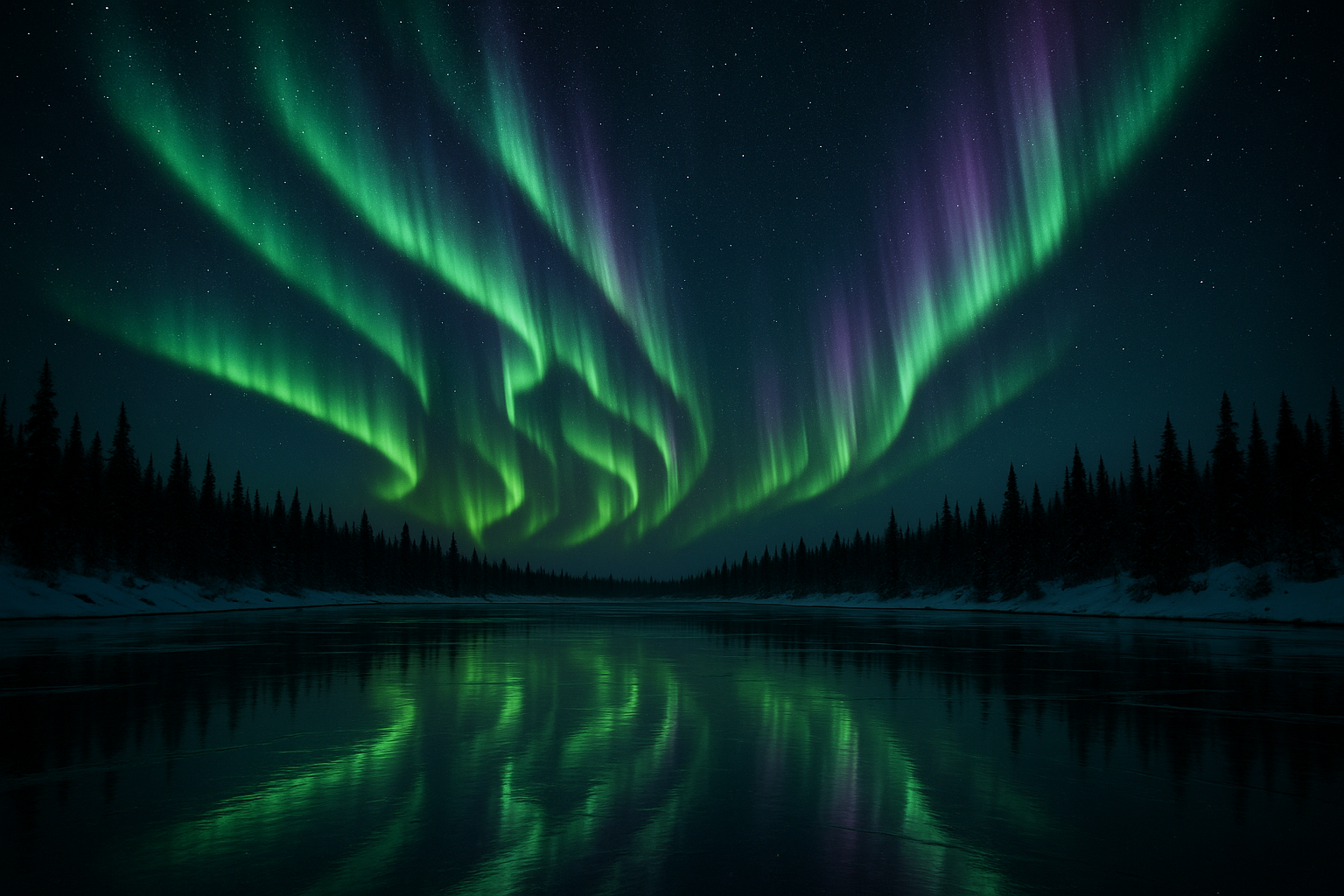
Most people assume seeing the northern lights requires a flight to Tromsø or Reykjavik. The truth? The aurora borealis puts on regular shows right here in the United States — in more places than most people realize. Whether you're planning a dedicated aurora-hunting trip to Alaska or hoping to catch a display on a clear winter night in Minnesota, this guide gives you everything you need: the best states, optimal timing, how to track solar activity, and what to pack.
We're currently near the peak of Solar Cycle 25, which makes 2025 and 2026 some of the best aurora years in a decade across the US. Here's how to make the most of it.
What Actually Causes the Northern Lights?
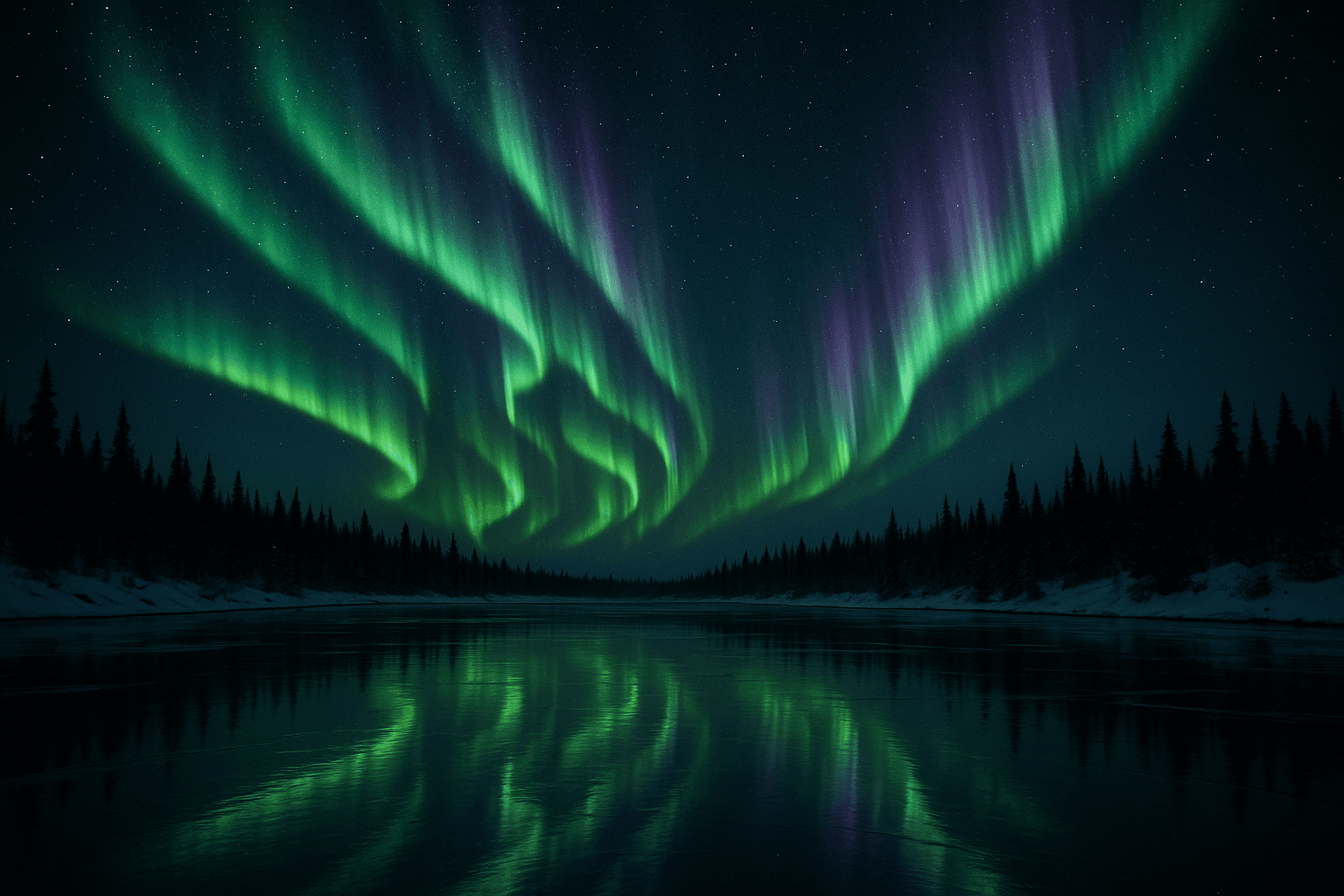
The aurora borealis occurs when charged particles from the sun — carried on the solar wind — collide with gases in Earth's upper atmosphere. These collisions excite oxygen and nitrogen molecules, releasing energy as light. The result is those unmistakable rippling curtains of color that have made people stop in their tracks for centuries.
Why the colors differ:
- Green (most common): oxygen at 60–150 miles altitude
- Red: oxygen above 150 miles — rarer and dramatic
- Blue and purple: nitrogen at lower altitudes
The intensity of any given aurora is measured by the KP index, a geomagnetic activity scale from 0 to 9. A KP of 1–2 is enough for Fairbanks, Alaska. A KP of 5 or higher starts pushing the visible aurora line into the northern Lower 48. A KP of 7 or above can bring the lights to mid-latitudes — sometimes as far south as Georgia or New Mexico during powerful geomagnetic storms.
The strongest event in recent memory was the May 2024 G5 geomagnetic storm — the most powerful in 20 years — when the aurora borealis was visible across virtually the entire continental US, including parts of Florida and Hawaii. Events like that are rare, but they happen more frequently near solar maximum.
The Best States to See the Northern Lights in the USA
Alaska — The Gold Standard
Nothing in the Lower 48 competes with Alaska for consistent, vibrant aurora viewing. At latitude 65°N, Fairbanks sits directly beneath the auroral oval — the ring-shaped zone around the magnetic pole where aurora activity is most concentrated.
In Fairbanks, the northern lights are visible on roughly 240 nights per year — about two out of every three clear nights between late August and mid-April. The lights can appear within hours of sunset, and a strong night can produce multiple shows running until dawn.
Best spots in Alaska:
- Fairbanks — the undisputed aurora capital of the US. Stay north of town near Chena Hot Springs Road to escape city glow. The Chena Hot Springs Resort offers an aurora alert system for guests.
- Utqiaġvik (Barrow) — at 71°N, the northernmost city in the US; auroras appear here even in late August as summer darkness returns.
- Denali National Park — spectacular mountain backdrop for aurora views, best from September to March.
- Anchorage — less reliable than Fairbanks due to more light pollution and a slightly lower latitude, but catches displays on active nights.
Winter temperatures in Fairbanks regularly reach -20°F or below. Planning your layering strategy before you arrive is essential.
Minnesota — The Midwest's Aurora Capital
For travelers who can't make it to Alaska, northern Minnesota is the strongest alternative in the contiguous US. The Boundary Waters Canoe Area Wilderness and Voyageurs National Park sit near 48°N latitude with some of the darkest skies in the Midwest.
Best spots in Minnesota:
- Voyageurs National Park — remote, lakeside, and free of significant light pollution. Frozen lake surfaces in winter create breathtaking reflection opportunities.
- Gunflint Trail — a 57-mile wilderness route northeast of Grand Marais, with north-facing views and minimal sky glow on the horizon.
- Lake Kabetogama — a quieter corner of Voyageurs, reliable during KP 3+ events.
September through April is the primary season, with equinox months (March and September) statistically producing the strongest geomagnetic activity.
Michigan's Upper Peninsula
The UP is one of the most underrated aurora destinations in the country. The peninsula extends north into Lake Superior at roughly 47°N — far enough for regular displays, and far enough from population centers for genuinely dark skies.
Best spots in Michigan's Upper Peninsula:
- Pictured Rocks National Lakeshore — sandstone cliffs overlooking Lake Superior create a dramatic aurora backdrop. The stretch between Munising and Grand Marais is particularly dark and north-open.
- Porcupine Mountains Wilderness State Park — the UP's largest state park, with minimal light interference and sweeping views to the north.
- Tahquamenon Falls State Park — accessible in winter with good north-facing sky views.
The best national parks in the USA include several excellent aurora-viewing locations — Michigan's UP parks deserve a spot on that list.
Maine — The East Coast's Best Bet
Maine gives East Coasters their strongest odds of seeing the aurora without leaving the region. The state's northern counties — particularly Aroostook County and the wilderness around Baxter State Park — offer dark skies and unobstructed north-facing horizons.
Best spots in Maine:
- Aroostook County — the northernmost, least-developed part of the state, ideal for KP 4+ nights
- Baxter State Park — wilderness preserve anchored by Mount Katahdin, with excellent dark sky conditions
- Acadia National Park — lower latitude, but coastal darkness and an open ocean horizon make it viable on active nights
Maine's aurora season runs September through April. A significant advantage: the state is accessible by car from Boston, New York City, and Montreal.
Montana — Glacier National Park and Beyond
Glacier National Park sits at 48–49°N latitude — prime aurora territory — and its mountain lakes and remote valleys are well away from significant light pollution. The park's northward-facing ridgelines are excellent for scanning the sky.
Flathead Lake, just south of Glacier, is the largest freshwater lake west of the Mississippi and offers open, unobstructed north-sky views during active nights.
Montana is a natural fit for fall travel and aurora chasing together — for broader fall destination ideas across the country, our roundup of best US cities to visit in fall 2026 covers the wider region in depth.
Washington State and Idaho
Pacific Northwest aurora viewing is less consistent due to frequent cloud cover, but the potential is real when skies are clear.
Washington: The Olympic Peninsula and North Cascades offer dark skies that catch strong displays. Head to north-facing hillsides or the shores of Lake Chelan on KP 5+ nights for the best odds.
Idaho: The Central Idaho Dark Sky Reserve — one of roughly 20 internationally certified dark sky reserves worldwide — is a legitimate hidden gem. The Sawtooth Valley around Stanley is remarkably dark and north-open, making it one of the best aurora-spotting locations in the Mountain West. Plan for KP 4+ for reliable sightings here.
North Dakota, Wisconsin & Beyond
- North Dakota: Turtle Mountain State Park and Theodore Roosevelt National Park's north unit both sit near 48°N, with wide-open prairie skies and minimal obstruction.
- Wisconsin: The Apostle Islands on Lake Superior's south shore and Washington Island near Door County are popular among Midwest aurora chasers.
- New Hampshire and Vermont: Remote areas of the White Mountains and Northeast Kingdom can catch displays during KP 5+ events.
- The southern Lower 48: During G4–G5 geomagnetic storms — rare but real, as May 2024 proved — auroras have been reported as far south as Alabama, Texas, and Florida. Set alerts on your aurora app even if you live at mid-latitude; you might be surprised.
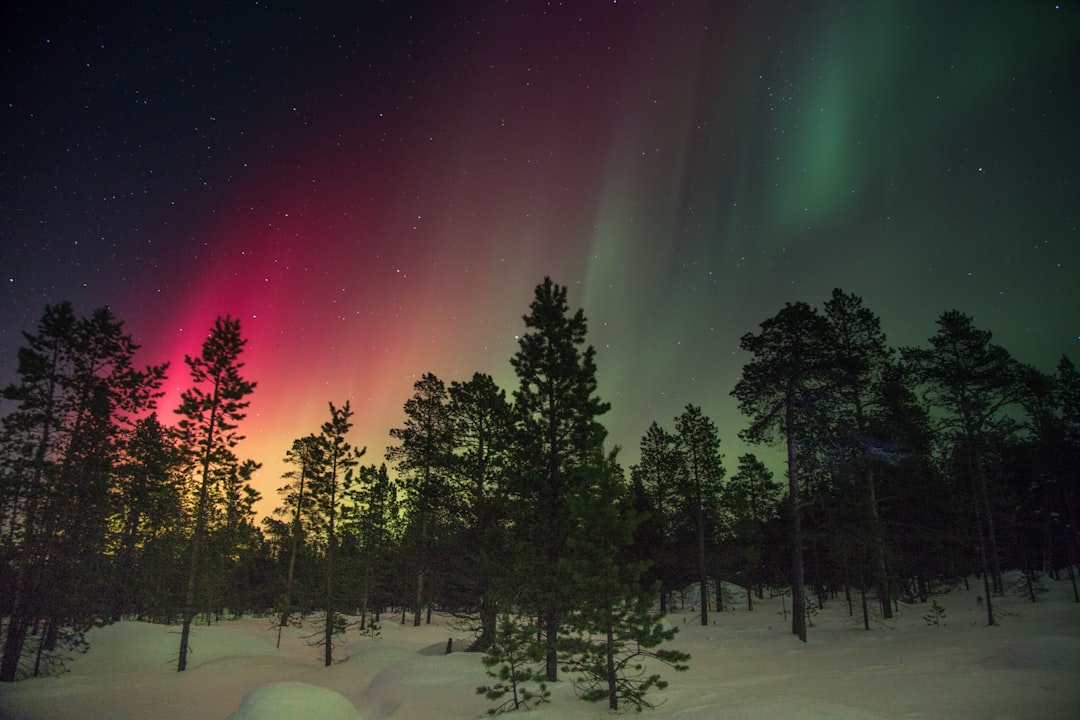
Photo by Nelly Volkovich on Unsplash
When Is the Best Time to See the Northern Lights in the USA?
Best Months
The aurora exists year-round, but you need darkness to see it — which rules out summer at high latitudes, where the sun barely sets for months.
The reliable window: September through March.
- September and October — Equinox months are statistically the most geomagnetically active. Temperatures are still manageable, and some of the most spectacular recent events have occurred in September.
- November through February — Up to 20+ hours of darkness in Fairbanks, and long viewing windows across the northern Lower 48. Coldest, but most reliable for extended shows.
- March — Another equinox activity peak. Temperatures start moderating, and this remains one of the best months for a first-time visitor to Alaska.
- April — Still viable in Alaska, but rapidly shortening nights cut viewing windows. Tail end of the season in the Lower 48.
Best Time of Night
Aurora activity typically peaks between 10 PM and 2 AM local time, often intensifying around local magnetic midnight — roughly 1 AM in most of Alaska, midnight in Minnesota and Montana.
Plan to be outdoors for several hours rather than expecting a brief 15-minute show. Many of the most dramatic aurora displays begin well after midnight. Bring your thermos.
The 2026 Solar Cycle Advantage
Solar Cycle 25 peaked around late 2025 and its elevated activity extends into 2026, with higher-than-predicted solar output. This means more frequent coronal mass ejections, elevated baseline KP on many nights, and wider aurora visibility zones across the US. For anyone who has been putting off an aurora trip, 2026 represents one of the best windows in over a decade.
Moon Phase Matters
A full moon washes out faint aurora displays. Aim for nights within 5–7 days of a new moon to maximize sky darkness and see subtler aurora features — dancing rays, color gradients, and fast-moving pulses that a bright moon would drown out.
How to Track Aurora Borealis: Tools, Apps & Forecasts
The right forecast tool changes everything about aurora chasing. Here's what experienced aurora hunters actually use:
NOAA Space Weather Prediction Center (spaceweather.gov) The official US government source for space weather. The aurora viewline tool shows predicted aurora visibility zones for tonight and tomorrow night, updated every few hours. Free and reliable — bookmark it.
SpaceWeatherLive Available as a website and app. Displays real-time KP index, solar wind speed and the critical Bz component: when Bz dips strongly southward (negative), Earth's magnetic field "opens up" and aurora activity intensifies. Experienced chasers monitor Bz from around 9 PM onward on promising nights.
My Aurora Forecast A user-friendly app with a map-based interface showing predicted aurora visibility for your specific location — essentially a zip-code-level check on whether tonight is worth heading outside. Configurable push notifications when KP exceeds a threshold you set.
University of Alaska Fairbanks Aurora Forecast (gi.alaska.edu) Three-day aurora forecasts from the UAF Geophysical Institute, with particular accuracy for Alaska-specific predictions and oval positioning.
Key thresholds to watch:
- KP 3–4: Alaska guaranteed; northern border states possible on dark nights
- KP 5+: Minnesota, Michigan, Maine, Montana have good odds
- KP 7+: Mid-latitude states (Iowa, Pennsylvania, Oregon) should step outside
- Clear skies: Non-negotiable. Aurora behind cloud cover is invisible regardless of KP level.
What to Bring: Aurora Watching Gear List
Being cold and underprepared is the fastest way to cut short a great aurora night. Here's the practical checklist:
Clothing (layer system):
- Merino wool or synthetic thermal base layer (top and bottom)
- Insulating mid-layer — heavy fleece or down jacket
- Windproof, waterproof outer shell
- Insulated boots rated to at least -20°F for Alaska or deep winter anywhere north
- Hand warmers, warm hat, balaclava, and insulated gloves
Lighting:
- Red headlamp — preserves night vision (white light destroys it within minutes)
- Keep your phone in an inner pocket; lithium batteries drain fast in the cold
Camera:
- Mirrorless or DSLR with manual settings: aperture f/1.8–f/2.8, ISO 800–3200, shutter speed 10–20 seconds
- A sturdy tripod is non-negotiable — any movement during a long exposure destroys the image
- Smartphone tip: modern iPhones and Android phones in Night Mode capture aurora colors more vividly than the naked eye often can. Place the phone on a small tripod and use the timer to avoid shake.
- Spare batteries kept warm in an inside pocket — cold will drain a battery in under an hour
Comfort:
- Thermos of hot drink (coffee, tea, cocoa — your call)
- A reclining camp chair or foam sleeping pad — lying back and looking straight up is far more comfortable than craning your neck for two hours
- A warm sleeping bag or heavy blanket for extended waits on very cold nights
Planning a Northern Lights Road Trip in the USA
The best aurora locations are remote by design — that's what keeps their skies dark. A road trip gives you the flexibility to reposition if cloud cover rolls in, chase clearer conditions, and explore multiple viewing spots across a region.
If you're building a broader itinerary around aurora viewing, our complete guide to planning a US road trip covers logistics, route planning, and budgeting in depth.
For route inspiration through scenic and remote terrain, America's best scenic drives includes several corridors that pass through prime aurora territory — the Going-to-the-Sun Road in Glacier, the Gunflint Trail in Minnesota, and the Seward Highway in Alaska among them.
For winter travel ideas more broadly, our guide on where to travel in the USA in December covers the full range of destinations — from warm-weather escapes to cold-weather adventures like this one.
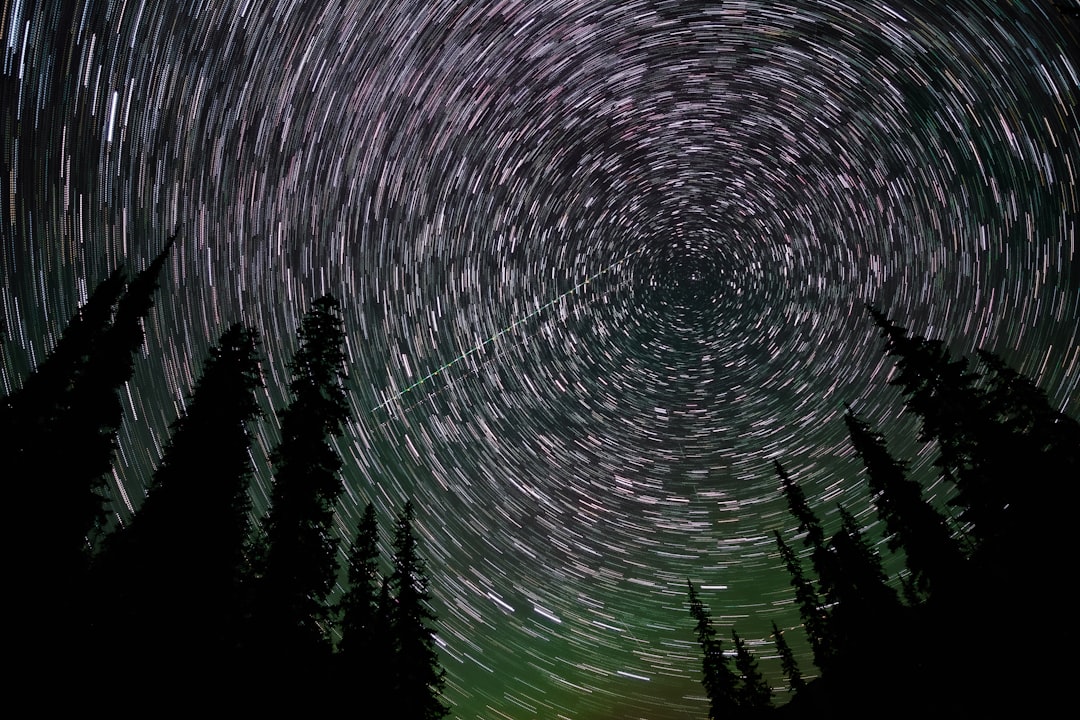
Photo by Gantavya Bhatt on Unsplash
Frequently Asked Questions
Where in the USA can you see the northern lights?
The most reliable location is Alaska — Fairbanks in particular sits directly under the auroral oval and sees the lights on roughly 240 nights per year between late August and mid-April. In the Lower 48, the best states are Minnesota, Michigan's Upper Peninsula, Maine, Montana, Idaho, Washington, North Dakota, and Wisconsin. During major geomagnetic storms (KP 7 or above), the aurora can stretch across most of the continental US.
Which states will see aurora borealis tonight?
That depends entirely on current solar activity. Check NOAA's Space Weather Prediction Center (spaceweather.gov) or the SpaceWeatherLive app for a real-time KP reading and aurora viewline map. On a KP 5+ night, northern border states — Minnesota, Michigan, Maine, Montana, North Dakota — have the best odds in the Lower 48.
Why is the US seeing the northern lights more often right now?
We're near the peak of Solar Cycle 25, which has been more active than initially forecast. More frequent and powerful coronal mass ejections are generating geomagnetic storms that push the aurora visibility zone to lower latitudes than usual. This elevated solar activity is expected to continue into 2026.
When and where to see the northern lights in 2026?
In 2026, we remain near solar maximum — one of the best aurora viewing windows in over a decade. In Alaska, the season runs late August through mid-April; target September, October, or March for equinox-enhanced geomagnetic activity. In the Lower 48, watch for storm alerts from September through March. Fairbanks remains the single most reliable destination for a guaranteed sighting.
Can you photograph the northern lights with a smartphone?
Yes — more effectively than you might expect. Modern iPhones and Android phones in Night Mode pick up aurora colors more vividly than the naked eye often can. Use a small tripod and the phone's built-in timer to eliminate any hand shake during exposure. Results will surprise you.
Ready to chase the lights? Whether it's a week in Fairbanks, a night at Voyageurs National Park, or a midnight drive to a dark field in northern Montana, seeing the northern lights in the USA is more achievable than most people assume. Set your KP alerts, find your dark spot, and be willing to wait — the aurora rewards patience every time.
Want to build your own spot list?
Join Spotli.st and share your favorite places with the world.
Create my free account