Is Mardi Gras in New Orleans Worth It? Costs, Crowds & How to Do It Right (2026)
Is Mardi Gras in New Orleans worth it? A straight answer on 2026 costs, crowds, the best days to go, family-friendly spots & first-timer tips.

The short answer: for most first-timers, yes — Mardi Gras in New Orleans is worth doing at least once, as long as you know what you're signing up for. It isn't one party; it's a weeks-long, city-wide festival where watching the parades is free, the food is some of the best in America, and the energy is unlike anything else in the U.S. The catch? Hotels triple in price, crowds get shoulder-to-shoulder, and you'll walk far more than you expect. If you want a polished, quiet getaway, skip it. If you want spectacle, culture and genuine community, it's absolutely worth the trip.

In this guide I'll give you a straight, no-hype answer on whether Mardi Gras is worth it for you — with real 2026 costs, an honest look at the crowds, the best days to be there, the family-friendly neighborhoods and the first-timer mistakes that quietly ruin the trip.
The Short Answer: Yes, If You Set the Right Expectations
Is Mardi Gras worth it? Yes — for the right traveler, on the right days, with the right plan. Think of it as the difference between simply "seeing" New Orleans and actually feeling it.
Mardi Gras is genuinely unlike any other event in the United States. For roughly two weeks leading up to Fat Tuesday, the city transforms: parades roll through the streets almost every day, brass bands play on corners, locals set up ladders and picnic tents along the parade routes, and complete strangers hand you beads, cups and toys for nothing more than a wave and a smile. That communal, slightly unhinged joy is the whole point.
Here's the honest trade-off, stated plainly:
- Go if you love live music, street culture, food, costumes and a big, joyful, occasionally chaotic crowd.
- Go if you're okay walking several miles a day, standing for hours and paying a premium for lodging.
- Skip it if you hate crowds, get anxious without a rigid itinerary, or want a calm, curated vacation.
The single biggest mistake visitors make is treating Mardi Gras like a single Saturday-night party on Bourbon Street. Do that, and it can feel overwhelming and overpriced. Approach it as a citywide festival — with the family-friendly Uptown parades, the neighborhood celebrations and the food as co-stars — and it becomes one of the most memorable trips you'll ever take.
What Mardi Gras Actually Is (and Why It's Worth It)
If you're asking "what is the point of celebrating Mardi Gras?", the short answer is that it's the last great celebration before the fasting season of Lent.
"Mardi Gras" literally means "Fat Tuesday" in French — the day before Ash Wednesday, when Christians traditionally used up rich foods (fat, sugar, eggs) before 40 days of Lenten restraint. Over three centuries in New Orleans, that single day grew into an entire season. In 2026, Carnival season runs from January 6 (Twelfth Night) through Fat Tuesday on February 17, 2026, with the parade calendar building steadily over the final two weeks.
The festival is organized by krewes — private social clubs that design giant, hand-crafted floats, host masked balls and throw "throws" to the crowd. Depending on the krewe, you might catch strings of beads, plastic cups, doubloons, stuffed animals, decorated coconuts (from the Zulu Social Aid & Pleasure Club) or hand-painted shoes (from the all-female Muses). Watching the grand parades along the route is completely free — the only money you'll spend is on food, drink, transport and, if you want a guaranteed seat, an optional grandstand ticket.
That's the core of why Mardi Gras is worth it: it's a rare American event that's both a massive public spectacle and a deeply local, community-run tradition. The krewes, the marching bands, the family ladders on St. Charles Avenue and the "throw me something, mister!" energy can't be replicated anywhere else.
How Much Does It Cost to Go to Mardi Gras? (2026 Numbers)
Direct answer: for a first-timer, budget roughly $800 to $1,800+ per person for a 3–4 day trip, excluding flights. How much you spend depends almost entirely on how early you book and where you sleep.
The painful part is lodging. During Mardi Gras, hotel and vacation-rental rates in and near the French Quarter and Central Business District routinely double or triple, from around $250–$800+ per night — and the best-located rooms can push past $1,000 on peak weekends. Book 6 to 12 months ahead if you can, and expect to pay a premium the closer you get. Domestic flights into Louis Armstrong New Orleans International Airport (MSY) vary wildly by origin, but fares also climb as Fat Tuesday approaches, so book early.
Here's a realistic budget breakdown for the essentials:
| Expense | Budget traveler | Mid-range | Splurge |
|---|---|---|---|
| Hotel (per night) | $150–$250 (outskirts, e.g. Metairie/Gentilly) | $250–$450 (CBD/Warehouse District) | $500–$1,000+ (French Quarter) |
| Food (per person/day) | $40–$60 (po'boys, gumbo, street food) | $70–$120 | $150+ |
| Drinks (per night) | $20–$40 | $50–$80 | $100+ |
| Parade viewing | Free | Free | $40–$70 grandstand seat |
| Costume & accessories | $20–$50 | $50–$100 | $100+ |
| Getting around | Streetcar/bus ($3/day pass) | Rideshares | Taxi/private car |
The good news: the main event is free. You do not need a ticket to watch the parades, and you do not need to buy beads — they'll be thrown at you by the bagful. The money goes to where you sleep, what you eat and how much you drink. If you're flexible on location and book a simple room outside the core, Mardi Gras can be done on a genuinely moderate budget.
How Bad Are the Crowds at Mardi Gras?
Direct answer: on the big parade days, the crowds are intense — but they're concentrated and highly predictable. Avoid one street and one weekend, and the experience changes completely.
The most chaotic zone is Bourbon Street, especially at night and on the final weekend. Expect heavy drinking, shoulder-to-shoulder foot traffic, loud music and behavior that simply isn't for everyone. It's fun for exactly the people who want it and miserable for everyone else. You can have a wonderful Mardi Gras without setting foot on Bourbon Street at all.
The broader picture is more manageable than the reputation suggests. Parade routes are long, and if you're willing to walk a few blocks, you can usually find a calmer stretch with actual breathing room. The crowds are heaviest:
- The final weekend before Fat Tuesday (Saturday–Tuesday), when the biggest "super krewes" roll.
- Along St. Charles Avenue and Canal Street during prime parade hours.
- Around the French Quarter on Fat Tuesday itself.

Photo: Library of Congress / Unsplash
One thing people underestimate is the logistics of it all. Road closures mean rideshares and taxis can't get anywhere near the route at peak times, so you'll walk far more than a normal trip — often several miles a day. Public restrooms near the routes are scarce; bars will usually let you use theirs if you buy a drink, and portable toilets appear along routes but get, well, well-used. Wear broken-in shoes, carry hand sanitizer, and plan your bathroom breaks around bars and restaurants.
Is Mardi Gras Family-Friendly? Yes — If You Know Where to Go
Direct answer: yes. Contrary to the Bourbon Street stereotype, much of Mardi Gras is a safe, family-oriented, community event.
The family-friendly heart of Mardi Gras is Uptown, along St. Charles Avenue, and in the Garden District. Here, families set up ladders with little seats on top so kids can see over the crowd, neighbors share food and drinks, and the atmosphere is closer to a giant block party than a rager. The daytime parades on the weekend before Fat Tuesday are especially kid-friendly — expect marching bands, school groups, and floats throwing toys and stuffed animals specifically for the younger crowd.
A good rule of thumb: stick to the daytime parades Uptown, and treat the French Quarter — especially Bourbon Street at night — as an adults-only zone. If you're traveling with kids, base yourself near St. Charles Avenue and you'll get the full magic of Mardi Gras without most of the chaos.
The Best Days to Be There: A First-Timer's Mardi Gras Itinerary
Direct answer: you don't need to be there for two full weeks. The sweet spot for most first-timers is the weekend before Fat Tuesday, arriving Friday and staying through Fat Tuesday morning.
The biggest, most spectacular parades cluster in the final few days. The Saturday and Sunday before Fat Tuesday are when the super krewes roll, and Lundi Gras (Monday, February 16, 2026) and Fat Tuesday (Tuesday, February 17, 2026) carry the festival to its peak — Fat Tuesday starts with the Zulu and Rex parades in the morning and ends at midnight, when the season officially shuts down and Ash Wednesday begins.
A practical first-timer rhythm:
- Friday: Arrive, check in, ease into it. Grab a po'boy, walk the French Quarter, maybe catch a smaller evening parade.
- Saturday: Post up Uptown on St. Charles Avenue for the daytime parades, then decide whether the nighttime super krewe (and its crowds) is your scene.
- Sunday: More parades, plus a long, lazy meal — this is a great day to just wander, listen to brass bands and eat.
- Lundi Gras (Monday): Catch the riverfront festivities and the Orpheus parade in the evening.
- Fat Tuesday: Wake early for the Zulu and Rex parades, people-watch in costume on Royal Street, and let the city end it at midnight.
If you can only do two days, make it Sunday and Fat Tuesday — you'll catch huge parades on both and still feel the full arc of the festival.
When to Go (and How to See New Orleans Without the Mardi Gras Madness)
If your real question is "when should I go to New Orleans to avoid Mardi Gras?", the answer is simple: almost any other time of year. New Orleans is a fantastic food, music and history city 12 months a year — Mardi Gras is just the loudest slice of it.
To dodge Carnival entirely, avoid the window from early January through Fat Tuesday (February 17, 2026). The weeks after Mardi Gras are often quieter and cheaper, and the shoulder seasons are lovely: fall brings pleasant temperatures, festival season and easier hotel rates, while late spring and early summer offer long daylight and lush greenery (before the full heat sets in). If you're drawn to New Orleans for the food, music and architecture rather than the parade chaos, visiting in the fall is arguably the better trip — see our guide to the best U.S. cities to visit in fall 2026 for how New Orleans fits into a bigger autumn itinerary.
The takeaway: Mardi Gras is worth it if you specifically want Mardi Gras. If you just want to experience New Orleans, you'll get most of the magic — the food, the music, the streets — any month of the year, often for half the price and a fraction of the crowd.
What to Eat and Drink During Mardi Gras
No Mardi Gras trip is complete without king cake — a braided, cinnamon-sugar cake glazed in purple, green and gold that appears on January 6 and disappears at midnight on Fat Tuesday. A tiny plastic baby is baked inside; whoever finds it in their slice traditionally buys the next cake or hosts the next gathering. It's the season's edible mascot, and every bakery in town has an opinion on who makes the best one.
Beyond king cake, Mardi Gras is your excuse to eat your way through the city's greatest hits: gumbo and jambalaya, fried oyster and shrimp po'boys, crawfish (when in season), beignets dusted in powdered sugar, and classic cocktails like the Sazerac and Ramos Gin Fizz. Food is one of the strongest arguments that Mardi Gras is worth it — few cities on Earth feed you this well while you're busy celebrating.
For a neighborhood-by-neighborhood guide to the best of it, from French Quarter classics to the spots locals actually frequent, start with our where to eat in New Orleans guide — it covers Cajun, Creole and everything in between.
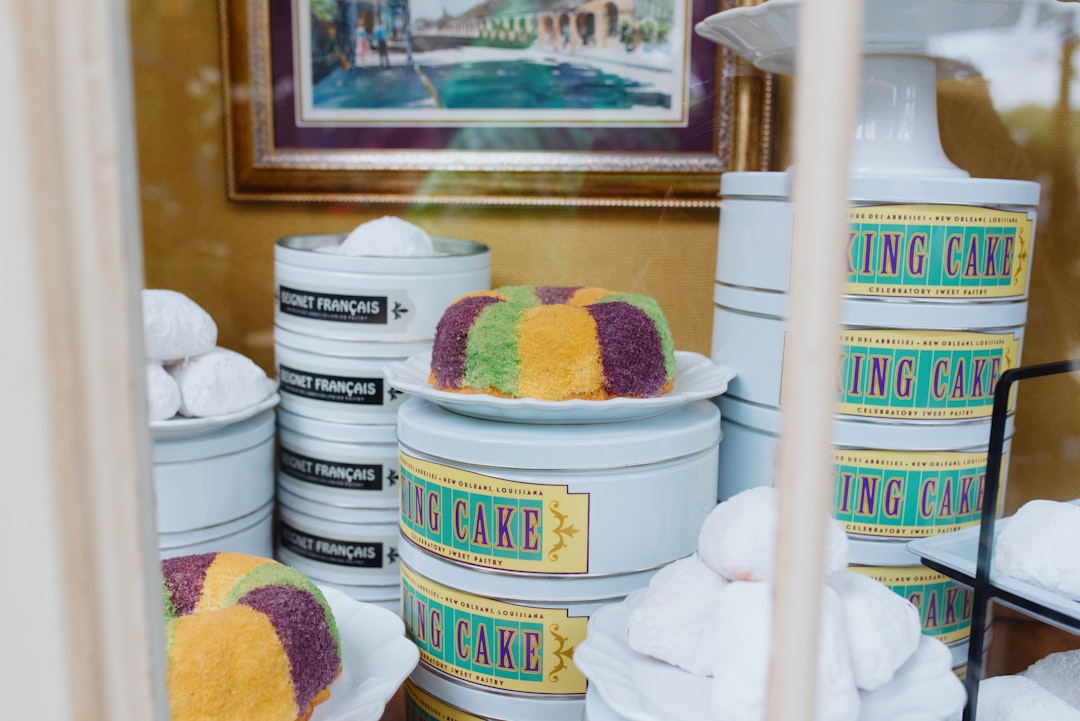
Photo: Aubrey Odom / Unsplash
Logistics, Safety & First-Timer Mistakes to Avoid
Direct answer: Mardi Gras is generally safe, but it rewards preparation. Most problems — lost phones, dead feet, missed parades — are avoidable with a few habits.
- Don't drive. Roads close all over town, parking is a nightmare, and a car is a liability. Fly into MSY, then use the streetcar, buses, rideshares (booked away from the route) or your own feet.
- Wear comfortable, closed shoes. You will walk and stand for hours. This is not the trip for new shoes or flimsy sandals.
- Secure your phone. Keep it in a front pocket or a zipped crossbody, not a back pocket. Pickpocketing spikes in dense crowds.
- Never reach for a bead on the ground. If you want it, put your foot on it first — reaching down near a moving float is how fingers get run over, and it's also basic parade etiquette.
- Go in groups and pick a meetup spot. Cell service gets spotty in huge crowds. Agree on a landmark in case you get separated.
- Bring cash and a portable charger. Some vendors and bars are cash-only during the crush, and your phone will drain fast from photos and navigation.
- Book lodging and flights early. This is the single biggest cost lever. Late bookings mean paying triple for a room far from everything.
The most common first-timer mistake, by far, is trying to see everything. Mardi Gras is too big. Pick a neighborhood, pick a couple of parades, leave room to eat and wander, and you'll have a much better time than the person sprinting between five routes.
FAQ: Your Mardi Gras Questions, Answered
Is Mardi Gras World worth seeing? Yes, especially if you want the behind-the-scenes story without the parade crowds. Mardi Gras World is a working float den where artists build and paint the floats year-round; you can tour the warehouse, see floats up close and learn how the krewes operate. It's a great rainy-day or first-day activity, and it's family-friendly.
When should I go to New Orleans to avoid Mardi Gras? Any time outside early January through Fat Tuesday. Fall (September–November) and the weeks right after Mardi Gras are two of the best windows for lower prices and lighter crowds, with the same food and music.
How much does it cost to go to Mardi Gras? Plan on roughly $800–$1,800+ per person for a 3–4 day trip, excluding flights. Lodging is the big variable — book 6–12 months out and consider staying outside the French Quarter to keep costs down. Watching the parades themselves is free.
What is the point of celebrating Mardi Gras? It's the final celebration before Lent, the Christian season of fasting that begins on Ash Wednesday. In New Orleans it has evolved into a weeks-long civic festival of parades, music, food and community, organized by krewes and open to everyone.
Is Mardi Gras safe for families? Yes. The Uptown and Garden District stretches of St. Charles Avenue, especially during daytime parades, are safe, family-oriented and full of locals with kids. Treat Bourbon Street at night as an adults-only area.
So, Is Mardi Gras Worth It?
Yes — once, and then you'll know if you're the kind of person who goes back every year. Mardi Gras in New Orleans is expensive, crowded and logistically demanding, and none of that matters to the millions of people who love it, because the payoff is a weeks-long, city-wide celebration that has no true American equivalent.
The formula for a trip that's worth it: book early, stay somewhere sensible, spend your parade time Uptown or on St. Charles Avenue, skip Bourbon Street unless that's specifically your scene, and treat the food as a main event rather than an afterthought. Do that, and the answer to "is Mardi Gras worth it?" stops being a question — and becomes one of the best travel decisions you've made.
Want to build your own spot list?
Join Spotli.st and share your favorite places with the world.
Create my free account