Miami Beach vs. Fort Lauderdale: Which South Florida City Should You Visit?
Miami Beach vs. Fort Lauderdale: Compare beaches, nightlife, costs, and family-friendliness to decide which South Florida city fits your travel style.
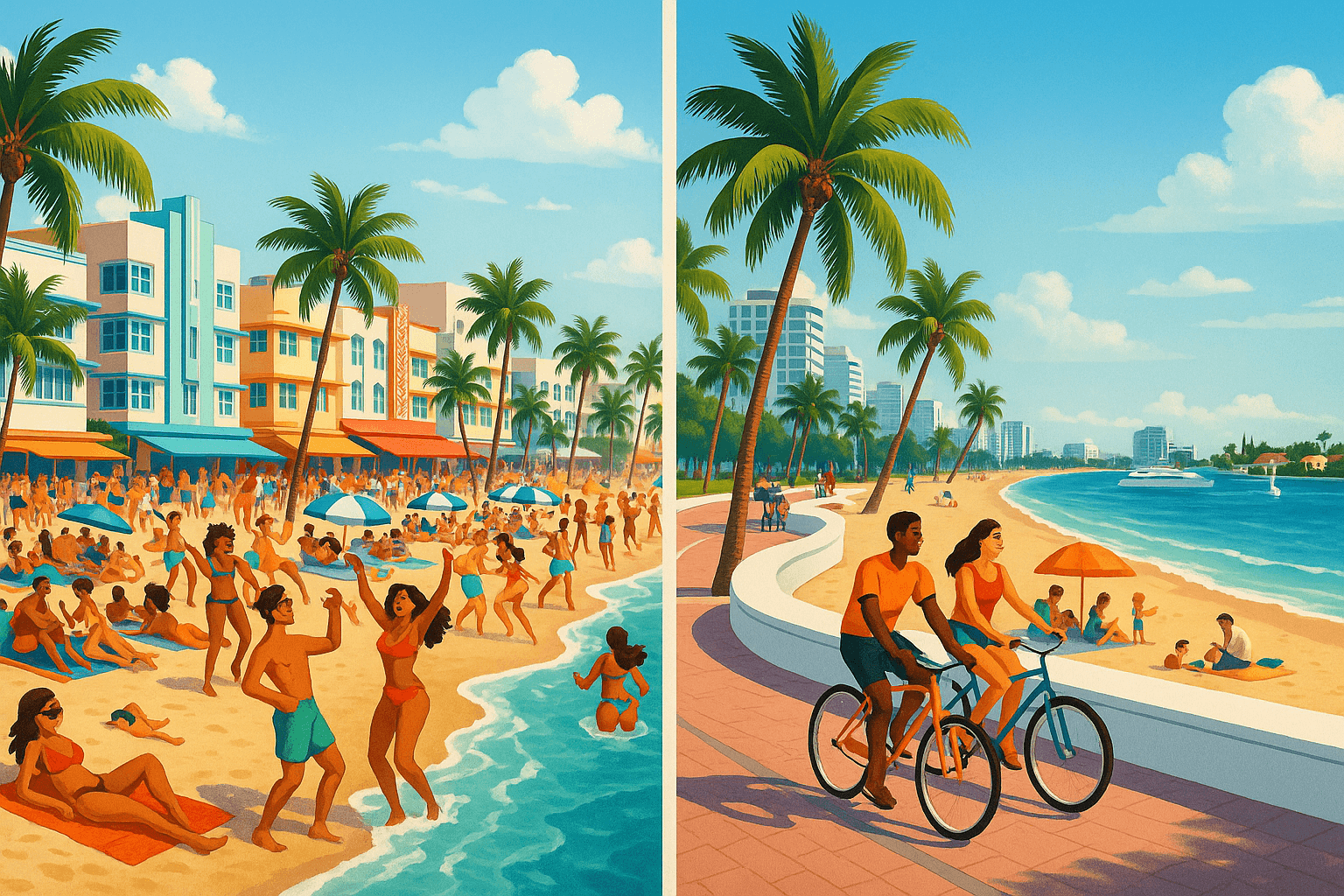
Picture this: you've booked your flights to South Florida, the sunscreen is packed, and there's just one question left — should you head to the electric shores of Miami Beach or the sun-drenched canals of Fort Lauderdale? They're only 30 miles apart, but these two coastal heavyweights deliver completely different vacations.
Miami Beach is the extrovert — loud, glamorous, and unapologetically flashy. Fort Lauderdale is the relaxed cousin — lower-key, more affordable, and built for unwinding. The right answer depends entirely on what kind of trip you're after.
The short answer: Choose Miami Beach if you want legendary nightlife, a global food scene, and the buzz of one of America's most famous beaches. Choose Fort Lauderdale if you want a laid-back escape with wider beaches, lower prices, and a family-friendly atmosphere — without sacrificing great dining and plenty of things to do.
Still on the fence? Let's break it down category by category.
At a Glance: Miami Beach vs. Fort Lauderdale
| Category | Miami Beach | Fort Lauderdale |
|---|---|---|
| Beach vibe | Energetic, crowded, iconic | Relaxed, spacious, local |
| Nightlife | World-class clubs (LIV, Story, E11even) | Casual bars, waterfront lounges |
| Avg. hotel/night | $200–$500+ | $130–$300 |
| Best for | Couples, party-goers, foodies | Families, couples, budget travelers |
| Walkability | High (South Beach especially) | Moderate (Las Olas, beach strip) |
| Airport proximity | 12 miles from MIA | 5 miles from FLL |
| Parking | Expensive & scarce ($20–$50/day) | Easier & cheaper ($10–$20/day) |
1. The Beaches: Two Very Different Stretches of Sand
Let's start with the main event — the reason you're coming to South Florida in the first place.
Miami Beach: The World-Famous Shoreline
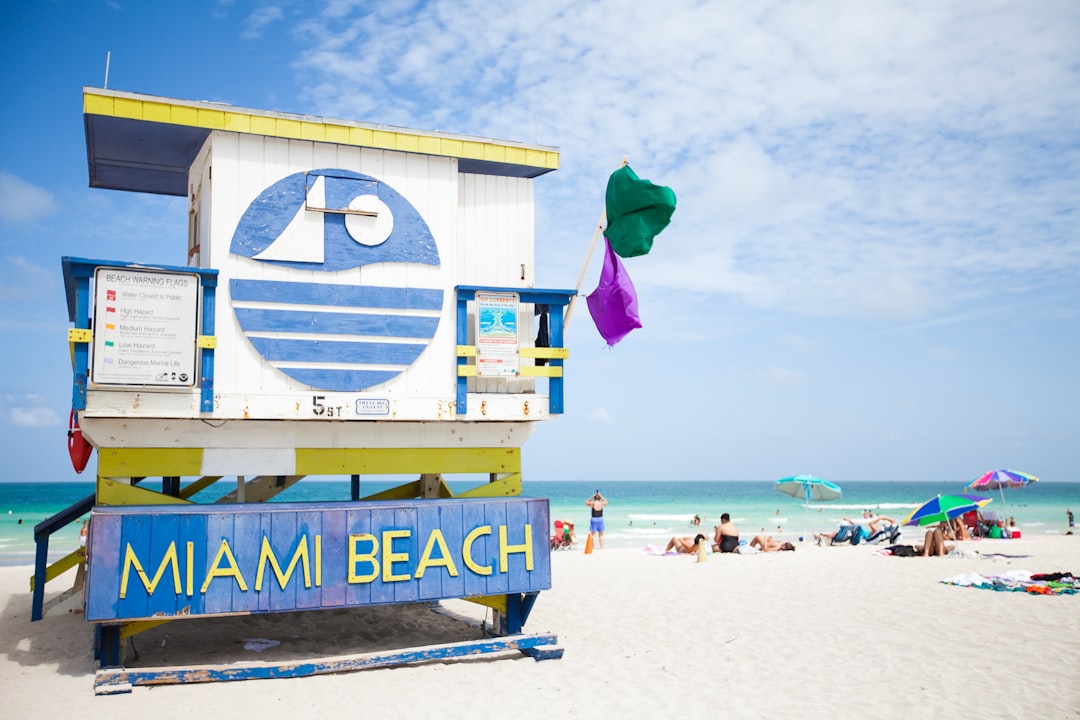 Photo by Marc Fanelli-Isla on Unsplash
Miami Beach — and South Beach in particular — is one of the most recognizable coastlines on the planet. The sand is wide and powdery, the water is warm and turquoise, and the backdrop is pure Art Deco. Hotels and condos rise directly from the sand, which creates that signature postcard view — but also means the beach can feel hemmed in and intensely developed.
On any given weekend, South Beach hums with activity: volleyball games, joggers along the boardwalk, music drifting from nearby hotels, and a steady parade of beachgoers from every corner of the globe. The people-watching is unmatched. Lifeguard stands painted in pastels dot the shore, and the whole scene feels like a movie set — because, in many ways, it is.
But that energy comes with real trade-offs: parking is expensive (expect $20–$50 for a few hours), the sand gets crowded by midday, and the atmosphere can feel more performative than relaxing. If your idea of a beach day involves a DJ, a mojito, and a vibrant crowd, Miami Beach delivers. If you want to hear the waves and read a book in peace, you might look north to Fort Lauderdale.
Fort Lauderdale: Space, Serenity, and the A1A Promenade
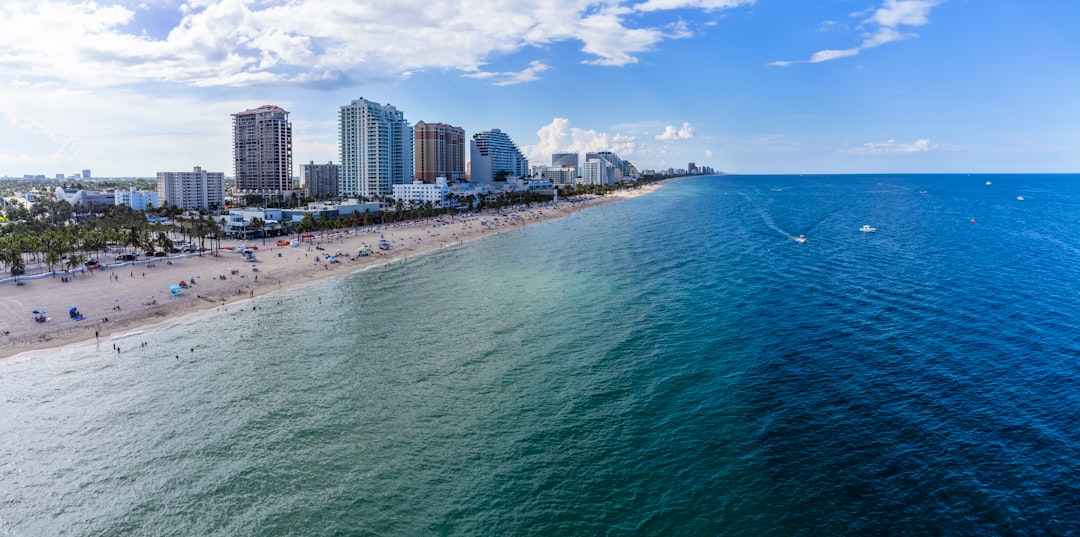 Photo by By Carl on Unsplash
Fort Lauderdale's beach couldn't be more different. Here, the sand stretches wider, and the hotels sit across the street from the beach — separated by State Road A1A — which keeps the shoreline feeling open, public, and uncluttered. The iconic wave wall and brick-paved promenade run for miles, drawing joggers, cyclists, and families pushing strollers.
The vibe is distinctly more relaxed. You'll see fewer velvet-rope beach clubs and more families building sandcastles. The water is just as warm, the sand just as soft, but the crowd is thinner and the pace is slower. Parking is easier to find and significantly cheaper — public lots charge $10–$20 per day versus Miami Beach's steep rates.
If Miami Beach is the beach you visit to be seen, Fort Lauderdale is the beach you visit to actually unwind.
Winner for beaches:
- Iconic energy and people-watching → Miami Beach
- Relaxation, space, and ease → Fort Lauderdale
2. Nightlife & Entertainment
Miami Beach: A Global Party Capital
Miami Beach's nightlife needs little introduction. South Beach is home to some of the most famous clubs in the world — LIV at the Fontainebleau, Story, E11even (a 24/7 ultraclub that literally never closes), and Basement at the Edition Hotel. The scene is high-energy, dress-coded, and expensive — table service can run into the thousands, and lines snake around the block on weekends.
Beyond the mega-clubs, Miami Beach offers chic rooftop bars (Juvia, Sugar at EAST Miami), craft cocktail speakeasies, and a thriving after-hours scene. The party doesn't really start until after 11 p.m., and it often stretches until sunrise. For a deeper dive into everything Miami has to offer beyond the beach, check out our ultimate guide to things to do in Miami.
Fort Lauderdale: Rooftop Drinks and Waterfront Bars
Fort Lauderdale's nightlife trades mega-clubs for casual sophistication. Las Olas Boulevard is the epicenter — a walkable stretch of wine bars, craft cocktail spots, and live-music venues where you can hop between spots without a dress code or a cover charge. Rooftop at 1WLO offers sweeping city views, and the Wharf Fort Lauderdale is an open-air event space on the New River with food trucks, live music, and a lively but unpretentious crowd.
You'll also find a strong craft brewery scene — LauderAle and Funky Buddha are local standouts — and plenty of waterfront tiki bars where you can sip a rum runner with your feet in the sand. It's nightlife you can enjoy in flip-flops, and that's by design.
Winner for nightlife:
- Full-throttle partying → Miami Beach
- Relaxed evenings and bar-hopping → Fort Lauderdale
3. Cost & Budget: What You'll Actually Spend
This is where the two cities diverge most dramatically — and for many travelers, it's the deciding factor.
Miami Beach is one of the most expensive beach destinations in the United States. Mid-range hotels in South Beach rarely dip below $200 per night, and beachfront properties routinely exceed $500. Dinner for two at a decent restaurant runs $80–$150 without drinks. Cocktails are $18–$25 each. Resort fees add another $30–$50 per night. And parking? Budget $20–$50 per day.
Fort Lauderdale is noticeably more affordable across the board — roughly 25–40% cheaper than Miami Beach for equivalent experiences. You can find well-reviewed hotels within walking distance of the beach for $130–$200 per night. Restaurant prices are consistently lower, public beach parking is abundant, and resort fees, while they still exist, are generally in the $20–$35 range.
For a one-week trip for two (flights excluded), here's a realistic estimate:
- Miami Beach: $3,000–$5,500 (mid-range to upscale)
- Fort Lauderdale: $2,000–$3,500 (mid-range to upscale)
For budget-conscious travelers, Fort Lauderdale is the clear winner. The money you save on lodging can fund extra excursions — like an Everglades airboat ride or a day trip down to the Florida Keys.
Winner for budget: Fort Lauderdale.
4. Food & Dining Scene
This is one category where Miami Beach has a genuine edge — but Fort Lauderdale holds its own with a distinct style.
Miami Beach's culinary scene is world-class, shaped by deep Latin American and Caribbean roots. You can eat your way from a Cuban colada and croquetas at a ventanita window to omakase at a Michelin-starred sushi counter — all in the same afternoon. The city excels at Cuban cuisine, Peruvian ceviche, stone crabs, and high-end fusion. For a neighborhood-by-neighborhood breakdown of must-visit spots, see our dedicated guide to where to eat in Miami.
Fort Lauderdale's dining scene leans more casual but is rapidly evolving. Las Olas Boulevard packs in everything from wood-fired pizza and craft burgers to fresh-caught seafood. Where Fort Lauderdale truly shines is waterfront dining — restaurants along the Intracoastal Waterway offer sunset views and boat-up access that's hard to find in Miami Beach without the high price tag. Local institutions like Coconuts, Boatyard, and Shooters Waterfront deliver the quintessential "dock and dine" Florida experience.
Winner for food:
- Culinary ambition and global diversity → Miami Beach
- Relaxed waterfront dining without the markup → Fort Lauderdale
5. Family-Friendliness
If you're traveling with kids, this category may single-handedly decide your trip — and Fort Lauderdale wins it comfortably.
Fort Lauderdale is genuinely family-friendly. The beaches feel safe and manageable, the crowds are less intense, and there are dedicated kid-focused attractions throughout the area: the Museum of Discovery and Science (with an IMAX theater), Butterfly World (the largest butterfly park in the world), and Flamingo Gardens, a 60-acre botanical garden and wildlife sanctuary. The water taxi doubles as family entertainment — kids love riding the boats through the canal system that earned Fort Lauderdale its "Venice of America" nickname. Hotels tend to have pools designed for families, and the overall atmosphere is simply more forgiving.
Miami Beach can work for families, but it requires more planning. South Beach's party atmosphere and dense crowds can overwhelm younger kids. That said, the Miami Children's Museum, Jungle Island, and the Miami Seaquarium on nearby Virginia Key are excellent family outings. If you're set on Miami with kids, consider staying in Mid-Beach or North Beach — both are significantly quieter than South Beach while keeping you close to the action.
Winner for families: Fort Lauderdale — by a comfortable margin.
6. Getting Around & Logistics
Both cities present distinct transportation challenges and advantages.
Miami Beach is highly walkable — if you stay in South Beach, you can go days without needing a car. The free Miami Beach Trolley connects South Beach to Mid-Beach and North Beach. Ride-shares are abundant and affordable for short trips. But driving and parking? Notoriously painful. Traffic on the MacArthur Causeway can turn a 15-minute drive into a 45-minute crawl, and parking garages command steep rates year-round.
Fort Lauderdale is more spread out, so you'll likely want a car — but driving and parking are dramatically easier than in Miami Beach. The Sun Trolley and LauderGO serve key areas. FLL airport is just 5 miles from the beach (versus 12 miles from MIA to South Beach), and the airport itself is smaller, less chaotic, and quicker to navigate. If you plan to explore beyond the beach — the Everglades, the Keys, or even a Miami day trip — Fort Lauderdale makes a more practical home base. You can also take the Brightline train from downtown Fort Lauderdale to downtown Miami in about 35 minutes.
Winner for logistics:
- Car-free trips → Miami Beach (South Beach specifically)
- Road-trip convenience and lower stress → Fort Lauderdale
7. Day Trips & Nearby Adventures
Both cities sit in the heart of South Florida, making them excellent launching pads for exploration. Neither keeps you confined to the sand.
From Miami Beach:
- Everglades National Park (~45 min): Airboat tours, alligator spotting, and the Shark Valley tram loop
- Key Biscayne & Bill Baggs Cape Florida State Park (~20 min): Quiet beaches, a historic lighthouse, and stunning skyline views of downtown Miami
- The Florida Keys (~1.5 hours to Key Largo, ~3.5 hours to Key West): One of America's great road trips across the Overseas Highway
- Wynwood & the Design District (~15 min from South Beach): Street art, galleries, and high-end shopping
From Fort Lauderdale:
- Everglades Holiday Park (~20 min): Airboat tours closer than Miami's entries — this is where the famous Gator Boys filmed
- Las Olas Boulevard & Riverwalk: The cultural spine of downtown — no drive required
- Hollywood Beach (~15 min): A classic old-Florida boardwalk with live music, ice cream shops, and a retro beach-town feel
- Delray Beach & Boca Raton (~30–40 min north): Upscale coastal towns with excellent dining, shopping, and quieter beaches
Both cities give you access to the Everglades, but Fort Lauderdale puts you closer to the northern entries. Miami Beach is the better jumping-off point for the Keys. For more inspiration on the best coastal destinations across the country, browse our coast-by-coast guide to the best beaches in the USA.
8. The Quick Decision Guide
Still undecided? Here's the cheat sheet:
Pick Miami Beach if:
- You want a high-energy, glamorous beach vacation
- Nightlife is a priority — clubs, rooftop bars, late nights
- You're traveling as a couple or with friends (no kids)
- You're a foodie interested in Latin-influenced, globally acclaimed cuisine
- You don't mind spending more for the experience
- You want walkability and don't plan to drive much
Pick Fort Lauderdale if:
- You're traveling with kids or as a multi-generational family
- You want a relaxing beach vacation without the chaos
- Budget matters — you want more value for your money
- You prefer casual bars and waterfront dining over mega-clubs
- You're planning road-trip-style day trips (Everglades, Keys, Palm Beach)
- You want to drive and park without the headache
Can't decide? Split the trip.
With just 30 miles between them, a 4-night Fort Lauderdale + 3-night Miami Beach combo is totally doable — and it gives you the best of both worlds. Fly into FLL, spend the first half unwinding on Fort Lauderdale's wide beaches and exploring its canals, then head south for a dose of Miami Beach energy before flying out of MIA. You'll come home knowing exactly which one to book for next time.
FAQ
Is Fort Lauderdale cheaper than Miami Beach?
Yes — significantly. Expect to pay 25–40% less for hotels, dining, and parking in Fort Lauderdale compared to Miami Beach. A mid-range hotel near the beach that costs $350 in Miami Beach often has a comparable counterpart in Fort Lauderdale for $180–$220.
Which has the better beach — Miami Beach or Fort Lauderdale?
It depends on what you value. Miami Beach offers the iconic, postcard-perfect scene — Art Deco backdrop, turquoise water, and world-famous energy. Fort Lauderdale's beach is objectively wider, less crowded, and more relaxing, with easier parking and a beautiful promenade. If you want spectacle, pick Miami Beach. If you want serenity, pick Fort Lauderdale.
Can you do a day trip from Fort Lauderdale to Miami Beach?
Absolutely. The drive is 30–45 minutes depending on traffic. You can also take the Brightline train from downtown Fort Lauderdale to downtown Miami in about 35 minutes, then grab a 10-minute ride-share to South Beach. It's an easy day trip in either direction.
Which is better for a family vacation — Miami Beach or Fort Lauderdale?
Fort Lauderdale wins for families. Its beaches are wider and calmer, kid-focused attractions are abundant (Museum of Discovery and Science, Butterfly World, Flamingo Gardens), costs are lower, and the overall atmosphere is more relaxed and forgiving. Miami Beach can work for families in Mid-Beach or North Beach, but requires more planning.
What's the best time to visit either city?
November through April offers the best weather — warm but not stifling, with low humidity, little rain, and daytime highs in the mid-70s to low 80s (°F). Summer (June–September) is hot, humid, and brings afternoon thunderstorms — but hotel rates drop 20–40%. Late spring (May) and early fall (October) are sweet spots with decent weather and thinner crowds.
Is Miami Beach safe?
Yes — especially in tourist areas like South Beach, Mid-Beach, and North Beach. Like any major city, exercise standard precautions: secure your valuables, stay in well-lit areas at night, and be aware of your surroundings. Fort Lauderdale's beach areas are similarly safe, with a generally quieter feel after dark.
Which city has an airport closer to the beach?
Fort Lauderdale–Hollywood International Airport (FLL) is just 5 miles from Fort Lauderdale Beach — roughly a 15-minute drive. Miami International Airport (MIA) is about 12 miles from South Beach, which can take 25–45 minutes depending on traffic. FLL is also smaller and easier to navigate.
Miami Beach and Fort Lauderdale share the same stretch of South Florida coastline, the same warm Atlantic waters, and the same palm-tree-and-pastel-sky aesthetic — but they feel like entirely different worlds once you're on the ground.
Miami Beach is the showstopper: glamorous, loud, and unforgettable. It's the place you go when you want to feel the pulse of a global party city and wake up to one of the most famous beaches on Earth. Fort Lauderdale is the breather: relaxed, accessible, and surprisingly sophisticated. It's where you go to actually unwind — with a cold drink, a wide stretch of sand, and a little more money left in your pocket.
The good news? You don't have to choose forever. They're close enough that you can sample both in a single trip — and once you do, you'll know exactly which one to book for next time.
Want to build your own spot list?
Join Spotli.st and share your favorite places with the world.
Create my free account