New York vs. Los Angeles: Which US City Should You Visit First?
New York vs Los Angeles: a honest city-by-city comparison on weather, cost, food, transport, and attractions to help you pick the right destination.
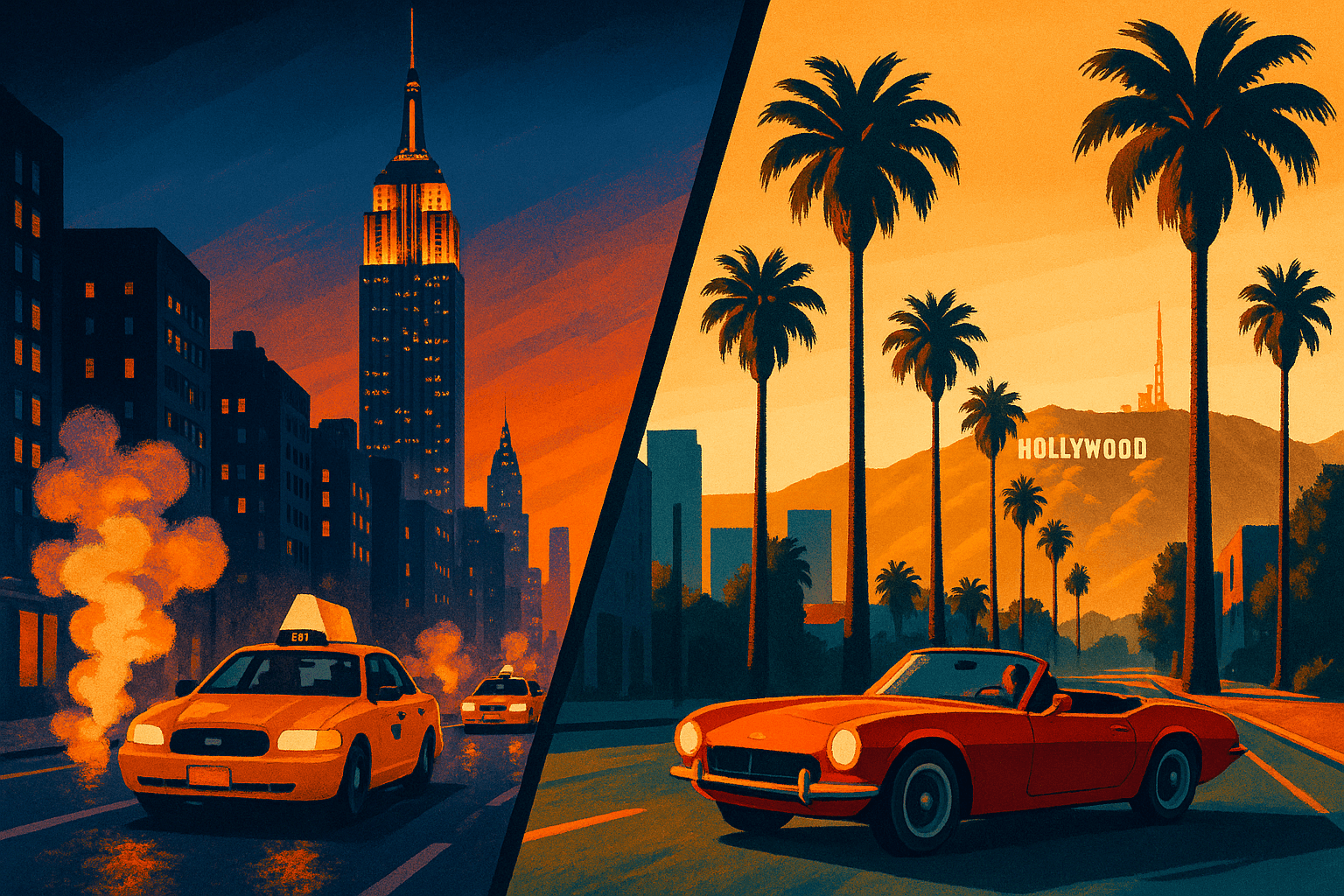
New York vs. Los Angeles: Which US City Should You Visit First?
You've saved up, blocked out the days, and narrowed your US trip down to two cities. The problem? New York and Los Angeles are both world-class destinations — and they couldn't be more different. One pulses with vertical energy and subway noise at 2 a.m.; the other sprawls under near-permanent sunshine with the Pacific Ocean at its doorstep. Picking the wrong one for your travel style isn't a catastrophe, but picking the right one can turn a good trip into an unforgettable one.
Short answer: if you want to walk everywhere, absorb the city's electricity, and pack iconic landmarks into every day, go to New York. If you want beaches, sunshine, Hollywood glamour, and room to breathe, choose Los Angeles. But the full answer depends on five or six factors that are deeply specific to how you travel — and this guide breaks every single one of them down.
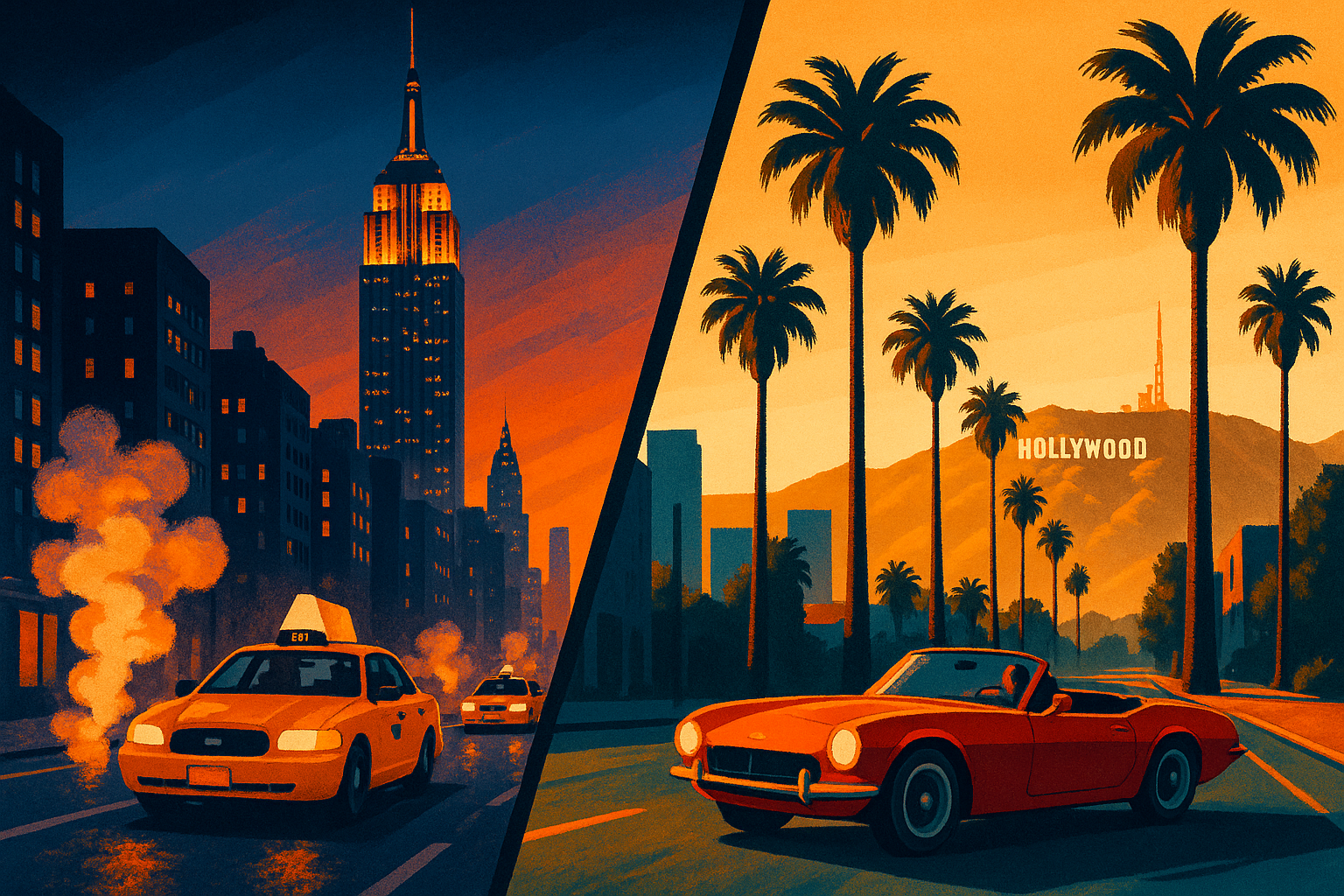
At a Glance: NYC vs. LA Side by Side
| 🗽 New York City | 🌴 Los Angeles | |
|---|---|---|
| Best for | Walkable sightseeing, culture, non-stop energy | Beaches, sunshine, entertainment industry, outdoors |
| Getting around | Subway + walking — no car needed | Car or rideshare required for almost everything |
| Weather | 4 real seasons — hot summers, cold winters | Warm & sunny year-round (~284 sunny days/year) |
| Cost ranking | #1 most expensive US city | #9 most expensive US city |
| Population / size | 8.3M residents / 302 sq mi | 3.9M residents / 503 sq mi |
| Food highlights | 27,000+ restaurants, every global cuisine | World-class tacos, Korean BBQ, farm-to-table |
| City pace | Fast, intense, 24/7 | Relaxed, sprawling, car-dependent |
| Best day trips | Hudson Valley, The Hamptons, Philadelphia, DC | Malibu, Joshua Tree, Santa Barbara, San Diego |
| Signature sight | Manhattan skyline / Times Square | Hollywood Sign / Venice Beach |
Vibes & Personality: What Kind of Traveler Thrives Where?
Before comparing facts and figures, ask yourself one honest question: what do you actually want to feel on vacation?
New York City delivers an energy that simply cannot be manufactured anywhere else on earth. From the moment you exit Penn Station or step off the subway at Times Square, the city is on — at full volume, full speed, all the time. There are roughly 27,000 restaurants, more than 100 museums, Broadway running eight shows a week, and neighborhoods that transform character from one block to the next. NYC rewards curious walkers who thrive on sensory intensity and love the feeling of being at the center of everything.
Los Angeles is New York's photographic negative: horizontal where New York is vertical, unhurried where New York is relentless, golden where New York is grey. LA is best for travelers who want to craft an itinerary entirely at their own pace — beach in the morning, an art gallery in the afternoon, a rooftop taco bar at sunset. It's also the city for outdoor lovers: 75+ miles of Pacific coastline, hikes through Griffith Park, and a day trip to Joshua Tree are all on the table.
The honest trade-off: NYC's density means you can experience enormous variety without much planning. LA's sprawl means you can experience enormous variety — but you absolutely need a plan, and a car.
Getting Around: Subway Freedom vs. Car Culture
This is arguably the single biggest practical difference between the two cities, and it has a major impact on both your daily budget and your moment-to-moment experience.
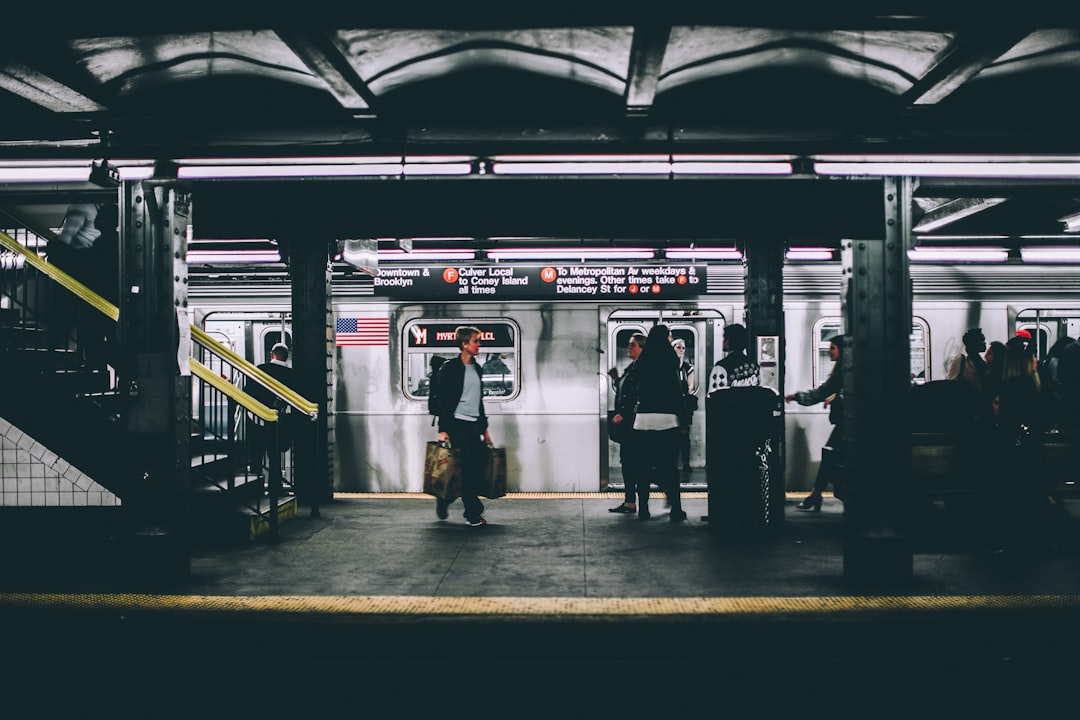 Photo by Andre Benz on Unsplash
New York City
NYC has one of the world's great public transit systems. The subway runs 24 hours a day, 7 days a week, covers all five boroughs, and costs a flat $2.90 per ride — capped at roughly $35 per week, after which rides are free. You can get from the Met Museum on the Upper East Side to a jazz club in Harlem to a slice of pizza in Brooklyn all without spending more than a few dollars on transport. No rental car stress, no parking fees, no surge pricing during rush hour. For most visitors, this makes NYC significantly cheaper to navigate than its fearsome reputation suggests.
Los Angeles
LA is famously car-dependent, and that reality hasn't changed significantly. You can use the LA Metro rail system to connect key points — Hollywood, Downtown, Santa Monica — but most of the city's most compelling experiences (beaches, canyon hikes, the Pacific Coast Highway, Koreatown at midnight) require either a rental car or constant rideshares. Budget $60–120 per day for a rental car, plus parking fees that regularly hit $20–40 at major attractions, plus gas averaging around $5.50/gallon in 2026. LA's geography also means you'll spend meaningful time in traffic; factor that into how much ground you realistically plan to cover.
Verdict: NYC wins decisively on transportation convenience and cost. LA compensates by giving you freedom to access outdoor spaces and experiences that no subway can reach.
Weather: Four Seasons vs. Perpetual Summer
New York City
NYC has genuine, distinct seasons — and they're all worth experiencing in their own right. Summers (June–August) are hot and humid, often hitting 88–92°F (31–33°C) with high humidity that makes the subway platforms feel like a sauna. Fall (September–November) is spectacular: crisp air, golden foliage in Central Park, and the city at its most photogenic. Winter brings real cold — temperatures regularly drop to 25–35°F (-4 to 2°C) — with occasional snow that transforms the city into something genuinely magical. Spring (April–May) is glorious but short.
Best time to visit NYC: September–November and April–May.
Los Angeles
LA's weather is one of its most irresistible selling points: roughly 284 sunny days per year, mild temperatures year-round between 60–80°F (15–27°C), and virtually no humidity. Even January is mild enough for a beach walk. The main caveats: "June Gloom" — a marine layer that keeps coastal areas overcast each morning from May through July — and wildfire smoke that can affect air quality in late summer and fall. Neither is a deal-breaker, but both are worth knowing.
Best time to visit LA: March–May and late September–October.
Verdict: LA wins on weather by a comfortable margin — unless you genuinely want seasons and atmospheric moodiness, in which case NYC in fall is hard to beat anywhere on earth.
Food Scene: Different Worlds, Equal Greatness
Both cities are world-class for food — but they excel in entirely different directions, and your culinary preferences should genuinely factor into your choice.
New York City
With over 27,000 restaurants representing virtually every country and culture on the planet, NYC may be the most culinarily diverse city in the world. Key highlights:
- Pizza: New York thin-crust slices are a cultural institution. Try John's of Bleecker Street or Di Fara in Brooklyn for the real thing.
- Bagels: Non-negotiable. H&H Bagels and Russ & Daughters for smoked salmon with cream cheese.
- Fine dining: NYC has more Michelin-starred restaurants than almost any city outside Tokyo and Paris.
- Ethnic enclaves: Flushing's Chinatown, Jackson Heights' South Asian corridor, Arthur Avenue's Italian Bronx — the outer-borough food scene rivals entire countries.
- Markets: Chelsea Market, Smorgasburg (seasonal), Katz's Delicatessen — all essential.
Los Angeles
LA's food identity is built on freshness, informality, and extraordinary cultural fusion — particularly its deep Mexican and Korean influences:
- Tacos: LA arguably has the best tacos in the country. Guisados, Leo's Taco Truck, and the taqueria scene in East LA are benchmarks.
- Korean BBQ: Koreatown is its own universe; the KBBQ here sets the standard for the entire US.
- Sushi: LA has some of the most innovative and surprisingly affordable omakase options in the country.
- Farm-to-table & plant-based: LA's health-conscious culture has generated an incredible vegan and vegetarian dining scene.
- Brunch: LA brunch is a full contact sport — expect lines, avocado toast variations, and cold-pressed juice on every corner.
Verdict: Genuine draw. It entirely depends whether you're more excited by global diversity and fine dining (NYC) or freshness, fusion, and casual excellence (LA).
Neighborhoods Worth Knowing
New York City's Must-Explore Areas
- Manhattan is the postcard version of NYC: Times Square, Central Park, the High Line, SoHo galleries, the Financial District's historic core. It's also the priciest and most crowded.
- Brooklyn — specifically Williamsburg, DUMBO, and Park Slope — is where much of the city's creative energy now lives. Better independent coffee shops, better restaurants per dollar, and the most spectacular views of the Manhattan skyline across the water.
- Harlem delivers cultural depth that most visitors miss entirely: jazz history, the Apollo Theater, gospel brunch at Sylvia's, and stunning brownstone architecture at a fraction of the tourist density of Midtown.
- Queens is the most ethnically diverse urban area on earth — an absolute essential for food exploration and cultural immersion.
Los Angeles's Must-Explore Neighborhoods
- Venice Beach & Santa Monica are the quintessential LA experience: the iconic boardwalk, street performers, Muscle Beach, and some of the best sunset views on the west coast.
- Silver Lake & Los Feliz are LA's Brooklyn equivalent — independent coffee roasters, vinyl record shops, weekend farmer's markets, and the best access to Griffith Park hikes.
- Koreatown is the densest, most electric neighborhood in LA — alive at 1 a.m. and the closest the city comes to a New York neighborhood energy.
- West Hollywood & Beverly Hills deliver the classic LA glamour circuit: Rodeo Drive, celebrity-spotting, and rooftop bars with views over the city.
- Downtown LA (DTLA) has transformed dramatically in recent years — The Broad museum, Grand Central Market, and the Arts District are now legitimate rivals to any US urban cultural core.
Top Attractions: Iconic Experiences in Each City
New York City
If it's your first time in New York, the iconic sights are iconic for a reason. Don't skip them trying to be contrarian:
- Empire State Building observation deck — the 86th-floor view remains one of the world's great urban panoramas. Tickets from ~$44.
- Central Park — 843 acres, free, and endlessly explorable regardless of season.
- The Metropolitan Museum of Art — suggested admission ~$30; budget a minimum of three to four hours.
- Brooklyn Bridge — walk it at sunrise or just after sunset for the best light and thinnest crowds.
- The High Line — a 1.45-mile elevated park built on a disused railway above Chelsea. Free, always open, and architecturally fascinating.
- One World Trade Center & the 9/11 Memorial — deeply moving and historically essential.
- A Broadway show — New York isn't New York without this. Discount TKTS booths in Times Square and at Lincoln Center offer same-day tickets at 20–50% off.
Explore the full New York City things to do guide for a complete itinerary.
Los Angeles
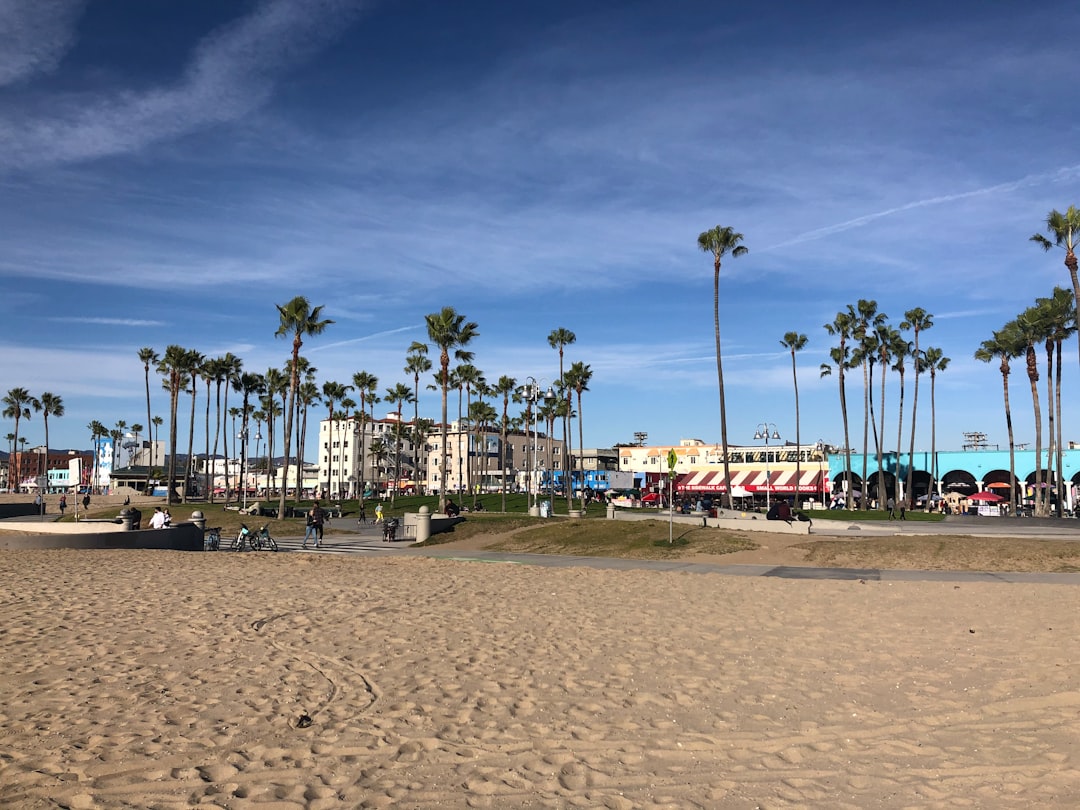 Photo by Sanika Kumar on Unsplash
- Griffith Observatory — free admission, sweeping panoramic views over the entire city basin, and the Hollywood Sign as a backdrop. Go at dusk.
- Venice Beach Boardwalk — street performers, Muscle Beach, the canals nearby, and some of the best people-watching in the US. Entirely free.
- The Getty Center — one of the world's great art museums, with free admission (only parking costs $25). The views over West LA are extraordinary.
- Universal Studios Hollywood — a full day experience with theme park rides and the real working studio backlot tour.
- Santa Monica Pier — sunset at the terminus of Route 66. Free and genuinely beautiful.
- LACMA (LA County Museum of Art) — ~$25 admission; the Urban Light installation of 202 antique street lamps out front is a required photo stop.
- Rodeo Drive — worth walking even if luxury shopping isn't your thing; the architecture and spectacle are their own attraction.
Our complete Los Angeles travel guide covers every neighborhood and attraction in depth.
Budget Breakdown: What You'll Actually Spend Per Day
Neither city is cheap — but knowing where the money actually goes lets you plan realistically.
New York City — Daily Cost Estimate
| Category | Budget | Mid-Range | Splurge |
|---|---|---|---|
| Accommodation | $120–180 (outer boroughs / hostels) | $200–350 (Manhattan) | $400–800+ (luxury Midtown) |
| Food | $30–45 (pizza, delis, markets) | $60–90 (sit-down restaurants) | $150–300+ (fine dining) |
| Transport | $10–15 (subway all day) | $20–30 (subway + occasional Uber) | $50+ (taxis/Uber only) |
| Attractions | $0–20 (parks, free museums) | $50–80 (paid attractions) | $100–200+ (shows + premium) |
| Daily total | ~$160–260 | ~$330–550 | $700+ |
Los Angeles — Daily Cost Estimate
| Category | Budget | Mid-Range | Splurge |
|---|---|---|---|
| Accommodation | $100–160 (Culver City, East LA) | $180–300 (West Hollywood, Santa Monica) | $400–700+ (Beverly Hills, Malibu) |
| Food | $20–35 (tacos, food trucks, markets) | $55–85 (restaurants) | $120–250+ (fine dining) |
| Transport | $60–90 (rental car + gas + parking) | $80–120 (rental + rideshares) | $120–200+ (luxury rental) |
| Attractions | $0–25 (beaches, Griffith Observatory) | $40–80 (paid sites) | $100–200+ (Universal, theme parks) |
| Daily total | ~$180–310 | ~$355–585 | $740+ |
Key insight: NYC's public transit dramatically reduces your daily transport spend. LA's car culture adds a fixed $60–90 baseline cost that you can't avoid. A mid-range week in NYC and a mid-range week in LA come in at broadly similar totals; LA's transport costs largely offset NYC's higher accommodation prices in central Manhattan.
Day Trips: What's Within Reach of Each City
One underrated factor in this decision is the quality of what surrounds each city within a day's reach.
From New York City
- Hudson Valley (1.5–2 hours north) — river towns, Catskill hiking trails, farm-to-table restaurants, and remarkable fall foliage.
- The Hamptons (2 hours east) — the classic Northeastern summer beach experience; best in early June or September to avoid peak crowds.
- Philadelphia (1.5 hours by Amtrak) — genuinely great city and a natural two-destination pairing with NYC.
- Washington DC (3.5 hours by Amtrak) — a logical next stop on any East Coast itinerary; see our DC guide for what to prioritize.
- Niagara Falls (6–7 hours) — better as an overnight, but possible as a long day trip.
From Los Angeles
- Malibu & Pacific Coast Highway (30–45 minutes) — celebrity beach towns, sea caves at Point Dume, and one of the most scenic coastal drives in the world.
- Joshua Tree National Park (2.5 hours east) — the Mojave Desert's otherworldly boulder landscapes; unmissable for photographers and hikers.
- Santa Barbara (1.5 hours north) — nicknamed the "American Riviera," it's genuinely beautiful and far less visited than it deserves.
- San Diego (2 hours south) — world-class zoo, Balboa Park, and excellent beaches.
- Las Vegas (4 hours by car or 1 hour by air) — the classic weekend addition to any LA trip; our Las Vegas guide covers how to make the most of it.
- Big Sur (5–6 hours via Pacific Coast Highway) — one of the most breathtaking coastal drives in North America, best as an overnight.
Verdict on day trips: LA wins on natural landscape diversity — desert, mountains, and ocean all within reach. NYC wins on cultural and urban day-trip options, with the added convenience of Amtrak connections.
The Verdict: Who Should Go Where
After comparing all the key factors, here's the honest breakdown:
Choose New York City if:
- This is your first visit to the United States — NYC is the quintessential American city, and it's simply unmatched as a first impression.
- You want to walk everywhere without planning, renting a car, or spending money on transport.
- Art, theater, architecture, and music are central to your travel identity.
- You're visiting in fall or spring and want spectacular weather without needing a beach.
- You thrive on urban intensity and want to feel the full electric charge of a global metropolis.
Choose Los Angeles if:
- You've already experienced NYC, or you know that dense, high-energy cities drain rather than energize you.
- Sun, beach, and outdoor space are non-negotiables for your happiness on vacation.
- You're drawn to the entertainment industry, film history, and Hollywood culture.
- You're planning to rent a car anyway and want the freedom to explore a vast, diverse region.
- You're happy building your days loosely rather than following a tightly scheduled itinerary.
Visit both if: You have 10 days or more. New York (5 nights) + Los Angeles (5 nights) is one of the most satisfying US itineraries available to a first-time visitor — and direct flights between the two cities depart every hour, with one-way prices often starting as low as $59.
FAQ
Is it better to visit New York or Los Angeles as a first-time US traveler? For most first-time visitors to the US, New York City offers the more efficient and memorable introduction: you can navigate the entire city without a car, cover enormous variety within a small geographic footprint, and experience genuinely global landmarks. Los Angeles rewards return visitors and travelers who specifically want beach culture, outdoor space, or the entertainment industry experience.
Is New York City bigger than Los Angeles? By population, yes — NYC has approximately 8.3 million residents compared to LA's 3.9 million. But by land area, Los Angeles is actually significantly larger: 503 square miles versus New York City's 302 square miles. This is why LA feels so spread out even with fewer people — it has more than 60% more territory to fill.
Is New York or Los Angeles more expensive to visit? New York City ranks as the #1 most expensive city in the United States; Los Angeles ranks #9. However, the picture is more nuanced for visitors: NYC's public transit system dramatically reduces daily spending on getting around compared to LA, where renting a car is effectively mandatory. Overall, a mid-range trip to each city ends up costing roughly similar amounts — typically $330–550/day in NYC versus $355–585/day in LA at mid-range.
What's more popular — New York or Los Angeles? Both consistently rank in the top three most-visited US cities. New York typically draws more international tourists — around 60 million annual visitors pre-2020 — while Los Angeles draws strong domestic numbers and Hollywood-driven international traffic, particularly from Asia and Europe. There is no meaningful difference in global popularity; they are the two undisputed anchors of US tourism.
Can you realistically visit both cities in one trip? Yes, and it's a highly recommended combination. A 10–12 day itinerary of 5 nights in New York followed by 5 nights in Los Angeles (or vice versa) is one of the most popular US trips for international visitors. Fly into one city and out of the other — airlines offer dozens of direct daily flights and pricing is extremely competitive year-round.
Envie de créer ta propre liste de spots ?
Rejoins Spotli.st et partage tes bonnes adresses avec le monde entier.
Créer mon compte gratuit