What to Eat in Chicago: 12 Iconic Dishes Every Visitor Must Try
From deep-dish pizza to jibaritos and Italian beef, discover the 12 iconic dishes every visitor must try in Chicago — with best spots, prices, and insider tips.
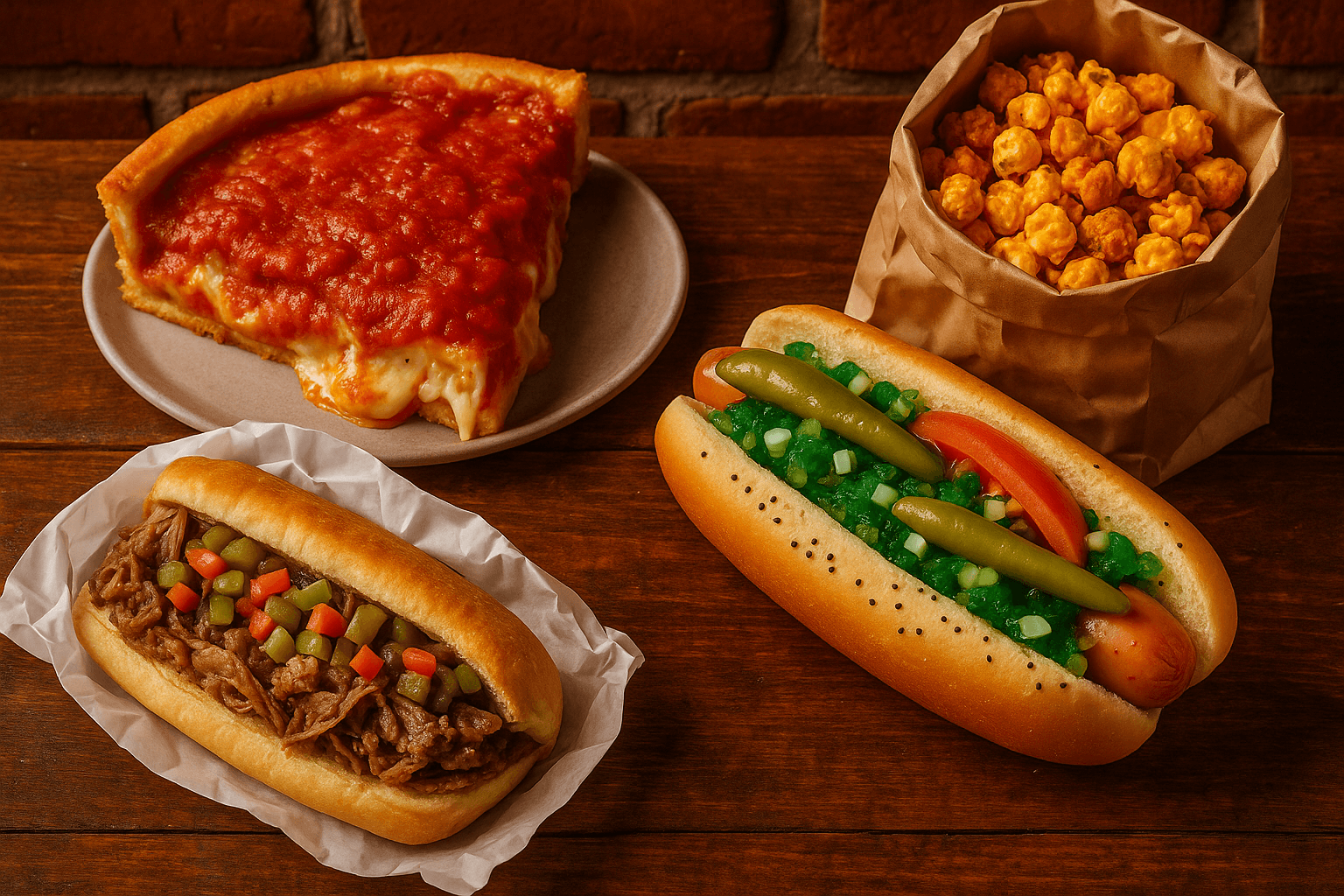
What to Eat in Chicago: 12 Iconic Dishes Every Visitor Must Try

Chicago doesn't ask for your attention when it comes to food — it demands it. The city that gave the world deep-dish pizza, the char dog, and the Italian beef sandwich has been quietly building one of America's most distinct and genuinely exciting culinary identities for over a century. And unlike cities whose food scenes are defined by a single trendy restaurant or a passing food media moment, Chicago's food culture runs deep: it's immigrant-shaped, neighborhood-driven, and passionately argued about at every family table in the city.
Whether you're visiting for a weekend or plotting a longer stay, knowing what to eat in Chicago before you arrive is the difference between an average trip and an exceptional one. This guide covers the 12 dishes that truly matter — classics that have been around for decades and newer icons that have earned their place on the Chicago food bucket list — along with the best places to find them and the insider rules that separate tourists from people who actually know what they're doing.
Chicago's Culinary Soul: More Than Just Pizza
When most people think of Chicago food, deep-dish pizza is the first thing that comes to mind. It's the city's best-known export, the dish that's been debated, mocked, defended, and devoured on television, in travel magazines, and in Reddit arguments for decades. But if deep-dish is the cover, the album is considerably richer.
Chicago's food identity was shaped by successive waves of immigration — Eastern Europeans who brought their sausage traditions, Mexican and Puerto Rican communities that planted roots on the North and West Sides, Italian families who built the beef sandwich and the thin-crust tavern pizza, and a thriving African-American food culture on the South Side that introduced barbecue styles you won't find anywhere else in the Midwest. Today, that layered history is still entirely legible — if you know where to eat.
The result is a city where the question "what to eat in Chicago" doesn't have one answer. It has twelve, at minimum.
The Holy Trinity: Three Dishes That Define Chicago
Some cities have a signature dish. Chicago has three, and to leave town without trying all of them is, frankly, a missed opportunity.
1. Deep-Dish Pizza
Let's address the elephant in the room: deep-dish pizza is not what most Chicagoans eat on a regular Tuesday night. They eat thin-crust tavern-style pizza — square-cut, cracker-thin, and absolutely delicious (more on that shortly). But deep-dish is Chicago's gift to the world, and it deserves to be experienced at least once, ideally with a group and absolutely with zero time pressure, because a proper deep-dish takes 30 to 45 minutes to bake.
What makes it Chicago's own is the architecture: the crust lines a deep, well-oiled pan — more like a pie dish than a pizza tray — thick enough to hold layers of mozzarella, your toppings of choice, and a chunky, herb-forward tomato sauce applied on top, reversed from virtually every other pizza tradition on earth. The result is closer to a savory pie than a flatbread: rich, deeply satisfying, and completely unlike anything you'll eat anywhere else.
Best spots: Lou Malnati's (the gold standard, beloved for its butter crust and sausage patty), Giordano's (stuffed deep-dish, double-crusted and even denser), and Pequod's (caramelized-edge crust that changes everything you thought you knew about pizza).
Practical note: Arrive hungry, and consider calling ahead — most spots take reservations or pre-orders to cut down on wait times.
Budget: $18–$28 for a personal deep-dish; $28–$45 for a large to share.
2. Chicago-Style Hot Dog
Never — and this point cannot be overstated — put ketchup on a Chicago dog. The city considers it an act of culinary vandalism, and the signage at most hot dog stands will remind you of this fact, loudly.
A proper Chicago-style hot dog starts with an all-beef frankfurter steamed in a poppy seed bun, then loaded in a precise order: yellow mustard, chopped white onion, sweet bright-green relish, tomato wedges, a dill pickle spear, sport peppers, and a celery salt finish. The seven toppings that constitute a "garden on a bun" are non-negotiable. It sounds like too many flavors at once — it isn't. The combination of acid, heat, freshness, and brine is a kind of genius that only makes sense once you've eaten it standing up at a street stand.
Best spots: Portillo's (iconic local chain, multiple locations downtown), Gene & Jude's (no-frills perfection in River Grove), and Superdawg Drive-In (a Chicago institution since 1948, complete with its rotating hot dog mascots on the roof).
Budget: $4–$6 per hot dog at a stand.
3. Italian Beef Sandwich
If deep-dish is Chicago's most famous food, the Italian beef is arguably its most loved. Thinly shaved roast beef, slow-cooked in a seasoned broth — the "gravy" — with garlic and Italian herbs, then piled high on a long Italian roll. The crucial decision that sorts locals from visitors: wet, dry, or dipped. Wet means the bread gets a splash of the braising juices. Dipped means the entire sandwich is plunged into the broth until the roll is fully saturated. Both are correct. Neither is clean.
Then you choose your pepper: sweet (giardiniera, pickled vegetables) or hot (spicy giardiniera). Most regulars get both.
The sandwich has working-class roots — it was designed to stretch small cuts of beef further at Italian-American wedding receptions in the early 20th century — and it still tastes like something made with ingenuity and care rather than with a food trend in mind.
Best spots: Al's Beef (the original, on West Taylor Street), Portillo's, and Johnnie's Beef in Elmwood Park if you're willing to make the drive.
Budget: $8–$12 per sandwich.
 Photo by Daniel Romero on Unsplash
From the Street Corner to the Corner Deli: Classic Chicago Bites
These three dishes don't get the international press coverage they deserve, but any Chicagoan will tell you they're essential parts of the famous Chicago food experience.
4. Garrett Popcorn — The Chicago Mix
Ask any Chicago native what they'd bring back to a friend after a business trip, and there's a reasonable chance they'd say a bag of Garrett Popcorn. Specifically, the Chicago Mix: a blend of their signature caramel corn and aged cheddar cheese corn. On paper, it sounds like a questionable idea. In practice, it's one of the city's great accidental flavor discoveries — the sweet-salty-savory contrast is deeply addictive, and the aroma alone has been known to stop people mid-sidewalk outside the downtown stores.
Garrett has been popping its corn in Chicago since 1949, and while you can now find it at airports and gift shops across the country, the flagship store on Michigan Avenue is the real experience, complete with a line that stretches around the block during tourist season.
Budget: A medium bag runs $10–$16. Worth every cent as a snack or a souvenir.
5. Maxwell Street Polish Sausage
Before it was largely demolished to make way for university development, Maxwell Street was one of Chicago's most vibrant immigrant markets — a place where Eastern European, Jewish, and Mexican vendors built a street food culture that the city still mourns and celebrates in equal measure. The Maxwell Street Polish sausage is its greatest surviving legacy.
It's a grilled or griddled Polish sausage (kielbasa), charred on a flat-top until the skin blisters, then served on a bun with grilled onions and yellow mustard. That's it. No complicated assembly, no unusual toppings — just a powerfully flavored sausage cooked with care on a griddle that has been seasoning for years. The char is the point.
Best spots: Jim's Original (the longest-running Maxwell Street stand, open 24 hours) and Express Grill right next door.
Budget: $5–$8.
6. Chicago-Style Gyros
Chicago has one of the largest Greek-American communities in the United States, and the city's gyros tradition goes back decades. What makes Chicago gyros distinctive is the use of pre-formed, spiced gyros loaf — sold by the same few distributors to street stands across the city — meaning there's a consistent, specific flavor profile that's entirely recognizable from neighborhood to neighborhood. Served with tomato, onions, and tzatziki in a warm pita, it's exactly the kind of late-night or lunchtime food that a city this size demands.
Every neighborhood seems to have a gyros stand. Trust the busy ones with visible meat rotation.
Budget: $8–$12.
Chicago's Melting Pot: Three Neighborhood Dishes You Can't Miss
These are the dishes where Chicago's immigrant communities left their most distinctive mark on the city's food identity — and the ones most visitors miss entirely by sticking to the tourist circuit.
7. Jibarito
The jibarito was invented in Chicago, not Puerto Rico. In 1996, Juan Figueroa at Borinquen Restaurant in Humboldt Park — Chicago's Puerto Rican cultural heart — replaced bread with flattened, fried green plantains (tostones) and built a sandwich around them. The result is one of the most unexpectedly satisfying things you can eat in the city: the plantains have a starchy, slightly sweet, deeply savory quality that functions as bread but tastes like absolutely nothing else, typically stuffed with seasoned steak or chicken, lettuce, tomato, onion, mayonnaise, garlic, and cheese.
This is a Chicago original in the strictest sense — born here, perfected here, and still best eaten in Humboldt Park. Borinquen Restaurant still serves the original version.
Budget: $12–$16.
8. Chicago Tamales
These are not Mexican tamales. Chicago tamales — sometimes called "hot tamales" or "steamed tamales" — are a South Side institution with roots in the African-American food culture that developed when Southern Black migrants brought their food traditions northward during the Great Migration of the early 20th century. They're smaller, denser, and spicier than their Mexican counterparts, wrapped in corn husks and sold from street stands, hot dog carts, and neighborhood spots across the South Side.
Try them at least once, because they exist almost exclusively in Chicago and a handful of Mississippi Delta towns — you won't find this version anywhere else in the world.
9. Chicago Tacos and Mexican Street Food
Chicago's Mexican-American community — centered in neighborhoods like Pilsen, Little Village, and Logan Square — has built one of the country's most respected Mexican food scenes outside of California and Texas. Pilsen in particular is considered essential for anyone building a serious Chicago food itinerary: birria tacos, al pastor carved from a vertical spit, handmade tortillas, and aguas frescas at every corner. The quality-to-price ratio in these neighborhoods puts the tourist-facing restaurant scene to shame.
Practical tip: Take the Pink Line to 18th Street and walk. You'll eat extraordinarily well for under $15 total.
 Photo by Mariah Hewines on Unsplash
Beyond the Classics: Modern Icons and Sweet Finishes
10. Rainbow Cone
Since 1926, the Original Rainbow Cone on 92nd Street on the South Side has been stacking five flavors in a specific, non-negotiable order: chocolate, strawberry, Palmer House vanilla (with cherries and walnuts), pistachio, and orange sherbet. It's a Chicago summer institution — the kind of thing that produces genuine nostalgia in anyone who grew up here, and the kind of thing that completely surprises visitors who've never seen a five-scoop cone arranged like a rainbow. A second location in Millennium Park has made it far more accessible for tourists.
Budget: $6–$9. Seasonal (typically April through October).
11. Chicken Vesuvio
Less famous outside the city, Chicken Vesuvio is a deeply Chicagoan dish born from the Italian-American restaurant tradition. Bone-in chicken pieces roasted with potato wedges, garlic, white wine, olive oil, oregano, and peas until the skin is crackling and the potatoes are soaked through with the pan juices. It's hearty, simple, and intensely satisfying — the kind of dish that appears on the menus of old-school Italian-American restaurants across the city and never goes out of style. If you're looking for what authentic Chicago food tastes like in a sit-down setting, this is it.
Best spots: Rosebud on Taylor Street, Carmine's in the Gold Coast.
Budget: $24–$32 as a main course.
12. The Au Cheval Burger
No list of what to eat in Chicago today is complete without acknowledging Au Cheval, the West Loop diner that has become one of the most consistently praised burgers in the United States. A double smash burger with a rich, glossy sauce, American cheese, pickles, and an optional fried egg — simple on paper, extraordinary in execution. The wait can stretch to 45 minutes or more, and it remains worth it.
Au Cheval represents the newer layer of Chicago's food identity: a city that has always cooked with confidence finally receiving the national recognition its fine-dining and upscale-casual scene has long deserved.
Budget: $18–$24 for the burger.
Where to Eat What: Chicago's Best Food Neighborhoods
Knowing the right neighborhood makes a significant difference to the quality and authenticity of what you eat:
- West Taylor Street (University Village): Italian-American heritage — Italian beef, stuffed pizzas, old-school delis, Chicken Vesuvio
- Pilsen & Little Village: The best Mexican food in the Midwest — tacos, tortas, birria, handmade tortillas, aguas frescas
- Humboldt Park: Puerto Rican food, jibaritos, pernil, arroz con pollo
- Wicker Park / West Loop: Trendy restaurants, top-rated brunch spots; home to Au Cheval
- South Side: Rainbow Cone, Chicago tamales, a deep BBQ tradition featuring rib tips and hot links
- The Loop / Magnificent Mile: Portillo's, Garrett Popcorn, and the major deep-dish chains for tourist-friendly access
If you're building a full Chicago visit around the food, our complete guide to things to do in Chicago covers neighborhoods, attractions, and itinerary ideas beyond eating. Chicago is also one of the standout stops for anyone planning a US road trip through the Midwest, and the city earns a well-deserved spot on our list of the best US cities to visit in fall — cooler temperatures, fewer crowds, and the city's food scene in full swing.
Frequently Asked Questions About Chicago Food
What food is Chicago famous for? Chicago is most famous for its deep-dish pizza, Chicago-style hot dog, and Italian beef sandwich — known informally as the city's culinary "holy trinity." Beyond these three, the city is celebrated for Garrett Popcorn's Chicago Mix, jibarito sandwiches, Maxwell Street Polish sausage, and one of the best Mexican food scenes in the Midwest.
What do locals eat in Chicago? Day-to-day, locals are more likely to eat tavern-style thin-crust pizza (square-cut, cracker-thin) than deep-dish. They eat Italian beef sandwiches dipped in gravy, Chicago dogs at sidewalk stands, and the diverse street food of their own neighborhoods — from jibaritos in Humboldt Park to al pastor tacos in Pilsen. Chicago BBQ (rib tips, hot links) is also a genuine local staple, particularly on the South Side.
What is Chicago's signature dish? If forced to pick just one, most food writers and longtime residents would say the Italian beef sandwich. It's uniquely Chicagoan in origin, universally beloved across every neighborhood, and rarely replicated faithfully anywhere else in the country. The Chicago-style hot dog is a close second, primarily for the near-religious rules surrounding its preparation.
What is authentic Chicago food? Authentic Chicago food is neighborhood-specific. It's not only the tourist-facing deep-dish restaurants — it's the Italian beef served wet at a West Side stand, tamales from a South Side cart, a jibarito in Humboldt Park, and al pastor tacos in Pilsen. The most authentic way to eat in Chicago is to leave downtown and let the neighborhoods cook for you.
How much should I budget for food in Chicago? You can eat remarkably well on a modest budget. A Chicago hot dog runs $4–$6. An Italian beef sandwich costs $8–$12. A slice at a neighborhood pizza spot is $4–$6. Deep-dish at a sit-down restaurant will run $20–$30 for a personal pie. A full day covering the city's iconic foods — hot dog, Italian beef, Rainbow Cone, and Garrett Popcorn — should cost well under $45.
Chicago rewards the curious and punishes the timid. Order the beef dipped. Ask for both sweet and hot peppers. Try the jibarito. Skip the ketchup. The city has been cooking at this level for over a century — all you have to do is show up hungry.
Want to build your own spot list?
Join Spotli.st and share your favorite places with the world.
Create my free account