How to Rent a Campervan in the USA: Costs, Insurance & First-Timer Mistakes
Campervan rental in the USA costs $50–$250 a day. Learn real prices, insurance basics, hidden fees, and the first-timer mistakes to avoid.

Renting a campervan in the USA costs roughly $50 to $250 per day for the vehicle itself — plus a refundable security deposit (usually $500 to $1,000), insurance, and a stack of smaller fees that first-timers almost never budget for. If you're planning a multi-stop trip and comparing a van against hotel rooms and restaurant meals, the van usually wins once you're cooking your own food and waking up already parked at the trailhead.
Here's the thing most "campervan rental" guides skip: the sticker price is never the real price. Below, we break down exactly what a campervan rental in the USA costs, the insurance you genuinely need, where you're legally allowed to sleep, and the seven mistakes that turn a dream road trip into an expensive lesson.

Before you commit to a vehicle, it helps to have a rough route in mind. Our complete guide to planning a US road trip walks through pacing, budgets, and how many miles you'll actually drive.
How Much Does It Cost to Rent a Campervan in the USA?
Short answer: expect $50 to $250 per day before insurance and fees, with luxury Sprinters and small motorhomes pushing past $300 in peak season. The exact number depends on three things: the vehicle class, the season, and how the company charges for mileage.
Price tiers at a glance
| Vehicle type | Typical daily rate | Best for | Usually included |
|---|---|---|---|
| Budget campervan (minivan camper, converted van, VW Westfalia) | $50–$120 | Solo travelers, couples, short trips | Basic bedding, simple camp kitchen |
| Mid-range campervan (Ford Transit, Ram ProMaster, Jucy-style) | $120–$200 | Couples, small families | Kitchen kit, bedding, 100+ free miles/day |
| Premium / Class B or small Class C RV (Sprinter, motorhome) | $200–$350+ | Families, long trips, comfort | Full kitchen, bathroom, more living space |
These are typical starting rates; summer weekends and holidays can add 30–50% on top, especially in high-demand regions around the national parks.
What the base rate actually includes — and what it doesn't
Most US campervan rental companies quote a base rate that includes a set number of free miles per day — usually 100 to 150 miles — plus standard liability insurance. After that, you pay per extra mile, commonly $0.25 to $0.40 per mile, which adds up fast on a 2,000-mile loop.
Beyond the base rate, budget separately for:
- Security deposit: typically $500 to $1,000, held on a credit card and released after return.
- Insurance upgrades: roughly $15 to $40 per day depending on the coverage level you choose.
- Camping: $0 to $60+ per night depending on whether you're dispersed camping or in a private RV park.
- Fuel: vans get 10–20 mpg, so a 2,000-mile trip can cost $300–$600+ in gas.
A realistic, all-in budget for a week in a mid-range campervan usually lands between $1,500 and $2,500 once you add insurance, campgrounds, and fuel. That's the number to plan against — not the tempting "$99/day" in the ad.
Is renting a campervan actually cheaper than hotels?
Sometimes — but not always. Do the math honestly: a $150/night hotel plus $80/day in restaurant meals is $230/day before activities. A mid-range campervan at $160/day plus $40 for a campsite and $30 of self-cooked groceries comes in around $230/day too, but you're also paying for your transportation. On trips where you'd otherwise rent a car and a hotel room, the van almost always wins; on a single-city stay, it usually doesn't.
The Hidden Fees First-Timers Never See Coming
The daily rate is only part of the bill. Here are the charges that quietly inflate a campervan rental in the USA:
- Mileage overages — the single biggest surprise. If your route is longer than the included allowance, the overage charge can cost more than the rental itself. On an ambitious cross-country loop, this is the line item to check first.
- Generator use — many companies meter generator hours at $3 to $5 per hour or charge a flat daily fee. If you're not plugged into a campsite, this can quietly run up.
- Cleaning fee — returning a van messy can trigger a $50 to $150 charge; some operators also charge an up-front "prep fee" on top of the rate.
- Kitchen and bedding kits — budget operators often sell these as add-ons ($50–$150 per trip) rather than including them, which matters if you're flying in with no gear.
- One-way / drop-off fee — picking up in one city and dropping in another frequently costs $300 to $1,000+, if the company allows it at all. Sometimes it's cheaper to loop back.
- Extra driver and young-driver fees — a second driver is sometimes free, sometimes $10–$15/day; drivers under 25 usually pay a daily surcharge.
- Tolls — companies often charge a flat transponder/convenience fee or expect you to handle tolls yourself, so factor in toll-heavy routes.
Read the rental agreement's fee schedule line by line before you book — this is where the "cheap" rental proves not to be cheap.
Campervan vs. RV: Which Should You Rent?
First-timers often say "campervan" and mean "any RV." They're not the same thing, and the choice changes your whole trip.
- Campervan (Class B / converted van): fits in a normal parking spot, easier to drive and park, more fuel-efficient, sleeps 2–4. Best for couples and first-timers.
- Class C RV: the boxy "over-cab" motorhome with a real bathroom and more sleeping room. Best for families, but harder to maneuver, park, and fuel.
- Class A RV: a bus-sized coach. Overkill for a first rental.
If you've never driven anything bigger than an SUV, start with a campervan. You'll spend less time worrying about clearance and more time enjoying the drive — which matters a lot if you're stringing together something like the best scenic drives in America.
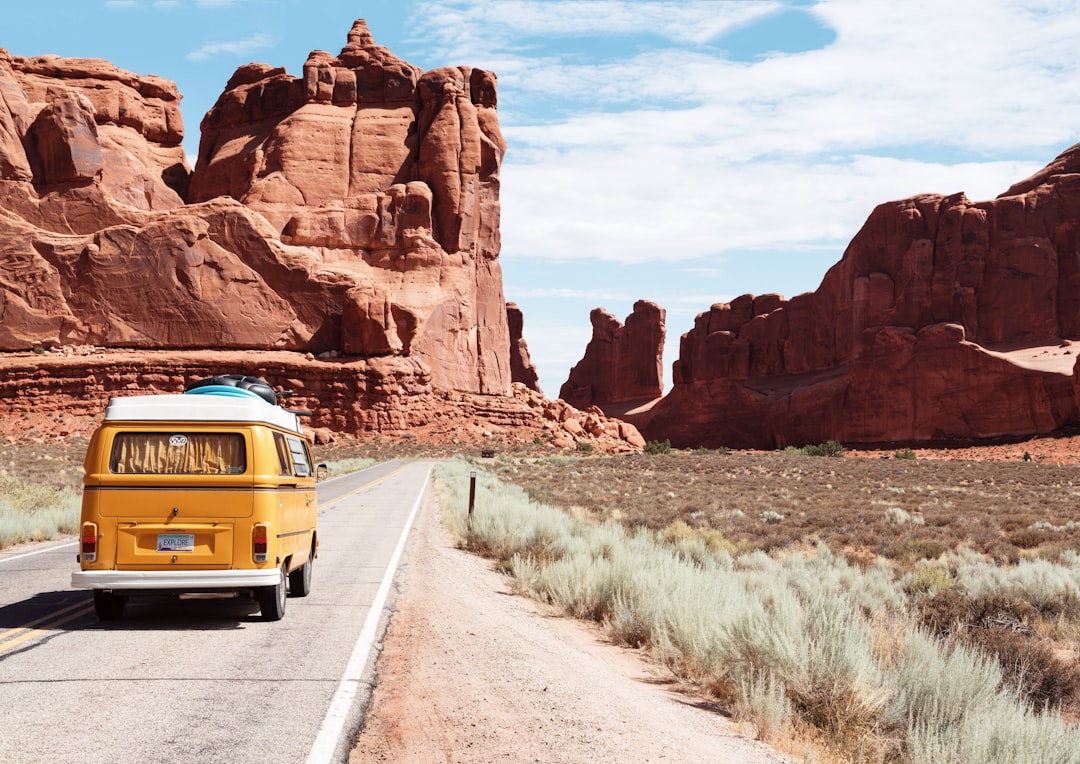
Photo by Dino Reichmuth on Unsplash
Campervan Rental Insurance: What You Actually Need
You are not automatically covered when you rent a campervan in the USA. At minimum you need liability coverage plus damage protection for the van itself. Here's the plain-English breakdown:
- Liability insurance: covers damage you cause to other people and property. Many companies include a basic state-minimum policy; you can upgrade to supplemental liability for higher limits.
- Collision Damage Waiver (CDW / "damage waiver"): not technically insurance — it waives the company's right to charge you for damage to the van. This is what most people mean when they ask about "campervan insurance." Expect $15 to $40 per day.
- Your own auto insurance: may extend to a rental car, but often excludes motorhomes and campervans over a certain weight or length. Call your insurer and ask specifically about RVs before you decline anything.
- Credit card coverage: most premium cards cover rental cars, but the fine print frequently excludes campervans, motorhomes, and trucks. Don't assume — check the card's terms.
- Contents / personal effects: the gear inside the van (laptops, cameras, bikes) usually isn't covered by the rental company. Renters or travel insurance is your best bet.
- Roadside assistance: worth adding if it's not included, because a tow for a 9,000-pound van can run hundreds of dollars.
A good rule for first-timers: buy the company's full damage waiver and skip the gamble of relying on a credit card that may not apply. If you're renting through a peer-to-peer marketplace, insurance is usually offered as a bundle at checkout — opt into the top-tier damage protection rather than the minimum.
How to Pick the Right Campervan Rental Company
There are three broad kinds of campervan rental in the USA, and each fits a different traveler:
- Peer-to-peer marketplaces (Outdoorsy, RVshare, RVezy): the widest variety and often better rates, with insurance offered at checkout. Quality varies by owner, so read reviews and look for verified listings.
- National RV chains (Cruise America, El Monte RV): standardized and easy to book, but fleets skew toward older Class C motorhomes rather than nimble vans.
- Campervan specialists (Escape Campervans, Travellers Autobarn, Indie Campers, Roadsurfer, Jucy): younger fleets, unlimited or generous mileage, and amenities bundled — usually the best fit for a first-time campervan trip.
Compare at least three companies on five things: included mileage, age surcharges, insurance bundling, one-way availability, and cancellation policy. Also confirm the amenities you actually need — kitchen kit, bedding, awning, and a fridge versus just a cooler — because "included" means different things at different price points.
And book early. Summer and national-park-adjacent rentals sell out months ahead, and last-minute inventory is both scarce and expensive.
7 First-Timer Mistakes to Avoid When Renting a Campervan
- Budgeting only the daily rate. Always add mileage, insurance, campgrounds, and fuel. An honest all-in number beats a nasty surprise on the final bill.
- Assuming your credit card covers the van. It usually doesn't for motorhomes and campervans. Verify before you decline the company's damage waiver, because one scrape on a rental van can cost thousands.
- Forgetting the security deposit. The company places a hold (often $500–$1,000) on your card at pickup, so you need available credit in addition to the rental cost — a common gotcha at the counter.
- Waiting to book campgrounds. National park campsites fill months in advance. Lock in your sleeping spots, especially in summer. Our guide to US national parks on a budget covers passes and fee-free days that cut the nightly bill.
- Renting the wrong size. A van that's too small makes everyone miserable; one that's too big is stressful to drive and park. Match sleeping and seating to your actual group, not your fantasy group.
- Ignoring generator and kit fees. Budget operators earn on add-ons. Know whether kitchen, bedding, and generator use are included before you book, not when you're standing at the counter.
- Skipping the pickup inspection. Photograph and video every scratch, dent, and interior mark before you drive off, and note them on the form. This is your only real protection against being charged for pre-existing damage.
Where Can You Sleep in an RV or Campervan in the USA?
No, you can't sleep just anywhere in a campervan in the USA. Overnight parking is only allowed where it's explicitly permitted. Here are your options, from free to full-service:
- Dispersed camping on Bureau of Land Management (BLM) and National Forest land — free, no hookups, usually a 14-day stay limit. This is the backbone of budget van life in the West.
- Public campgrounds in national parks, national forests, and state parks — typically $15 to $40 per night, with bathrooms and sometimes showers.
- Private RV parks and campgrounds — $40 to $70+ per night, with full hookups, showers, and laundry.
- Retail parking lots — many Walmarts, Cracker Barrels, and some truck stops allow overnight parking, but policies vary by store and city. Always ask the manager first; never assume.
- Membership and booking networks — Harvest Hosts (overnight stays at wineries, farms, and attractions), Boondockers Welcome, and Hipcamp connect you with private land.
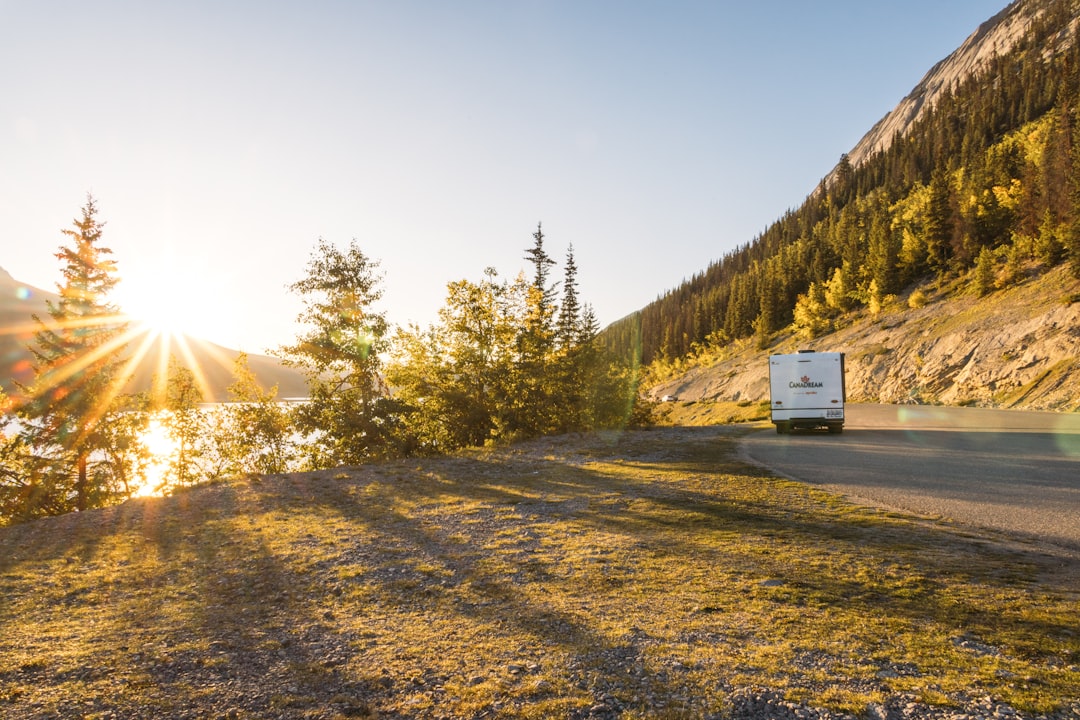
Photo by Rafael Peier on Unsplash
If your route is heavy on the big parks, reserve your campsites as early as the booking window opens — nothing derails a campervan trip faster than "no vacancy" at the park gate.
How to Book and Pick Up Your Campervan
Follow this order and you'll avoid most headaches:
- Lock in your route and approximate mileage (our US road trip planning guide helps here).
- Compare three companies on total cost, not base rate.
- Confirm the included mileage covers your route; if not, compare a one-way option or a different pickup point.
- Book campgrounds for any dates inside popular parks.
- At pickup, photograph everything, confirm the fee schedule, and ask where the spare tire, jack, and power hookups live.
- Do a 20-minute "shakeout" drive near the depot to get comfortable with the size before hitting the highway.
FAQ
How much does it cost to rent a camper van in the USA?
Most campervan rentals in the USA run $50 to $250 per day for the base rate, with luxury Sprinters and small motorhomes higher. Add insurance, mileage, campgrounds, and fuel, and a typical week lands between $1,500 and $2,500 all-in.
How much does a campervan rental cost per day?
Expect roughly $50–$120/day for a budget campervan, $120–$200 for a mid-range conversion van, and $200–$350+ for a premium Class B or small Class C RV, before insurance and fees.
Can you sleep anywhere in an RV in the USA?
No. You can sleep in designated campgrounds, on public land that allows dispersed camping, and in some retail lots that permit overnight parking — but overnight parking is generally prohibited on city streets, at most rest areas, and on private property without permission.
Do I need a special license to drive a campervan in the USA?
For most rental campervans and small motorhomes, a standard US driver's license is enough. Standard rentals are designed for ordinary licenses, though very large RVs can approach thresholds that require more in some states.
What is the minimum age to rent a campervan in the USA?
Most companies require drivers to be at least 21, and many charge a daily "young driver" fee for anyone under 25.
Ready to Hit the Road?
Renting a campervan in the USA is one of the best ways to see the country — one vehicle, one bed, zero hotel check-ins — but only if you go in with your eyes open on cost and coverage. Nail the mileage math, buy the damage waiver, and book your campsites early, and the "hidden fees" horror stories won't be yours.
If a campervan turns out to be more adventure than you need, luxury glamping spots give you the outdoors without the driving. But if you're ready to roll, the best national parks in the USA are waiting.
Want to build your own spot list?
Join Spotli.st and share your favorite places with the world.
Create my free account