American BBQ Styles Explained: Texas, Kansas City, Memphis & the Carolinas
Texas brisket, KC burnt ends, Memphis ribs and Carolina whole hog — the 4 main American BBQ styles, their sauces, woods and signature dishes, explained.
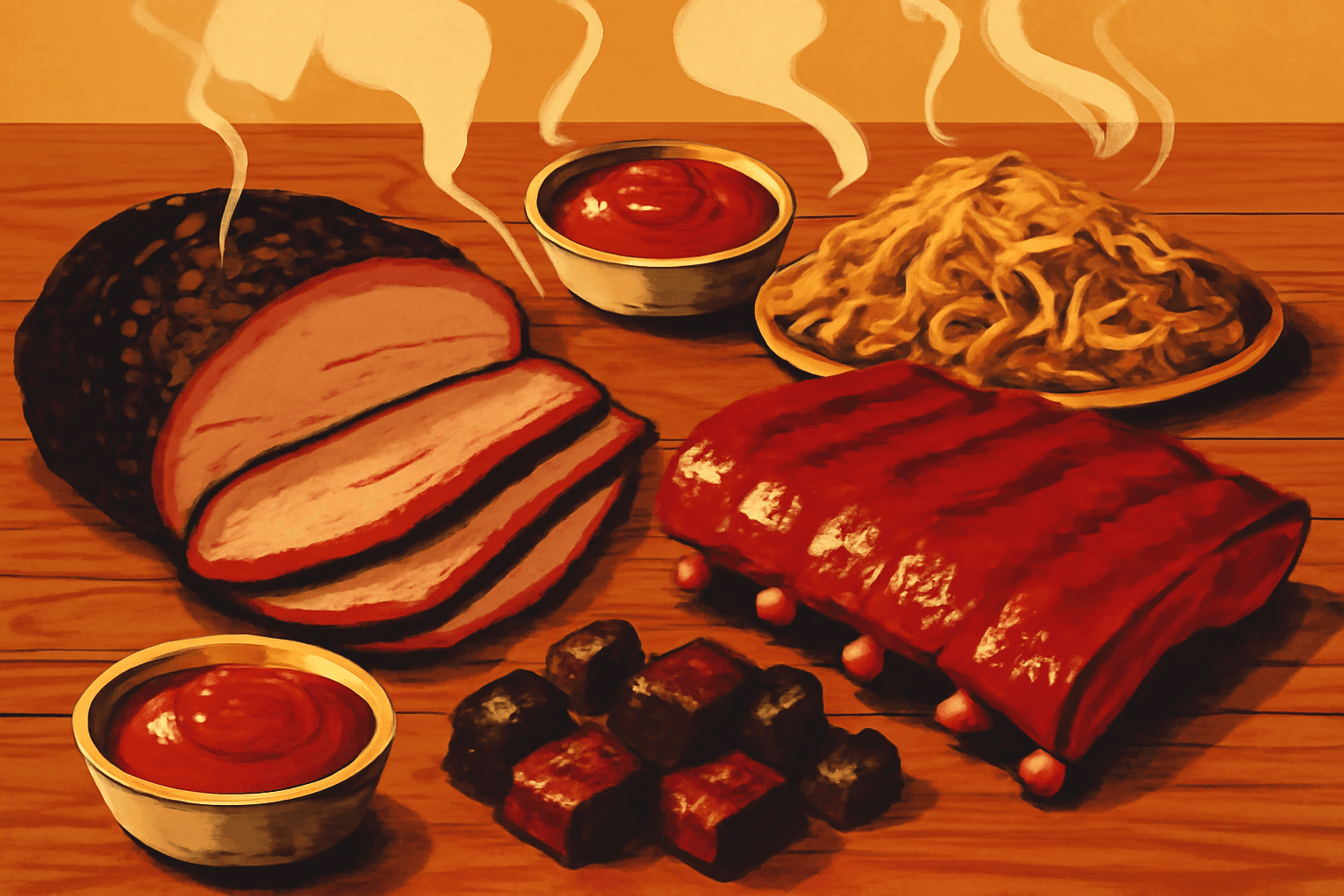
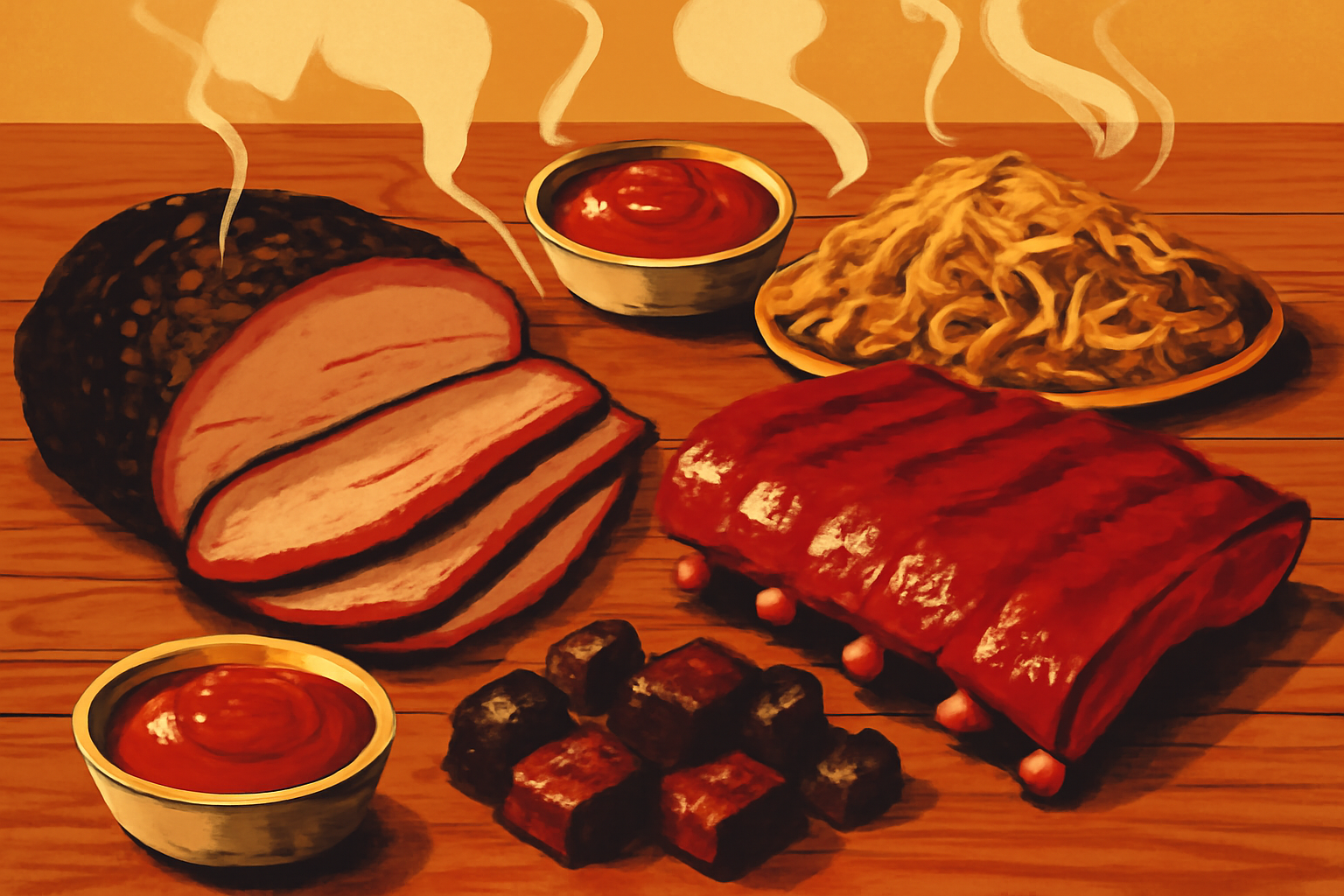
There is no single "American barbecue." There are at least four great ones — and a whole supporting cast behind them. Ask a pitmaster in Lockhart, Texas what barbecue means and they'll hand you a slice of salt-and-pepper beef brisket. Ask in Memphis and you'll get a rack of paprika-rubbed pork ribs. Ask in eastern North Carolina and the answer is a pile of chopped whole hog drenched in vinegar. Same word, three different religions.
This guide breaks down the four pillars of American BBQ styles — Texas, Kansas City, Memphis, and the Carolinas — plus the regional variations worth knowing, the cuts of meat behind them, and how to order each one like a local. If you only remember four names, remember these: Texas is beef, Kansas City is sauce, Memphis is pork with a dry rub, and the Carolinas are pork with vinegar (or mustard).
What Actually Defines a Barbecue Style
First, a definition that saves a lot of arguments. In the United States, barbecue means low-and-slow cooking with smoke and indirect heat — think 200–275°F over several hours — not burgers seared over a hot flame. That fast, direct-heat method is grilling. Barbecue is a technique for turning tough, fatty, cheap cuts (brisket, pork shoulder, ribs) into something you can pull apart with a fork.
Every regional style is really a combination of four variables:
- The meat — beef in Texas, pork across the Southeast, and a little of everything in Kansas City.
- The wood — post oak, hickory, mesquite, pecan, or fruit woods, each of which changes the smoke flavor.
- The seasoning — from Texas's minimalist salt-and-pepper to Memphis's paprika-heavy dry rub.
- The sauce — tomato-and-molasses in Kansas City, vinegar-and-pepper in eastern Carolina, mustard in South Carolina, or none at all in Central Texas.
Change any one of those and you get a different tradition. That's why "the four types of BBQ" is the wrong framing to fear — the four pillars below are just the most famous stops on a much longer map.
The 4 Big Styles at a Glance
| Style | Star meat | Signature wood | Sauce | Signature dish |
|---|---|---|---|---|
| Texas (Central) | Beef brisket | Post oak | None, or on the side | Sliced brisket on butcher paper |
| Kansas City | A little of everything | Hickory | Thick, sweet tomato-molasses | Burnt ends |
| Memphis | Pork (ribs & shoulder) | Hickory | Dry rub, or thin tomato-vinegar | Dry or "wet" ribs |
| Carolina | Pork (whole hog or shoulder) | Oak/hickory | Vinegar-pepper, or mustard | Chopped whole-hog sandwich |
Texas Barbecue: Beef, Smoke, and Salt-and-Pepper Minimalism
Texas is the exception to the pork-first rule of the American South. Here, beef — specifically brisket — is the whole point. A proper Texas brisket is smoked 12 to 18 hours over post oak until the outside forms a jet-black bark and the inside carries a pink smoke ring. The seasoning is almost insultingly simple: coarse salt and cracked black pepper, maybe a little garlic powder. That's it. The pitmaster's job is to make the meat taste like beef and smoke, not like a bottle of sauce.
There are two broad Texas schools worth knowing:
- Central Texas — the "meat market" style born in the German and Czech butcher shops of towns like Lockhart and Taylor. Brisket, beef ribs, and sausage are sold by the pound, sliced to order, and served on a sheet of butcher paper with white bread, pickles, and raw onion. Sauce, if there is any, stays on the side.
- East Texas — closer to Southern barbecue, with chopped beef and pork, and a sweeter, thinner tomato sauce that's often served on the meat.
The Central Texas rule of thumb: if the brisket needs sauce, it wasn't smoked right. If you want to taste this style at the source, the epicenter is Austin, where a handful of legendary joints still run out of meat by early afternoon — our guide to where to eat in Austin covers the BBQ heavyweights alongside the Tex-Mex and food trucks.
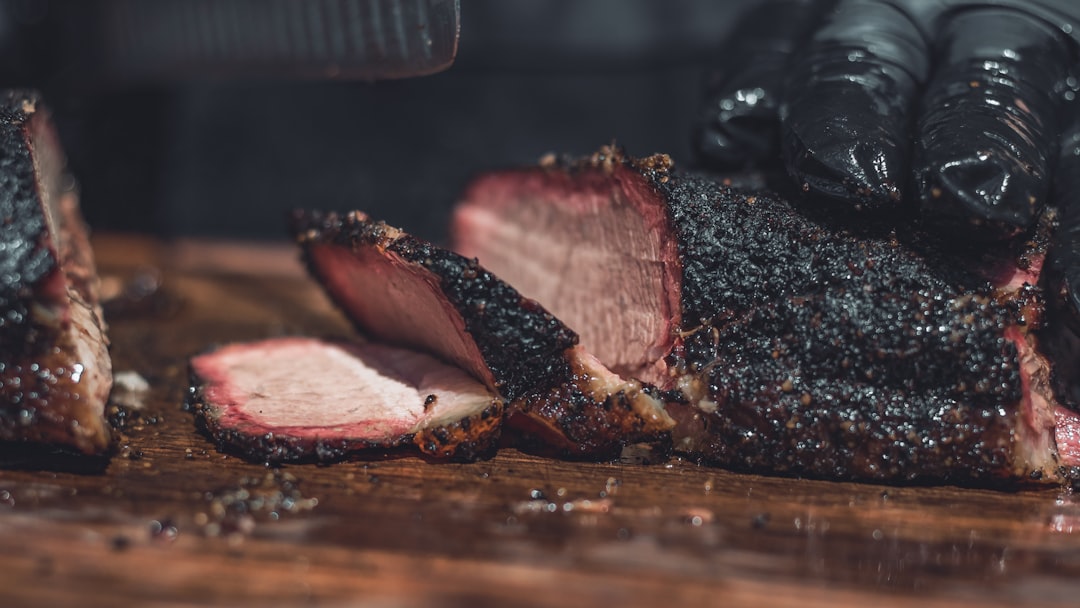
Photo by Luis Santoyo on Unsplash
Kansas City Barbecue: Sweet, Smoky, and Everything on the Menu
If Texas is a purist's barbecue, Kansas City is the pluralist's. KC's tradition — rooted in the early-1900s pit of a cook named Henry Perry — is famous for doing everything: pork ribs, brisket, chicken, turkey, sausage, and its single most beloved invention, burnt ends.
Burnt ends are the charred, caramelized corners of the brisket's fatty "point" end, chopped into cubes, tossed back in sauce, and smoked again until they're basically meat candy. They became so popular that Kansas City now serves them as a standalone dish.
The other half of KC's identity is sauce: thick, sweet, and tangy, built on tomato and sweetened with molasses or brown sugar. It's the style most people picture when they think of "barbecue sauce," and it's applied liberally — brushed on while the meat finishes and poured on again at the table. Smoke comes from hickory, and rubs are richer and sweeter than Texas's minimalist approach. Kansas City is the crowd-pleaser of the four: the style most likely to have something for everyone at the table.
Memphis Barbecue: Dry Rubs, Wet Ribs, and a Whole Lot of Pork
Memphis is the pork capital of the mid-South. Its two signatures are pork ribs and pulled pork shoulder, smoked over hickory and seasoned with a heavy dry rub built on paprika, garlic, and cayenne. What makes Memphis genuinely distinctive is the dry-or-wet choice:
- Dry ribs are seasoned with the rub and smoked without sauce, so the spice crust stays crisp on the surface.
- Wet ribs are basted with a thinner, tangier sauce — still tomato-based, but with vinegar and more restraint than Kansas City's sweet glaze.
Ask for "dry" at a Memphis joint and you'll often get the sauce on the side, letting you dip each rib yourself. The city's other claim to fame is barbecue spaghetti — pulled pork, sauce, and spaghetti tangled together — plus the annual World Championship Barbecue Cooking Contest held each May as part of Memphis in May. Memphis is the style to reach for when you want pork with texture and spice rather than sweetness.
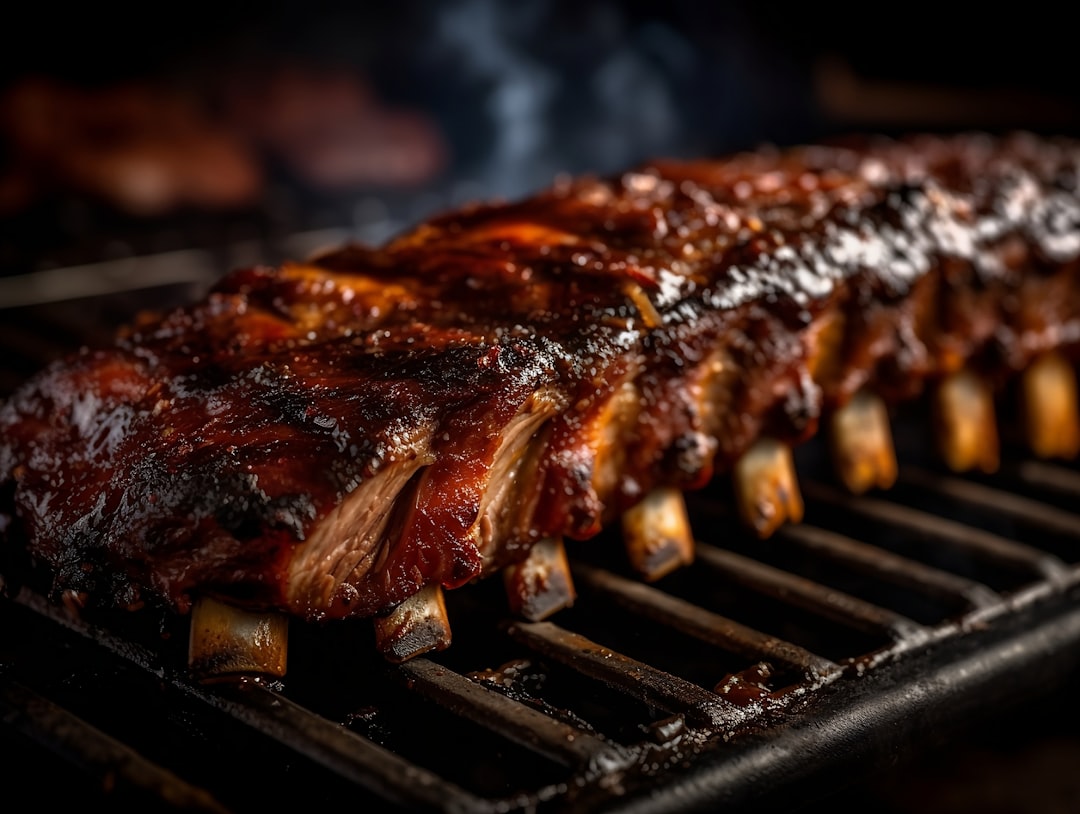
Photo by Brian Wegman on Unsplash
The Carolinas: Whole Hog, Vinegar, and the Mustard Line
Carolina barbecue is the oldest tradition in the country — and the most confusing to outsiders, because it's really three sauces arguing over one animal: the pig. Here's the short version:
- Eastern North Carolina — the whole hog, cooked over hardwood coals, then chopped (skin and all) and dressed with a sharp, thin sauce of vinegar and crushed red pepper. No tomato. Served on a soft bun, traditionally topped with creamy coleslaw.
- Lexington / Western (Piedmont) North Carolina — pork shoulder only, no whole hog, with a sauce that adds a touch of ketchup to the vinegar base. The signature side is "red slaw," coleslaw tinted with the same sauce.
- South Carolina — famous for "Carolina Gold," a yellow, mustard-based sauce (a legacy of German immigrants). It's tangy and bright, and it's the state's default for pulled pork.
So when people ask what the two main types of barbecue in North Carolina are, the answer is Eastern (whole hog + vinegar-pepper) versus Lexington/Western (pork shoulder + tomato-vinegar). South Carolina then throws the mustard curveball on top. The one thing all three share: pork is the canvas, and the sauce is acidic enough to cut through the fat.
Beyond the Big Four: The Rest of the American BBQ Map
Stop at four and you'll miss the fun parts. The BBQ styles by state rabbit hole goes deep:
- Alabama — the outlier that made white sauce famous. It's mayonnaise whipped with vinegar, lemon juice, black pepper, and sometimes horseradish, and it's spooned over smoked chicken. It sounds strange; it's outstanding.
- Kentucky — specifically Owensboro, the only American barbecue built on mutton (older sheep), served with a Worcestershire-based "black dip."
- St. Louis, Missouri — pork country with a sweet-sour tomato sauce (Maull's is the local brand) and a signature cut: the pork steak, a thin shoulder steak grilled and simmered in sauce.
- Santa Maria, California — tri-tip seasoned with garlic, salt, and pepper, grilled over red oak, and served with salsa and pinquito beans. It's more "live-fire" than low-and-slow, but it counts.
- Chicago — rib tips and hot links from the aquarium-style smokers that once dominated the South Side.
- Hawaii — a cousin more than a sibling, but kalua pork (pig roasted in an underground imu) deserves a nod on any national list.
The takeaway: "American barbecue" is less a recipe and more a map of how different immigrant communities — Germans, Czechs, Scots-Irish, and African Americans — adapted the same smoky technique to whatever livestock and timber they had on hand.
The Meats of American Barbecue
Wondering about the types of BBQ meat you'll see on a menu? Here's the glossary:
- Brisket — the pectoral muscle of the cow, from the chest. Rich, marbled, and the holy grail of Texas. Usually ordered "lean" or "moist/fatty."
- Pork ribs — three cuts: spare ribs (bigger, fattier), St. Louis-cut ribs (trimmed spare ribs, neat and rectangular), and baby back ribs (smaller, leaner, from the loin).
- Pulled pork — a pork shoulder (aka "Boston butt") smoked until it shreds, then pulled into strands. The backbone of Memphis and the Carolinas.
- Burnt ends — the caramelized brisket point, chopped and re-sauced. Kansas City's gift to the world.
- Hot links / sausage — coarsely ground, often German- or Czech-style, smoked in the pit.
- Chicken and turkey — leaner, faster options that let a pit's smoke (and Alabama's white sauce) shine.
- Mutton — Owensboro, Kentucky's claim to fame.
- Tri-tip — the Santa Maria, California classic.
As for the popular American BBQ dishes that turn up everywhere: the sliced-brisket plate, the pulled-pork sandwich, a half-rack of ribs, a burnt-ends sandwich, and a "combo" plate that lets you sample a little of everything.
Sauce vs. Dry Rub: How to Order Like a Local
The fastest way to mark yourself as a tourist is to blanket everything in sauce before tasting it. Local etiquette, by region:
- Texas — don't ask for sauce on the brisket. Taste it first; if the joint offers sauce, use it sparingly on the side.
- Kansas City — sauce is the point. Order burnt ends and let them be sauced.
- Memphis — decide up front: "dry" (rub only) or "wet" (basted). You can't go wrong either way.
- North Carolina — the sandwich comes dressed. If you want to be a local, ask for slaw on it in the east, and expect vinegar rather than sweetness.
The deeper principle: sauce should follow the meat, not drown it. Acidic, thin sauces (vinegar, mustard) are built to cut through fatty pork; sweet, thick sauces are built to glaze. Match them to the cut and you'll taste why each tradition exists.
Planning a BBQ Pilgrimage
Barbecue is best experienced as a loop, not a single meal — the great joints tend to cluster in a few corridors (Central Texas, Kansas City, Memphis, the Carolinas), and the fun is comparing two styles back to back. If you're thinking of stringing a few stops together, how to plan a US road trip is a good place to start — a BBQ tour fits neatly into the same planning logic of distance, timing, and advance booking (yes, the famous places sell out).
A rough route for the ambitious: Austin (Central Texas brisket) → Kansas City (burnt ends) → Memphis (dry ribs) → eastern North Carolina (whole hog). That's four of the great American food traditions in roughly a week of driving.
FAQ
What is an American style barbecue? American barbecue means cooking meat low and slow over indirect heat and wood smoke — typically 200–275°F for several hours — to break down tough cuts. It's distinct from grilling, which is fast cooking over direct heat.
What are the 4 types of BBQ? The four most famous regional styles are Texas (beef brisket, minimal seasoning), Kansas City (varied meats, sweet tomato-molasses sauce, burnt ends), Memphis (pork ribs and pulled pork, dry or wet), and Carolina (pork with vinegar-pepper or mustard sauce).
What are the two main types of barbecue in North Carolina? Eastern North Carolina uses the whole hog with a sharp vinegar-and-pepper sauce, while Lexington/Western North Carolina uses pork shoulder only with a vinegar-and-ketchup sauce and "red slaw."
What's the difference between grilling and barbecue? Grilling is fast cooking over direct high heat (steaks, burgers). Barbecue is slow cooking with indirect heat and smoke, meant to tenderize tough cuts like brisket and pork shoulder.
What are some popular American BBQ dishes? Sliced brisket, pulled-pork sandwiches, pork ribs, burnt ends, smoked sausage, smoked chicken, and combination plates that sample several meats at once.
The Short Version
American barbecue is a family of regional traditions, not a single recipe. Texas worships beef brisket and lets smoke do the talking. Kansas City sauces everything sweet and invented burnt ends. Memphis puts pork and a paprika dry rub first, with the dry-or-wet choice. And the Carolinas turn the whole hog into a vinegar-and-mustard argument that's been running for centuries. The best way to understand them isn't to read — it's to book the road trip and taste the differences for yourself.
Want to build your own spot list?
Join Spotli.st and share your favorite places with the world.
Create my free account