Best Time to Visit New York City: A Month-by-Month Breakdown
Fall or spring? Budget January? Our month-by-month guide to the best time to visit New York City covers weather, crowds, prices & key events.
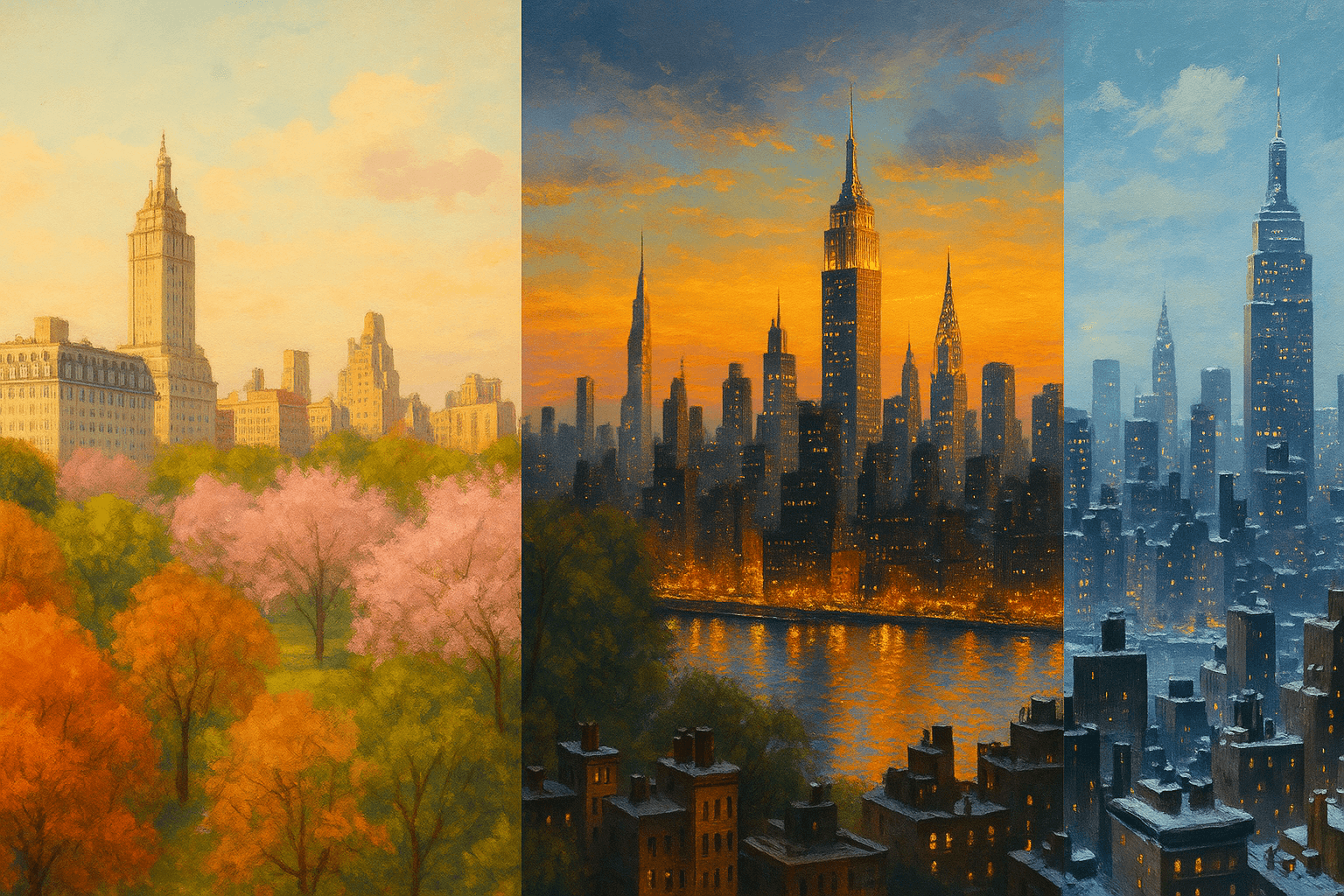

October in Central Park. A warm April afternoon on the High Line. The Rockefeller Christmas Tree in December. The perfectly quiet streets of January after a snowstorm. New York City has no bad season — it has different seasons, each offering something the others can't.
The short answer: Fall (late September through early November) is the best time to visit New York City for most travelers. October is the consensus sweet spot — ideal temperatures, peak fall foliage in Central Park, and hotel rates that haven't yet spiked for the holiday season. Spring (April–May) is a close runner-up. January is the cheapest month if budget is your main concern.
Read on for a full month-by-month breakdown: temperatures, crowd levels, hotel prices, and the events worth building a trip around.
Best Time to Visit NYC: Quick Seasonal Guide
| Season | Months | Weather | Crowds | Price | Best For |
|---|---|---|---|---|---|
| Spring | April–May | 50–72°F (10–22°C) | Moderate | Mid | Mild walks, cherry blossoms |
| Summer | June–August | 68–88°F (20–31°C) | Very high | High | Festivals, rooftops, beaches |
| Fall | Sep–Nov | 45–78°F (7–26°C) | Moderate | Mid | Foliage, events, best weather |
| Winter (holidays) | December | 32–45°F (0–7°C) | Very high | Very high | Holiday magic |
| Winter (off-peak) | Jan–Feb | 27–42°F (-3–6°C) | Low | Low | Budget travelers |
Spring in New York City (March–May)
Spring is one of the most beautiful times to visit New York — as long as you time it right. March is still firmly winter by feel; April and May are when the city truly blooms.
March: Winter's Stubborn Finale
March sits in an awkward in-between zone. Temperatures hover between 35–52°F (2–11°C), and cold snaps are common well into mid-month. Hotel rates are still in off-peak territory, and cultural institutions are quieter than they'll be for the rest of the year.
Late March brings the first signs of spring: St. Patrick's Day Parade on March 17th turns Fifth Avenue into a sea of green, and cherry blossom buds begin to appear at Riverside Park and the Brooklyn Botanic Garden. For travelers on a tighter budget who don't mind bundling up, late March offers genuine value.
Average temps: 35–52°F (2–11°C) | Rain days: ~10 | Crowd level: Low
April: Cherry Blossoms and the City in Bloom
April is the month New York shakes off winter for good. Cherry blossom season peaks between late March and mid-April — the Brooklyn Botanic Garden's Sakura Matsuri festival draws thousands with its Japanese cultural programming and 200+ cherry trees in full bloom. Central Park erupts with flowering beds, tulips, and picnicking locals reclaiming the lawns.
Temperatures range from 48–65°F (9–18°C) — cool enough for comfortable walking, warm enough for terrace dining. Rain is more frequent in April than in fall, so pack a compact umbrella. Hotel prices are still moderate before the summer spike, making April a strong value play for travelers who want pleasant weather without paying summer rates.
Average temps: 48–65°F (9–18°C) | Highlight: Brooklyn Botanic Garden Sakura Matsuri | Crowd level: Moderate
May: The Spring Sweet Spot
May is the best month of spring — possibly one of the best months overall. Temperatures warm to 58–75°F (14–24°C), humidity stays low, and the city buzzes with outdoor energy: rooftop bars reopen at full swing, Governors Island launches its season (free on weekends), and the Frieze New York international art fair draws a global crowd to Randall's Island.
The second and third weeks of May often hit what locals call a "perfect window" — consistently sunny, breezy, and warm without humidity. The caveat: Memorial Day weekend (last Monday of May) triggers a sharp price surge that rivals summer rates. Book before that weekend or plan around it.
Average temps: 58–75°F (14–24°C) | Highlight: Frieze New York art fair, High Line in bloom | Crowd level: Moderate–high
Summer in New York City (June–August)
Summer is New York at its most intense: more festivals, more tourists, more heat, more energy — and more expense. It rewards travelers who plan carefully and tolerate crowds.
June: Warm, Festive, and Pride-Filled
June opens summer with a bang. The weather is warm (65–82°F / 18–28°C) without July's oppressive humidity. SummerStage kicks off free outdoor concerts across all five boroughs. Smorgasburg food markets run every Saturday in Brooklyn, drawing massive outdoor dining crowds.
The month's anchor event is NYC Pride, culminating in the Pride March on the last Sunday of June — over 2 million spectators line Fifth Avenue for one of the world's largest Pride celebrations. Hotels are expensive, especially Pride weekend, but June still beats July and August on humidity and sheer livability. If you're visiting in summer, June is the most comfortable of the three months.
Average temps: 65–82°F (18–28°C) | Highlight: NYC Pride March | Crowd level: High
July: Peak Everything — Plan Far Ahead
July is New York's most intense month. The 4th of July Macy's Fireworks (launched from barges on the East River) are spectacular and draw millions — plan your viewing spot hours in advance. Temperatures regularly hit 85–90°F (29–32°C) with thick humidity, and subway platforms (especially underground stations on the 1, 2, and 3 lines) become genuinely punishing in the heat.
That said, Shakespeare in the Park at the Delacorte Theater in Central Park is a bucket-list experience, and free summer concerts, street festivals, and beach days at Jacob Riis Park or Rockaway Beach make July rewarding for travelers who go in prepared. Book hotels 3–4 months in advance.
Average temps: 72–88°F (22–31°C) | Highlight: Macy's 4th of July Fireworks, Shakespeare in the Park | Crowd level: Very high
August: Hot and Humid — But With Late Deals
August is the hottest, most humid month in New York. European tourism peaks in August (it's vacation month across the continent), keeping prices stubbornly high. Yet late August — particularly the last ten days before Labor Day — sometimes sees brief price drops as families with school-age children head home.
The US Open tennis Grand Slam begins in the last week of August at Flushing Meadows–Corona Park in Queens, running into early September. For tennis fans, it's a bucket-list event with surprisingly accessible ticket prices for early rounds. Otherwise, August rewards early risers (beat the heat before 10am) and museum-goers who lean into air-conditioned spaces.
Average temps: 70–86°F (21–30°C) | Highlight: US Open tennis (late Aug–early Sep) | Crowd level: Very high
Fall in New York City (September–November)
 Photo by Look Again Digital on Unsplash
Fall is the best time to visit New York City. Temperatures sit in an ideal 50–78°F (10–26°C) range, Central Park and Prospect Park transform into canvases of orange and gold, and crowds thin considerably compared to summer. If you can only visit once and want to get it right, plan for late September through early November.
September: The Local Favorite
September is the month New York residents treasure most. After Labor Day, summer crowds evaporate almost overnight. Temperatures settle into a comfortable 63–78°F (17–26°C) range, and the city snaps back into its fast, energized rhythm.
The US Open wraps up in early September. The San Gennaro Festival fills Little Italy with street food and processions for 11 days. New York Fashion Week (early September) transforms Midtown into a runway. The New York Film Festival (NYFF) opens at Lincoln Center in late September, drawing prestige premieres and celebrity sightings.
Hotel prices drop meaningfully from their summer peak in mid-September — this is the window where you get excellent weather at genuinely lower prices than July. For a full list of what to do once you arrive, our complete guide to things to do in New York City covers every borough and every interest.
Average temps: 63–78°F (17–26°C) | Highlights: San Gennaro Festival, Fashion Week, NYFF | Crowd level: Moderate
October: The Best Month in New York City
Ask a dozen NYC travel writers the same question and you'll get the same answer: October. The fall foliage in Central Park, Prospect Park, and Fort Tryon Park peaks between mid-October and early November — deep reds, fiery oranges, and warm yellows frame every skyline view. Temperatures hover between 53–68°F (12–20°C), skies are mostly clear, and rain is infrequent.
New York Comic Con (Javits Center, mid-October) is the largest pop culture event on the East Coast. The Village Halloween Parade on October 31st is pure NYC spectacle — 50,000 costumed participants march up Sixth Avenue while half a million spectators crowd the sidewalks. And because hotels haven't hit the holiday-season premium yet, October delivers the rare combination of ideal conditions, rich programming, and relatively reasonable prices.
If you're picking one month: October.
Average temps: 53–68°F (12–20°C) | Highlights: Fall foliage, NYC Comic Con, Village Halloween Parade | Crowd level: Moderate
New York is far from the only US city putting on an autumn show — see our roundup of the best US cities to visit in fall 2026 for more foliage and festival inspiration across the country.
November: Calm Before the Holiday Storm
Early November continues October's pleasures: cool crisp air, late foliage still burning bright, and a city not yet overtaken by holiday tourism. This is a genuinely underrated travel window — temperatures of 42–57°F (6–14°C) are manageable with a good coat, and the city's museums and restaurants are far easier to access than at any point since January.
Then Thanksgiving arrives and everything changes. The Macy's Thanksgiving Day Parade (fourth Thursday of November) is an institution — the balloon inflation the evening before, along Central Park West, is often more magical than the parade itself. Hotel prices spike for the full Thanksgiving week and remain elevated through New Year's.
Average temps: 42–57°F (6–14°C) | Highlight: Macy's Thanksgiving Day Parade | Crowd level: Low early → Very high (Thanksgiving week)
Winter in New York City (December–February)
 Photo by Kaydn Ito on Unsplash
December: Holiday Magic — At a Price
December in New York is genuinely spectacular, and genuinely expensive. The Rockefeller Center Christmas Tree lighting (early December) draws enormous crowds to Midtown. The Fifth Avenue windows at Saks and Bergdorf Goodman are elaborate walk-up art installations. Bryant Park Winter Village becomes a European-style Christmas market with a free ice rink. The Nutcracker plays at Lincoln Center. Times Square counts down to New Year's Eve.
If the holiday atmosphere is your primary motivation, December is worth the splurge — just go in clear-eyed. Hotel rates hit their annual peak between mid-December and January 1st. Fifth Avenue sidewalks on December weekends can be genuinely impassable. Book everything at least three months in advance.
Weighing New York against other US destinations for winter travel? Our guide to where to travel in the USA in December puts NYC's holiday magic in full perspective.
Average temps: 32–45°F (0–7°C) | Highlights: Rockefeller Tree, Bryant Park Winter Village, NYE Times Square | Crowd level: Very high
January: The Cheapest Month to Visit NYC
Once the ball drops, New York enters its annual quiet season. January is the cheapest month of the year to visit NYC — hotel rates fall 40–50% from December peaks, flights hit their annual lows, and the city returns to a normal pace. The MoMA, the Met, the Brooklyn Museum: all dramatically easier to navigate without the holiday rush.
The tradeoffs are real: temperatures of 27–38°F (-3–3°C), occasional snowstorms, and wind chill that makes exposed skin painful. But for travelers who genuinely don't mind cold and want to stretch every dollar, January is the insider's answer. NYC Restaurant Week typically begins in late January, offering prix-fixe lunches and dinners at the city's finest restaurants for around $30–$45.
A snow day in Central Park is one of New York's most cinematic experiences — and you'll have the paths almost to yourself.
Average temps: 27–38°F (-3–3°C) | Highlight: NYC Restaurant Week | Crowd level: Low | Price: Lowest of the year
February: Cold but Rewarding for Budget Travelers
February keeps the cold-and-cheap formula of January. Temperatures range from 30–42°F (-1–6°C) with a realistic chance of snow. Valentine's Day weekend sees brief hotel price spikes (romantic packages, weekend surge), but otherwise February is the second cheapest month of the year.
NYC Restaurant Week continues into February. The Westminster Dog Show at Madison Square Garden (mid-February) is an unexpectedly entertaining spectator event. The Lunar New Year parade in Chinatown — held in late January or early February depending on the year — is one of the city's most vibrant and culturally rich celebrations, and entirely free.
Average temps: 30–42°F (-1–6°C) | Highlight: Lunar New Year parade, Restaurant Week | Crowd level: Low
When Is the Cheapest Time to Visit NYC?
January is definitively the cheapest month to visit New York City. Hotel rates drop 40–50% from December peaks, flights from most US cities hit their annual low in early January, and tourist crowds reach their yearly minimum. Outside of winter, the cheapest travel windows are:
- Late August (just before Labor Day): summer tourists leave, prices ease briefly
- Early November (before Thanksgiving week): the quietest window where the weather is still pleasant
- Late March: shoulder season before spring crowds build
For maximum budget efficiency at any time of year, staying in outer-borough neighborhoods — Long Island City (Queens), Williamsburg or Downtown Brooklyn, Astoria — cuts accommodation costs significantly compared to Midtown Manhattan. Our full NYC budget travel guide covers lodging, transport, food, and free attractions in detail.
NYC Events Calendar: Key Dates for 2026
| Month | Event |
|---|---|
| March 17 | St. Patrick's Day Parade (Fifth Avenue) |
| Late March–mid April | Cherry blossom season |
| Late April | Brooklyn Botanic Garden Sakura Matsuri |
| Late May | Memorial Day weekend (high prices) |
| Early June | SummerStage free concerts season opens |
| Late June | NYC Pride March |
| July 4 | Macy's 4th of July Fireworks |
| Late August | US Open Tennis begins (Flushing Meadows) |
| Early September | New York Fashion Week |
| Mid-September | San Gennaro Festival, Little Italy |
| Late September | New York Film Festival (Lincoln Center) |
| Mid-October | New York Comic Con (Javits Center) |
| Late October | Peak fall foliage in Central Park |
| October 31 | Village Halloween Parade |
| 4th Thursday November | Macy's Thanksgiving Day Parade |
| Early December | Rockefeller Center Tree Lighting |
| December 31 | New Year's Eve, Times Square |
| Late January–February | NYC Restaurant Week |
| Mid-February | Westminster Dog Show |
Frequently Asked Questions
What is the best month to visit New York City?
October is the best single month to visit New York City. Temperatures are ideal (53–68°F / 12–20°C), Central Park's fall foliage is at its peak, hotel prices are moderate, and the event calendar is packed. Late September is nearly as good, with slightly warmer temperatures and fewer crowds.
What is the cheapest month to visit New York?
January is definitively the cheapest month to visit NYC. Hotel rates drop 40–50% from December levels, flights are at their annual low, and tourist crowds reach their yearly minimum. February is a close second.
Is $1,000 enough for 4 days in New York City?
Yes — but it requires planning. At $250/day, the formula works best in January or February: budget accommodations in outer-borough neighborhoods (from $100–$130/night), affordable meals (pizza slices, food halls, ethnic neighborhoods like Flushing or Jackson Heights), a MetroCard for all transit, and a focus on free attractions (the High Line, Brooklyn Bridge, Central Park, Staten Island Ferry for Statue of Liberty views). In peak summer or December, $1,000 for 4 days in Midtown is genuinely difficult. Our NYC budget guide maps out the full strategy.
How many days do you need in New York City?
First-time visitors need 4–6 days to cover Manhattan's key neighborhoods plus a day in Brooklyn. A 3-night / 4-day long weekend is enough for a focused first itinerary. To explore all five boroughs at a relaxed pace — including the Bronx (Yankee Stadium, NY Botanical Garden), Queens (Flushing, Astoria), and Staten Island — plan for 7–10 days.
What is the worst time to visit New York City?
There's no truly bad time, but mid-December through early January (peak crowds, peak prices, freezing cold) and July (peak crowds, oppressive heat, peak prices) are the most demanding. New Year's Eve in Times Square, while iconic, means Midtown is a checkpoint maze for hours. Go deliberately — or watch the ball drop from a neighborhood bar instead.
Should I visit New York or Los Angeles first?
Both are iconic but profoundly different experiences. New York is denser, more walkable, and easier to navigate without a car. Our head-to-head comparison of New York vs. Los Angeles breaks down the key differences in weather, cost, culture, and logistics to help you decide.
The Bottom Line: Best Times to Visit NYC, Ranked
- October — ideal weather, fall foliage, events, and value in one month
- May — spring's peak; warm, lively, pre-summer prices
- September — locals' favorite; great value after Labor Day
- April — cherry blossoms, mild temps, moderate prices
- June — festive and warm; prices climbing but below July
- December — magical, if you budget for the premium
- Early November — underrated calm before Thanksgiving crowds
- February — budget-friendly winter, Restaurant Week deals
- January — cheapest month of the year; for cold-tolerant bargain hunters
- March — transitional, unpredictable; lowest prices but no guarantees
- July / August — rewarding but demanding; highest prices and heat
Whatever month you land in New York, the city will more than deliver. Its scale, energy, and sheer density of experiences mean any season in NYC will leave you planning your return — ideally in October, if you can help it.
Envie de créer ta propre liste de spots ?
Rejoins Spotli.st et partage tes bonnes adresses avec le monde entier.
Créer mon compte gratuit