Snorkeling in Hawaii: The Best Spots on Maui, Oahu, the Big Island & Kauai
Discover the best snorkeling in Hawaii by island — Molokini Crater, Hanauma Bay, Kealakekua Bay, manta rays & more. Spot guides, tips & seasonal advice.
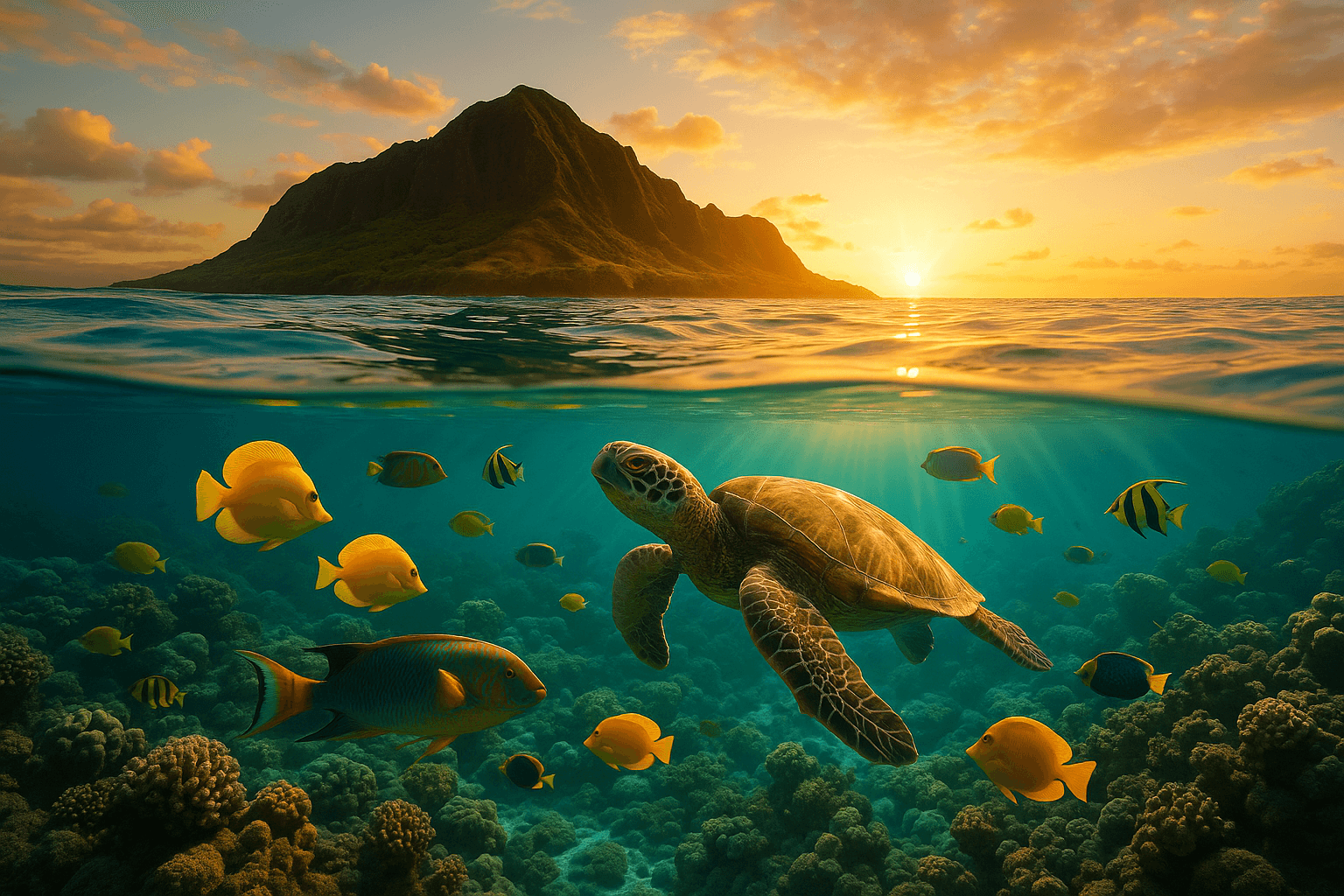
Snorkeling in Hawaii: The Best Spots on Maui, Oahu, the Big Island & Kauai

The best snorkeling in Hawaii is found at Molokini Crater (Maui), Hanauma Bay (Oahu), and Kealakekua Bay (Big Island) — but every major island holds world-class spots. Water temperatures hover between 76°F and 82°F year-round, visibility regularly exceeds 50–60 feet, and roughly 25% of Hawaii's marine species exist nowhere else on Earth.
Hawaii sits more than 2,400 miles from the nearest continent. Its isolation in the North Pacific is precisely what makes its reefs so extraordinary — thousands of years of undisturbed evolution produced a cast of characters unlike any reef system on the planet: neon-colored endemic fish, Hawaiian green sea turtles grazing in shallow bays, spinner dolphins resting in protected coves, and — on the Big Island — giant manta rays performing their nightly feeding ballet just below the surface.
Whether you're a first-timer looking for a gentle, shallow bay or an experienced swimmer hunting dramatic reef walls, this guide breaks down the best snorkeling in Hawaii island by island, with practical detail on conditions, what you'll see, and how to get the most out of every session.
Maui — Hawaii's Top Island for Snorkeling
Ask any experienced snorkeler which Hawaiian island to prioritize and the answer is almost always Maui. The combination of reef quality, water clarity, marine diversity, and sheer number of excellent sites is unmatched in the archipelago.
Molokini Crater
Molokini is Hawaii's most famous snorkeling destination: a partially submerged volcanic caldera about 2.5 miles off Maui's south coast, accessible only by boat, with visibility that regularly reaches 100–150 feet. The crescent-shaped islet acts as a natural amphitheater sheltering over 250 species of tropical fish. The protected inner crater bowl is perfectly suited to snorkelers of all levels; the outer "back wall" — a sheer drop of 300 feet — is reserved for certified divers. Most tours depart from Maalaea Harbor or Kihei and run 2–4 hours ($60–$100 per person). Book well in advance — morning slots sell out weeks ahead in peak season.
Honolua Bay
Honolua Bay is a Marine Life Conservation District on Maui's northwest coast, with a reef in exceptional health. Parrotfish, surgeonfish, and moray eels are abundant; Hawaiian green sea turtles are a near-certainty. Access is via a forested path leading to a rocky shoreline — there's no formal beach. Best conditions run May through September, when North Pacific swells subside. Entry is free; bring your own gear.
Kapalua Bay
The best snorkeling in Hawaii for beginners is at Kapalua Bay. This crescent-shaped bay is naturally sheltered, shallow, and consistently calm, with a healthy coral shelf running along its northern edge. Spinner dolphins cruise through at dawn. Gear rentals are on-site, making it one of the most accessible spots on the island.
Black Rock (Ka'anapali Beach)
Right off the Sheraton Maui, Black Rock is the most convenient snorkeling on the island. The underwater lava promontory creates ledges, overhangs, and dramatic topography that attract sea turtles resting on the sandy bottom, dense schools of reef fish, and occasionally spotted eagle rays. Arrive early morning before the Ka'anapali hotel crowds appear.
 Photo by Satty Singh on Unsplash
Oahu — Iconic Reefs and Crowd-Free Alternatives
Oahu is Hawaii's most visited island, which means its most famous snorkeling spots can get crowded. But it also delivers excellent infrastructure, easy access, and some quieter gems for anyone willing to look beyond the obvious. If you're building a full island-hopping trip, our 10-day Hawaii itinerary covers the best way to combine all four islands.
Hanauma Bay Nature Preserve
Hanauma Bay is one of the most famous snorkeling spots in the world — and the reputation is earned. This protected cove sits inside the rim of an ancient volcanic cone on Oahu's southeast shore. Fish are so accustomed to snorkelers that they swim directly up to you; the inner coral garden is spectacular even for experienced swimmers. Strictly managed: you must reserve a timed entry online (reservations open two days in advance and sell out within minutes), watch a mandatory marine education video, and pay an entrance fee. Closed Tuesdays and Mondays for reef recovery. Plan well ahead — it's absolutely worth the effort.
Shark's Cove (Pupukea)
Shark's Cove on Oahu's North Shore is one of the most exciting snorkeling sites in Hawaii for intermediate swimmers, thanks to intricate lava tunnels, arches, and ledges sheltering eels, octopuses, and dozens of reef species. Available in summer only (May–September), when the North Shore's legendary winter swells flatten into calm, clear water. The name comes from the cove's shape, not its residents.
Three Tables Beach
Three Tables is Oahu's best-kept North Shore snorkeling secret. Named for three flat lava formations that break the surface, the site offers arches and channels with surprisingly rich marine life just steps from the shore. Summer conditions only — go on the same day as Shark's Cove, which is a short walk away.
Ko'Olina Lagoons
Ko'Olina is the most reliable year-round snorkeling on Oahu, particularly for families. Four protected man-made lagoons on the island's west coast offer calm, sheltered water regardless of season or swell. Fish diversity is lower than a natural coral reef, but triggerfish, parrotfish, and convict tang are consistently present. Perfect for anyone visiting in winter who wants safe, predictable conditions.
The Big Island — Sea Turtles, Manta Rays & Volcanic Lava Fields
The youngest of the Hawaiian islands, the Big Island has a dramatic underwater landscape shaped by ongoing volcanic activity. The Kona coast (leeward side) delivers the best snorkeling — calm water and marine encounters that are genuinely unique to this island. Several top spots sit alongside cultural landmarks worth combining into a single day: Pu'uhonua o Hōnaunau is one of the most remarkable national historical parks in the USA, directly adjacent to two of the best snorkeling entries on the island.
Kealakekua Bay (Captain Cook Monument)
Kealakekua Bay is widely considered the best snorkeling spot on the Big Island — and a serious contender for the entire state. This protected marine sanctuary offers 40–60 foot visibility, a vertical reef wall plunging to 100+ feet, dense fish populations, and spinner dolphins that rest in the bay each morning before heading offshore mid-day. Reaching the prime snorkeling area takes effort: a 2-mile kayak paddle each way from Napoopoo (rentals available), a guided boat tour from Kailua-Kona, or a demanding 4-mile round-trip hike. Every approach is worth it.
Two Step (Pu'uhonua o Hōnaunau)
Two Step is named for the pair of natural lava ledges that make it the easiest water entry of any top snorkeling site in Hawaii. The reef is in exceptional health, Hawaiian green sea turtles are virtually always present, and spinner dolphins pass through in the mornings. Located directly beside Pu'uhonua o Hōnaunau National Historical Park, it pairs naturally with a half-day cultural visit. No facilities, no fees — just show up.
Kahaluu Beach Park
For guaranteed sea turtle encounters, Kahaluu is the best snorkeling in Hawaii for beginners on the Big Island. A fringing reef absorbs most wave energy, keeping the water shallow and calm; Hawaiian green sea turtles feed on algae-covered rocks in the shallows so reliably that locals call it Turtle Beach. A lifeguard is on duty; gear rentals are available nearby. Entry is free.
Night Snorkeling with Manta Rays off Kona
The Kona manta ray night snorkel is one of the most extraordinary wildlife encounters on Earth. Giant manta rays — wingspans up to 14 feet — gather nightly off the Kona coast to feed on plankton drawn by dive boat and hotel lights. Snorkelers float in a circle at the surface, holding a light board, while the mantas loop and soar just inches below. Several Kona operators run nightly tours (approximately $60–$80 per person, 60–90 minutes in the water). Book ahead in peak season. This requires basic comfort in open water after dark — accessible, but not suited to complete beginners.
 Photo by Will H McMahan on Unsplash
Kauai — Dramatic Reefs for Adventurous Snorkelers
Kauai's rugged coastline and exposure to powerful Pacific swells make snorkeling more seasonal and somewhat more demanding than on Maui or Oahu. The reward: less-visited reefs of outstanding quality and a landscape above and below the waterline that is simply stunning.
Tunnels Beach (Haena)
Tunnels Beach is Kauai's best snorkeling site — a broad offshore reef at Haena Beach Park on the North Shore, shaped by a network of lava tubes that give the spot its name. Expect parrotfish, surgeonfish, eels, octopuses, and the occasional reef shark. Visibility is excellent in summer when the North Shore calms down. Access requires a parking reservation through the Haena State Park system (book several weeks ahead online). Summer months only for safe conditions.
Poipu Beach Park
Poipu is Kauai's most accessible, year-round snorkeling spot. On the sunny south shore, it offers consistent conditions at a beginner-friendly level. The eastern side of the beach — past the tombolo connecting the two points — provides the best reef. Critically, this is one of the few places in Hawaii where you may spot a Hawaiian monk seal hauled out on the beach: one of the world's most endangered marine mammals, with only around 1,400 individuals remaining. Facilities and gear rentals on-site.
Na Pali Coast Snorkel Tours
The Na Pali Coast snorkel tour is Hawaii's most spectacular boat excursion. Those iconic emerald cliffs dropping straight into the Pacific can only be reached by boat (or helicopter), and several operators run half- and full-day snorkel tours departing from Hanalei Bay in summer and Port Allen in winter. Stops include isolated sea caves and remote reefs that most Hawaii visitors never see — spinner dolphins are a near-constant companion. Prices run $130–$180 per person, and it's one of Hawaii's genuine splurges that earns every dollar.
Which Hawaii Island Is Best for Snorkeling?
Maui is the best overall island for snorkeling in Hawaii. Molokini Crater, Honolua Bay, and the consistent year-round calm of the south shore give it the highest density of excellent sites across all experience levels. If snorkeling is your primary goal, base yourself on Maui.
Oahu is the most convenient option for travelers combining snorkeling with Honolulu sightseeing. Hanauma Bay is genuinely world-class; North Shore spots (Shark's Cove, Three Tables) add excellent variety in summer.
The Big Island wins for unique marine encounters. Sea turtles at Kahaluu, the epic scenery and coral diversity of Kealakekua Bay, and the manta ray night snorkel are experiences that don't exist on other islands. If wildlife (over reef diversity) drives your choice, the Big Island is hard to beat.
Kauai rewards experienced, adventurous snorkelers who time their visit to the North Shore summer season and want uncrowded reefs in extraordinary natural settings.
Best Time of Year to Snorkel in Hawaii
Water temperatures are comfortable year-round (76°F in winter, 82°F in August), and snorkeling is possible on every island in every month. The key variable is swell direction:
Summer (May–September): North Pacific trades calm the swells battering Oahu and Kauai's north coasts, unlocking Shark's Cove, Three Tables, and Tunnels Beach. South-shore and leeward spots — Maui's south coast, the Kona coast, Ko'Olina, Poipu — are also at their best. Peak tourist season: reserve timed entries weeks ahead.
Winter (October–April): North Shore sites on Oahu and Kauai close to snorkeling. Focus shifts to south- and west-facing spots: Maui's entire south shore remains excellent, the Kona coast is calm and clear, and Ko'Olina and Poipu are reliably manageable. Bonus: December through April is humpback whale season — you won't encounter them while snorkeling, but you may hear them singing underwater, one of the genuinely surreal experiences Hawaii offers.
Manta rays (Big Island): Year-round, with larger aggregations common in summer.
Hawaii's Marine Life: What You'll See Underwater
Hawaii's isolation has produced a reef community unlike anywhere else:
- Hawaiian green sea turtles (honu): Present at dozens of spots across all four islands. Protected under federal law — do not approach within 10 feet or attempt to touch them.
- Humuhumunukunukuapua'a: Hawaii's state fish — a rectangular triggerfish with electric-blue markings and a pig-like snout. Found on virtually every reef.
- Parrotfish: Large, brilliantly colored fish that actively graze on coral, producing much of Hawaii's famous white sand in the process.
- Spinner dolphins: Named for acrobatic aerial spins, they rest inshore in the early morning at Kealakekua Bay, Two Step, and along the Kona coast before heading offshore by midday.
- Giant manta rays: Kona coast, primarily at night (see above).
- Octopus: On most lava reefs; masters of camouflage. Slow down and study rocky bottoms carefully — you'll start seeing them everywhere.
- Hawaiian monk seals: Critically endangered (~1,400 individuals). Occasionally hauled out at Poipu Beach (Kauai). Give them wide berth — approaching is regulated.
- Moray eels, surgeonfish, wrasses, damselfish: The reliable supporting cast on every reef, present year-round across all islands.
Gear, Safety & Practical Tips
Reef-safe sunscreen is mandatory in Hawaii. State law bans sunscreens containing oxybenzone and octinoxate, both of which damage coral DNA. Use mineral sunscreen (zinc oxide or titanium dioxide) — or better yet, a UV-protective rash guard that covers your shoulders and back, which doubles as thermal protection on cooler winter days.
On fins: Longer freediving-style fins give more efficient propulsion with less effort; standard snorkel fins are fine for calm bays. Rental gear at major sites is adequate, though a quality mask with a proper seal is worth seeking out at a dedicated dive shop rather than a hotel kiosk.
Prescription masks: Available for rent at larger gear shops in Kihei (Maui), Kailua-Kona (Big Island), and Waikiki (Oahu) if you need corrective lenses.
Lava rock entries: Many of Hawaii's best sites — Honolua Bay, Shark's Cove, Two Step — require entering and exiting via lava rock. Water shoes with rubber soles protect your feet. Get in and out quickly rather than standing in surge.
Currents and conditions: Always check local conditions before entering unfamiliar water. The NOAA surf forecast and reports from local dive shops are reliable. Never snorkel alone at an unfamiliar site, particularly on Oahu's North Shore or Kauai.
Tour vs. DIY: Which Is Right for You?
DIY snorkeling works perfectly at: Hanauma Bay, Kapalua Bay, Black Rock, Two Step, Kahaluu Beach, Ko'Olina, and Poipu Beach — all have easy shore entries, manageable conditions, and no logistics beyond timed reservations where required.
A guided tour adds real value at: Molokini Crater (boat-only access), Kealakekua Bay (unless you want the demanding hike), the Kona manta ray night snorkel, and Na Pali Coast. Guides point out cryptic species you'd swim right past, handle all logistics, and significantly enrich the experience.
Budget benchmark: Half-day snorkel tours run $60–$120; manta ray night snorkels $60–$80; Na Pali full-day tours $130–$180. Budget-conscious travelers can DIY every shore-access spot on this list and spend under $30 on gear rental for the day.
If you're planning a full multi-island trip and want to make the most of your time in the water and on land, our guide to the best beaches across the USA puts Hawaii's coastline in broader context.
FAQ
Which Hawaii island is best for snorkeling? Maui is the best overall island for snorkeling in Hawaii, thanks to Molokini Crater, Honolua Bay, and consistent south-shore conditions year-round. The Big Island is the top choice specifically for sea turtle encounters and the manta ray night snorkel.
Is Oahu or Maui better for snorkeling? Maui is generally better — more diverse sites, healthier reef systems, and Molokini Crater as an exclusive boat-access crown jewel. However, Oahu's Hanauma Bay is world-class in its own right and more practical for travelers based in Honolulu.
Which is better for snorkeling, Maui or Kauai? Maui is easier, more consistent, and offers more variety across all skill levels. Kauai's best site — Tunnels Beach — rivals Maui in raw quality, but it's strictly seasonal (summer only) and harder to access. Choose Kauai if you're an experienced snorkeler who wants uncrowded reefs.
Is snorkeling better on Oahu or the Big Island? They offer different experiences. Oahu's Hanauma Bay delivers denser fish populations in a more accessible, family-friendly setting. The Big Island offers dramatic volcanic scenery, reliable sea turtle encounters, and the manta ray night snorkel — an experience unique to this island.
Do you need a wetsuit to snorkel in Hawaii? Not in summer — water temperatures reach 80–82°F from June through September. In winter (water around 76°F), a light 2mm shorty wetsuit adds comfort for longer sessions. Most snorkel tour operators include one in their gear package.
Hawaii's underwater world rewards every visit — but it especially rewards those who plan deliberately. Pick your island based on your priorities, time your trip around swell season, and get in the water before the tour boats arrive. The ocean at 7am, before the crowds, is a different place entirely.
Envie de créer ta propre liste de spots ?
Rejoins Spotli.st et partage tes bonnes adresses avec le monde entier.
Créer mon compte gratuit