Is the Amtrak USA Rail Pass Worth It? An Honest 2026 Breakdown
Is the Amtrak USA Rail Pass worth it? We break down the $499 price, 10-segment rules, hidden catches, and who it actually suits in 2026.

Is the Amtrak USA Rail Pass Worth It? An Honest 2026 Breakdown
The short answer: yes, the Amtrak USA Rail Pass is worth it — but only for a specific kind of traveler. At its standard $499 price, the pass buys you 10 coach-class train segments to use within 30 days across more than 500 destinations. That works out to roughly $50 per ride, which makes long, cross-country legs (which often cost $150–$400 each when booked individually) a genuinely good deal. But the pass is packed with fine print — coach-only seating, segment rules that quietly burn rides on transfers, and limited seat inventory on popular trains — that can turn a bargain into a frustration if you buy without reading the details.
In this guide I'll walk you through exactly how the Amtrak USA Rail Pass works, what it includes and excludes, how to do the math on whether it's worth it for your route, and the six things nobody tells you before you buy. By the end, you'll know with confidence whether to buy the pass or book individual tickets.

What Is the Amtrak USA Rail Pass?
The USA Rail Pass is Amtrak's flat-rate, multi-ride ticket for people who want to see a lot of the United States by train in a short window. It has existed in several forms over the years, but the current version is refreshingly simple to describe:
- 10 segments (rides) of coach-class travel
- Valid for 30 days of travel
- Usable on most Amtrak trains and 500+ destinations
- No blackout dates
The "one low fare" pitch is accurate: whether you hop a 45-minute regional train or ride the California Zephyr from Chicago to San Francisco, each segment costs the same flat amount baked into the pass price.
A quick note on the word "segment," because it's the single most misunderstood part of the product. A segment is one boarding — not one trip, not one day, not one destination. Board a train in Chicago and get off in Denver: that's one segment. Board in Chicago, change trains in Denver, and continue to Salt Lake City: that's two segments, because you boarded twice. If your itinerary involves lots of connections, your 10 segments can vanish faster than you expect.
How the Pass Works: Segments, the 30-Day Clock & the Booking Rules
Before you buy, you need to understand five mechanical rules that govern the whole product. Most complaints about the pass trace back to one of these.
1. The 30-day clock starts on your first ride
You have 120 days from the date of purchase to begin traveling. The moment you take your first trip, a 30-day countdown begins, and all 10 segments must be used inside that window. In practice, a "30-day pass" is really a pass you must start within 120 days and finish within 30 days of starting. If you buy in January but plan to travel in June, that's fine — as long as your first ride falls within four months.
2. You still have to reserve every segment
The pass is not a hop-on, hop-off ticket. For each segment, you book a specific train, date, and seat ahead of time through your Amtrak account. Reservations are subject to availability, and Amtrak limits how many seats each train allocates to pass holders — a popular train can show no pass seats left even when the train itself isn't sold out.
3. Coach class only, no upgrades
The pass books you into coach, and you cannot pay to upgrade to business class or a private roomette/sleeper on pass segments. This is the biggest single trade-off, and it matters on multi-day routes (more below).
4. Some trains are excluded
You cannot use the pass on the Acela (the premium Northeast Corridor high-speed trains), the Auto Train (the Virginia-to-Florida car-carrying service), or the Canadian portion of routes operated with VIA Rail (such as the Maple Leaf into Toronto).
5. Station limits
You can travel between the same two stations a maximum of two times per pass — so two round trips on the exact same city pair, but no more. This stops people from treating the pass as a commuter card.
What's Included (and What's Not)
It's worth being precise here, because the pass's real value depends almost entirely on the gaps between what it covers and what it doesn't.
Included:
- 10 coach segments on most Amtrak routes
- Standard coach seating with generous legroom and a reclining seat (about 23 inches wide on long-distance trains)
- Carry-on baggage (two bags plus a personal item), plus free checked bags on most long-distance routes
- Café car access (food and drinks available for purchase)
Not included:
- Sleeper or business-class upgrades
- Meals — dining-car meals are only included for sleeping-car passengers, which you won't be
- Acela, Auto Train, and VIA Rail Canada segments
- Parking, taxis, hotels, or anything off the train
The meal point deserves emphasis. On multi-day routes, café-car food — sandwiches, salads, reheated breakfast items, snacks — adds up quickly, and coach passengers aren't included in the traditional dining car. Savvy pass holders pack their own food (oatmeal packets, shelf-stable meals, tea, and snacks) and treat the café car as a treat rather than a meal plan.
The Real Cost: Does the Math Actually Work?
Here's where "is it worth it?" gets answered with numbers instead of vibes.
At the standard $499 price, the pass works out to $50 per segment if you use all 10 rides. During Amtrak's frequent sales, the price drops to $299 (about $30 per segment), and in January 2026 Amtrak even ran a limited-time $250 promo ($25 per segment). Catching a sale is the single biggest money-saver available.
Now compare that with what individual coach tickets cost on long-distance routes:
- Chicago → Seattle on the Empire Builder: typically $150–$400+ one-way in coach
- Chicago → San Francisco on the California Zephyr: often $150–$350+
- Seattle → Los Angeles on the Coast Starlight: roughly $120–$300
- New York → Chicago on the Lake Shore Limited: $90–$250
A single cross-country segment can cost more than a third of the whole pass. If your trip involves even three or four long-distance legs, the pass pays for itself quickly. Use it for a genuine coast-to-coast loop — say, Chicago → Seattle → Los Angeles → New Orleans → Chicago — and you could easily book $1,000+ worth of coach travel for $499 (or $299 on sale).
| Scenario | Individual tickets (typical) | USA Rail Pass |
|---|---|---|
| 2 short corridor hops (e.g., NYC–Philadelphia–DC) | $40–$120 | $499 → not worth it |
| 4 long-distance legs (e.g., Chicago–Seattle, Seattle–LA) | $600–$1,000 | $499 (or $299) → worth it |
| Full coast-to-coast loop (7–10 segments) | $1,000–$2,000+ | $499 / $299 → clearly worth it |
When the math does NOT work:
- Short corridor trips. On the Northeast Regional or other state-supported corridors, a ticket between nearby cities often costs $20–$80. Burning a $50 segment on a $40 ride is a loss.
- You'll only ride two or three times. With three segments at $499, you're paying about $166 per ride — usually more than buying separately.
- You need speed. Acela is excluded anyway, and trains are slower than flying point-to-point. If you're on a tight schedule, the pass fights you.
A good rule of thumb: the pass is worth it when you'll take at least four or five segments, most of them long-distance, and you can genuinely spend two to four weeks on the rails.
Who the Pass Is For (and Who Should Skip It)
Buy the pass if you:
- Are planning a multi-stop, cross-country rail trip and want to lock in a flat price
- Prefer the journey over the destination and genuinely enjoy slow travel
- Are a remote worker, writer, photographer, or sabbatical-taker who can spend weeks moving city to city
- Want to replace a long road trip with something more scenic and hands-free
Skip the pass if you:
- Are doing a short weekend city break on the Northeast Corridor
- Need a sleeper to actually rest overnight
- Only have one or two long legs in mind
- Are on a tight schedule where flying makes more sense
If you're torn between a train loop and driving, it's worth reading our guide to planning a US road trip to compare the two styles side by side. And if your priority is maximizing scenery per mile, both America's best scenic drives and a rail pass deliver — just in very different ways.
The Catch: 6 Things Nobody Tells You
The pass is a good product, but its marketing glosses over some realities. Here's what real users — including a Business Insider reporter who rode through 11 states in 30 days — wish they'd known first.
1. You're in coach the whole time
Coach seats recline and have decent legroom, but they don't lie flat. On a 50-hour route like the Empire Builder, that means several nights sleeping upright. Most experienced pass holders break up long hauls with hotel nights in gateway cities rather than chaining overnight trains back to back.
2. Popular trains run out of pass seats
Because pass inventory is limited per train, you may find a train shows seats to normal buyers but not to pass holders. Book your segments as far ahead as possible, and stay flexible with dates and routes.
3. Transfers burn your segments
Every boarding counts, so a "connection" is really two rides. Choose direct routes over convenient-but-transfer-heavy ones whenever you can — this one habit stretches 10 segments dramatically.
4. Food is on you
Coach passengers pay for everything in the café car, and prices are not cheap. Pack shelf-stable meals and snacks; ask politely and the crew will often give you hot water for oatmeal or tea.
5. The same-pair round-trip limit
You can't ride between the same two stations more than twice. If your plan involves shuttling between two cities repeatedly, the pass isn't the right tool.
6. The 30-day window is tighter than it looks
Ten segments in 30 days sounds easy, but long-distance trains run daily (or less often), and some connections force an overnight layover. A 10-segment loop can realistically consume two to three weeks — fine for a slow trip, tight for a "quick" one.
How to Plan a Rail Pass Itinerary (and a Sample Route)
Here's a simple method for designing a route that squeezes maximum value out of the pass.
Step 1 — List your must-see cities, then map the rail lines
Amtrak's long-distance network is a hub-and-spoke system centered on Chicago. Most cross-country routes radiate from there: the California Zephyr (Chicago–San Francisco), Empire Builder (Chicago–Seattle/Portland), Southwest Chief (Chicago–Los Angeles), City of New Orleans (Chicago–New Orleans), Coast Starlight (Seattle–Los Angeles), and Crescent (New York–New Orleans), among others.
Step 2 — Make each segment as long as possible
Since every boarding costs one segment regardless of distance, favor long, direct legs. A transfer in Denver is a second segment; a direct Chicago–Emeryville ride is one.
Step 3 — Count your segment total before buying
Write out every boarding as a number. If your dream itinerary is 13 boardings, the pass's 10 segments won't cover it — you'd pay extra for the overflow.
Step 4 — Book early and stay flexible
Lock your highest-demand legs first (summer Empire Builder, fall Zephyr through the Rockies), then fill in the gaps.
A sample 10-segment coast-to-coast loop:
- New York → Chicago (Lake Shore Limited)
- Chicago → Seattle (Empire Builder)
- Seattle → Los Angeles (Coast Starlight)
- Los Angeles → New Orleans (Sunset Limited)
- New Orleans → Chicago (City of New Orleans)
- Chicago → Washington, DC (Cardinal or Capitol Limited)
- Washington, DC → New York (Northeast Regional)
That's seven segments covering most of the country — with three left over for detours to national parks, cities, or family stops along the way. Many pass holders fold in stops at Glacier National Park (on the Empire Builder route) or the Grand Canyon region (near the Southwest Chief). If national parks are on your list, our roundup of the best national parks in the USA and tips for visiting them on a budget will help you string the stops together.

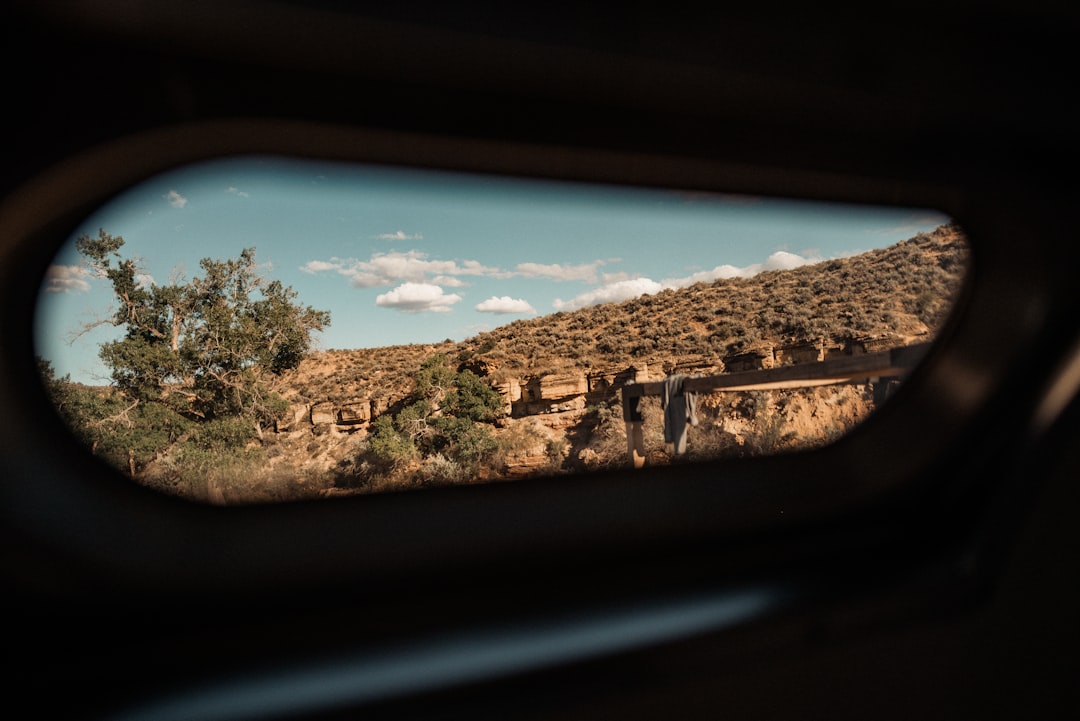
Photo by Hunter Reilly on Unsplash.
Buying the Pass & Getting Started
You buy the USA Rail Pass directly from Amtrak's website or mobile app (look under "Multi-Ride & Rail Passes"), not from third-party sellers. After purchase, you'll book each segment through your Amtrak account, where you can see which trains still have pass-holder seats available.
Watch Amtrak's email list and social channels for sales — the $299 and $250 promos recur, and buying during a sale is the biggest single money-saver available. If you're not in a rush, set a price alert and wait for a drop. Note that the pass is non-refundable once you've started using it, so map your route and count your segments before you commit.
Alternatives to the USA Rail Pass
The USA Rail Pass isn't the only multi-ride option, and it isn't the best one for every trip.
- Individual tickets are almost always cheaper for short corridor hops and single round trips.
- Amtrak Multi-Ride (10-ride) and Monthly passes exist on specific routes — particularly Northeast Corridor lines — and are better suited to regular commuters than to one-off travelers.
- Driving remains the classic American alternative if you want total schedule freedom and door-to-door flexibility. If that sounds more appealing, an iconic Route 66 road trip is the bucket-list version of it.
For most leisure travelers weighing all of the above, the decision comes down to this: Do I want to see a lot of America slowly, without driving? If yes, the Rail Pass wins. If you'd rather have wheels and a looser clock, driving wins.
FAQ
Is the Amtrak USA Rail Pass worth it?
Yes, if you'll take at least four or five segments — most of them long-distance — and can spend two to four weeks on the rails. At $499 (about $50 a ride), a cross-country loop can easily deliver $1,000+ of coach travel. For short corridor hops or a single two-city round trip, individual tickets are usually cheaper.
How does the Amtrak USA Rail Pass work?
You buy a pass (10 segments), then book each segment as a specific train, date, and seat. Each boarding counts as one segment; a connection is a second segment. You have 120 days to start traveling and 30 days (from your first ride) to use all 10 segments. Seating is coach only, and pass-holder seats are limited per train.
How much is the Amtrak USA Rail Pass?
The standard price is $499. Amtrak regularly discounts it to $299 during sales, and ran a $250 limited-time promo in January 2026. Always check for a sale before buying at full price.
Is the $299 Amtrak Rail Pass worth it?
Almost always yes, if you were already planning a multi-city trip. At $299, the pass costs about $30 per segment, which is cheaper than even many regional tickets — meaning the bar for "worth it" drops dramatically. If you see a $299 (or lower) sale and have even a loose multi-stop itinerary in mind, it's a strong buy.
What is the Amtrak 750-mile rule?
This is a common source of confusion. The "750-mile rule" is not a restriction on the Rail Pass — it's a federal statute (from the Passenger Rail Investment and Improvement Act of 2008) that classifies any Amtrak route of 750 miles or more as "long-distance" and eligible for federal funding. Shorter routes are considered state-supported or corridor service. It affects how routes are funded and operated, not how far you can ride on your pass. The 14 long-distance routes it defines are exactly the kind of long, scenic legs where the Rail Pass shines.
Does Amtrak wake you up at your stop?
On long-distance trains, stops are announced over the intercom, and sleeping-car attendants wake their passengers. In coach, there's no guaranteed wake-up service — set your own alarm, and let the conductor know your stop if you're a heavy sleeper.
Is there a senior discount for the Amtrak Rail Pass?
Amtrak offers a standard senior discount (age 65+) on many fares — typically 10% on most routes — but it doesn't stack with the Rail Pass's already-discounted pricing. If you qualify, compare senior-discounted individual tickets against the pass for your specific route count before deciding.
The Verdict
The Amtrak USA Rail Pass is one of the best deals in American travel — for the right person. If your idea of a great trip is a slow, scenic, multi-city loop by train, and you can commit to at least a couple of long-distance legs within a 30-day window, the pass almost certainly beats buying individual tickets, especially if you catch a $299 sale. If you're doing a short corridor trip, want a sleeper, or need to cover ground fast, save your money and book individual fares.
Buy it with a plan: map your segments first, book early, pack your own food, and treat overnight coach rides as part of the adventure rather than a flaw. Do that, and the pass delivers exactly what it promises — the whole country, one flat fare.
Want to build your own spot list?
Join Spotli.st and share your favorite places with the world.
Create my free account