Utah Mighty 5 Road Trip: A 7-Day Itinerary Through Zion, Bryce & Arches
Plan the Utah Mighty 5 road trip: a 7-day itinerary through Zion, Bryce, Capitol Reef, Arches & Canyonlands, with costs, permits and tips.
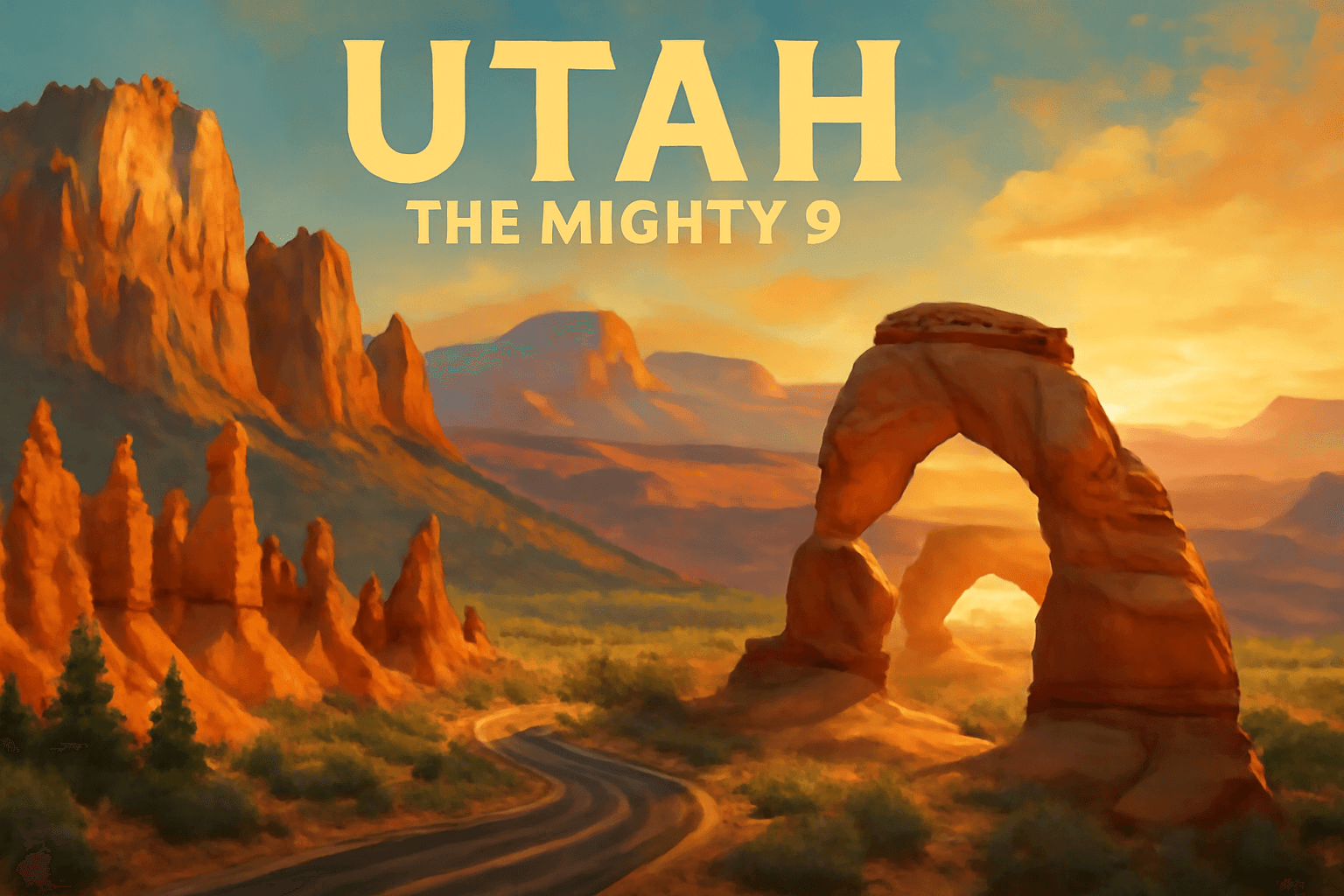
Here's the short answer: yes, you can road-trip all five of Utah's "Mighty 5" national parks — Zion, Bryce Canyon, Capitol Reef, Arches, and Canyonlands — in a single seven-day route without feeling rushed. The smart way to do it is point-to-point: fly into Las Vegas, work your way east across southern Utah, and fly home from Salt Lake City. Expect roughly 600 miles of driving, a mix of short scenic legs and two longer transfer days, and some of the most concentrated red-rock scenery on Earth.
This Utah Mighty 5 road trip itinerary works because the five parks form a natural chain along a single route. Zion sits at the western edge, Bryce Canyon and Capitol Reef in the middle, and Arches and Canyonlands cluster around the town of Moab on the eastern end. You'll follow that chain west to east, mostly on Scenic Byway 12 — frequently called one of the best drives in America — and never drive more than about four hours in a single day.
Below you'll find the complete day-by-day plan, plus what each park is actually worth your time, how much the trip costs, which permits and reservations you can't skip, and honest answers to the questions people ask most.
What Are Utah's Mighty 5?
"Mighty 5" is the official tourism nickname for Utah's five national parks, all located in the southern half of the state. They're the backbone of any Utah road trip because they sit close enough to connect in one week — and each one looks nothing like the others.
| Park | Signature sight | Best short hike | Entrance fee (per vehicle, 7 days) |
|---|---|---|---|
| Zion | Towering sandstone canyon walls | Riverside Walk / Canyon Overlook | $35 |
| Bryce Canyon | Thousands of orange hoodoo spires | Navajo Loop + Queen's Garden | $35 |
| Capitol Reef | Waterpocket Fold + pioneer orchards | Hickman Bridge | $20 |
| Arches | 2,000+ natural sandstone arches | Delicate Arch (or Windows Section) | $30 |
| Canyonlands | Vast Island in the Sky mesas | Mesa Arch (sunrise) | $30 |
(Fees are 2026 rates and can change — always check nps.gov before you go.)
- Zion is the showstopper: a deep, narrow canyon you enter from below and look up at. The famous hikes — Angels Landing and The Narrows — are here.
- Bryce Canyon isn't a canyon at all but a series of amphitheaters packed with hoodoos, thin rock spires in pink and orange that look best at sunrise.
- Capitol Reef is the quiet one: a 100-mile wrinkle in the Earth's crust called the Waterpocket Fold, with historic orchards where you can pick fruit and eat fresh pie.
- Arches is home to more natural arches than anywhere on Earth — Delicate Arch is Utah's unofficial symbol.
- Canyonlands is the wildcard: three districts carved by the Colorado and Green rivers, with the Island in the Sky district the easiest to reach from Moab.
Together they make one of the best national-park road trips in the country — and if you're plotting other park routes, start with our list of the best national parks in the USA for the full shortlist.
Best Time to Do the Mighty 5 Road Trip
The two golden windows are spring (April–May) and fall (mid-September–October). Daytime highs in the 60s–80s°F make hiking comfortable, and the desert light is at its best.
- Summer (June–August): Doable, but expect highs over 100°F in Zion and Moab. Start hikes at dawn, carry more water than you think, and avoid midday exposure. This is also peak season — book lodging early.
- Winter (November–March): Quiet and sometimes snowy, which turns Bryce's hoodoos into postcards. But snow can close trails and the high-elevation parks get cold. Zion and Arches stay mostly accessible, though.
- Timing note: Late September through mid-October is my pick — the summer crowds thin out, temperatures settle, and the aspens around Capitol Reef and Bryce turn gold.
Whatever season you choose, remember that this is high-desert country. The temperature can swing 40 degrees between sunrise and mid-afternoon, and a hot day can still end with a cold night. Pack layers.
Route & Logistics: The Point-to-Point Map
There are two ways to string the Mighty 5 together, and your airport choice is the biggest decision of the trip.
The point-to-point route (recommended): Fly into Las Vegas (LAS) and out of Salt Lake City (SLC). You'll drive west to east — Vegas → Zion → Bryce → Capitol Reef → Moab (Arches + Canyonlands) → Salt Lake City. This means zero backtracking and a natural flow that saves you roughly a full day of driving.
The loop route: Fly in and out of Salt Lake City and make a circle. You'll hit Moab's parks first, then Capitol Reef, Bryce, and Zion, before a straight shot back up I-15. It works, but the final drive is long and you end with the biggest park — which can feel anticlimactic after Arches.
Here's the driving reality of the recommended route:
- Las Vegas → Springdale (Zion): ~160 miles, 2.5–3 hours
- Zion → Bryce Canyon: ~85 miles, 1.5–2 hours (via the Zion–Mount Carmel Highway)
- Bryce → Capitol Reef: ~120 miles, 2.5–3 hours (Scenic Byway 12)
- Capitol Reef → Moab: ~150 miles, 2.5–3 hours
- Moab → Salt Lake City: ~230 miles, 3.5–4 hours
Car rental: A standard sedan handles every mile of this route — the main park roads are paved and well maintained. Reserve early; one-way rentals (picking up in Vegas, dropping in SLC) sometimes carry a drop fee, so compare both directions before you book. This is classic road-trip territory, so brush up on the basics in our complete guide to planning a US road trip before you commit.
The 7-Day Mighty 5 Itinerary, Day by Day
This is the exact plan I'd hand a first-timer. It front-loads Zion (which needs the most time), keeps every night's drive short except the final leg, and builds in buffer time for the unexpected.
Day 1 — Fly into Las Vegas, drive to Zion
Land in Las Vegas, grab your rental car, and get on the road early — you want to be in Springdale by early afternoon. The drive up I-15 through the Mojave is fast and easy.
In the park: If you arrive with daylight to spare, ride the free Zion shuttle up the canyon and do the short, flat Riverside Walk (2.2 miles round trip) at the mouth of The Narrows. For an even quicker intro, the Canyon Overlook Trail (1 mile round trip) delivers a sweeping view for minimal effort.
Stay: Springdale, UT — it sits right at the park entrance and is walkable to the shuttle.
Day 2 — Zion: Angels Landing or The Narrows
Give Zion one full day. Choose one big hike based on your comfort level:
- Angels Landing (permit required): A 5.4-mile round-trip with a famous spine-ridge finish held by chains. It's one of America's most thrilling hikes, but it's not for anyone afraid of heights. You need a permit from the National Park Service lottery — plan months ahead.
- The Narrows: Wade up the Virgin River through a slot canyon with walls up to 1,000 feet tall. Rent a dry suit and walking stick in Springdale in spring or fall; check the flash-flood forecast first. There's no permit for the day hike, and you can turn around whenever you want.
Stay: Springdale again — no need to move.
Day 3 — Zion to Bryce Canyon
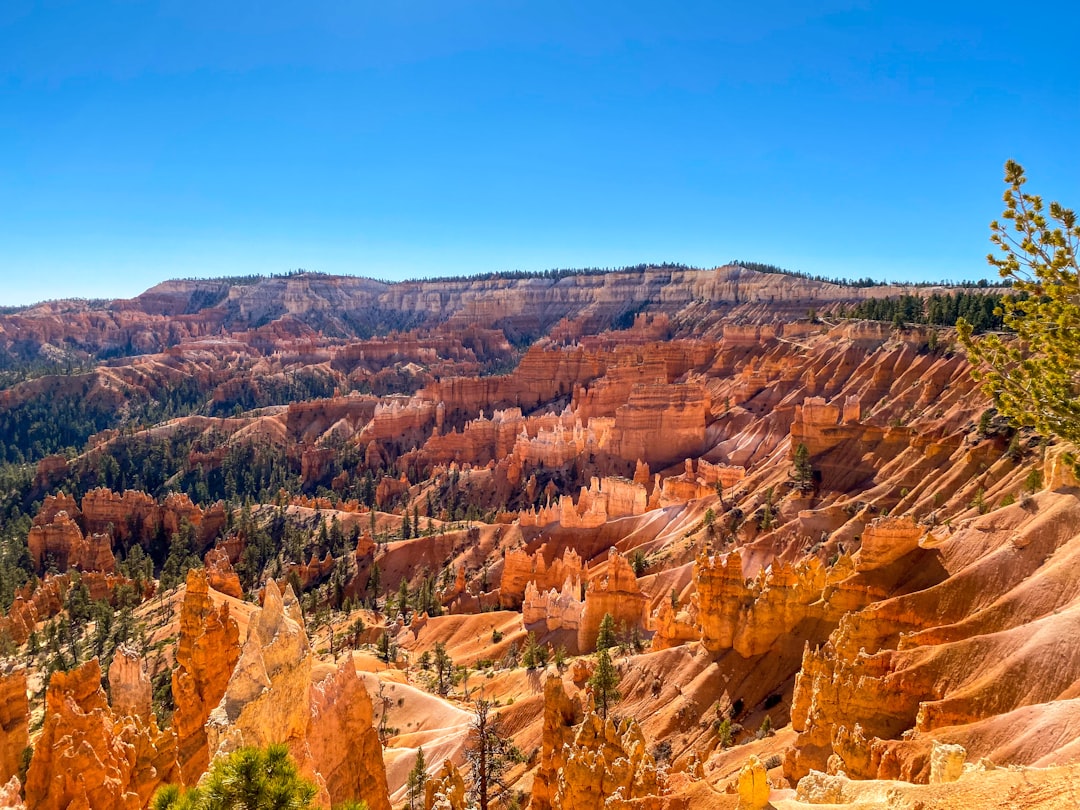 Photo: Zachary Zondlo / Unsplash
Leave Zion east through the Zion–Mount Carmel Highway, a winding switchback road that climbs through a mile-long tunnel carved into the rock. It's a drive, and it's also one of the best short drives in the state — the kind of stretch that lands on every scenic-drives shortlist.
In the park: At Bryce, walk the Navajo Loop + Queen's Garden combo (about 3 miles). It drops you down among the hoodoos and is the single best way to experience the amphitheater on foot. End the day at Sunset Point for, well, sunset.
Stay: Bryce Canyon City or Tropic, UT.
Day 4 — Bryce sunrise, then Capitol Reef via Scenic Byway 12
Set an early alarm and watch the sunrise from Sunrise Point — the low-angle light on the hoodoos is the whole reason people come to Bryce. Then hit the road on Scenic Byway 12, a 124-mile stretch that many consider the most beautiful highway in America. It climbs over Boulder Mountain (above 9,000 feet), crosses a knife-edge ridge between canyons, and drops into Capitol Reef.
In the park: Hike Hickman Bridge (1.8 miles round trip) to a natural rock bridge, then drive the short Fruita scenic loop and stop at the Gifford Homestead for a slice of fresh fruit pie — a Capitol Reef ritual.
Stay: Torrey, UT.
Day 5 — Capitol Reef to Moab, with a Goblin Valley detour
The drive from Torrey to Moab is about three hours, so break it up. About an hour out of Moab, detour to Goblin Valley State Park, a surreal field of mushroom-shaped sandstone goblins you can wander freely. Kids especially love it.
In the afternoon: You can either relax in Moab or start Arches early. If you have a timed-entry ticket for late afternoon, go — the park's red rocks glow best in the last hour of light.
Stay: Moab, UT (three nights).
Day 6 — Arches: Delicate Arch and the Windows
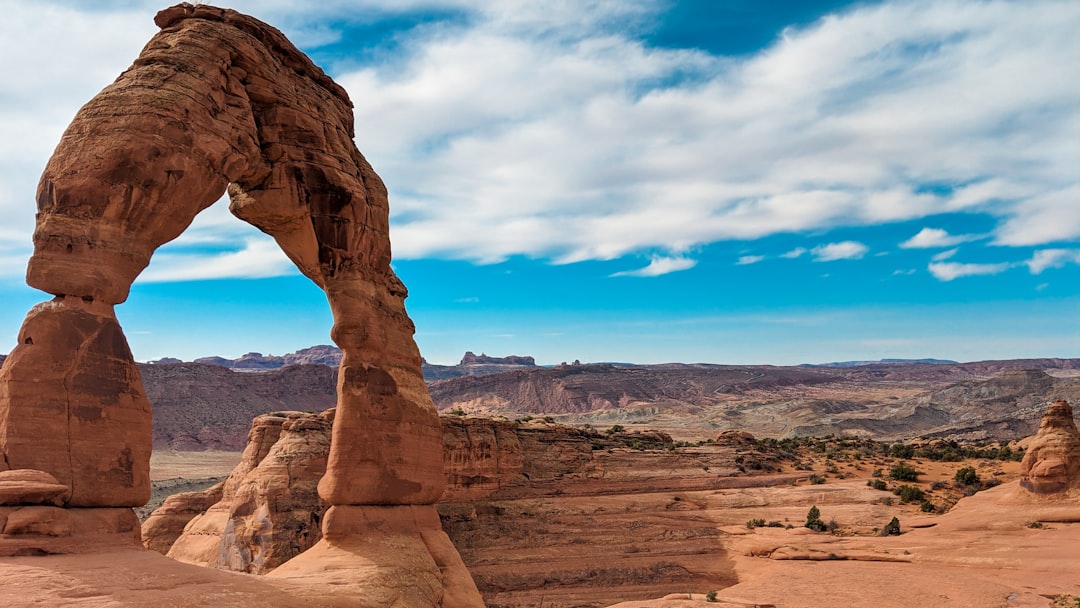 Photo: Ben Stiefel / Unsplash
Give Arches a full day, and use the early morning wisely — the desert heats up fast.
- Delicate Arch: The 3-mile round-trip hike to Utah's most famous arch is exposed and uphill, but the payoff is iconic. Go at dawn or late afternoon.
- Windows Section: Short, easy, and spectacular — Double Arch and North/South Window in under an hour.
- Balanced Rock and Park Avenue are quick roadside stops worth pulling over for.
Key planning point: Arches requires a timed-entry reservation to enter between 7 a.m. and 4 p.m. from April 1 through October 31 (in addition to the entrance fee). Reserve it on recreation.gov in advance — slots sell out.
Stay: Moab.
Day 7 — Canyonlands sunrise, then fly home from Salt Lake City
Get up before dawn and drive 30–40 minutes to Canyonlands' Island in the Sky district for sunrise at Mesa Arch — the light underneath the arch is a photographer's bucket-list shot. Then take in Grand View Point and the overlooks along the rim before starting the ~4-hour drive to Salt Lake City.
If you have an evening flight and spare time, stop at Dead Horse Point State Park on the way out for a final overlook over a hairpin bend in the Colorado River.
That's the loop — five parks, seven days, no backtracking.
How Much Does the Mighty 5 Road Trip Cost?
Here's a realistic mid-range budget for two people sharing a rental car and hotel room (2026 prices):
- Park entry: ~$150 total if you pay per park — or $80 for an America the Beautiful annual pass, which pays for itself after just three parks. (The pass is the obvious choice; more on that below.)
- Lodging (7 nights): $120–$250/night near the parks → roughly $850–$1,750. Camping runs $15–$50/night.
- Rental car (7 days): $300–$500, plus a possible one-way drop fee.
- Gas: $120–$180 (roughly 600 miles, with Utah gas often a bit cheaper than the coasts).
- Food: $40–$60/person/day → about $560–$840 for two.
- Extras: Angels Landing permit ($6 application + $3/person if successful), Arches timed-entry ($2), shuttle rentals, and any tours.
Realistic all-in total for two: roughly $2,000–$3,300 for the week, more if you fly during peak season or book late. You can cut that significantly by camping and cooking — the same playbook we cover in our guide to US national parks on a budget.
Park Passes, Permits & Reservations You Can't Skip
This is where Mighty 5 trips go wrong, so read carefully.
- Buy the America the Beautiful pass ($80). It covers entry to all five parks and every other federal land for a year. Five single-park fees total ~$150, so the pass saves you money on this trip alone.
- Angels Landing permits. Required year-round, via a seasonal lottery on recreation.gov. The spring–fall lottery is competitive; enter as early as the window allows.
- Arches timed entry (April 1–Oct 31). You need a reservation (about $2) to enter between 7 a.m. and 4 p.m., on top of the entrance fee or pass. Book weeks ahead.
- Campsites and in-park lodging. Zion's Watchman and South campgrounds, and Bryce's campgrounds, fill months in advance during peak season. Reserve the moment your dates are firm.
- The Narrows & flash floods. Not a permit, but non-negotiable: check the day's flash-flood risk at the Zion visitor center or NPS weather page before entering any slot canyon.
Where to Stay Each Night
The lodging strategy is simple: stay as close to each park's entrance as your budget allows, and minimize one-night moves.
- Springdale (Zion): Walkable to the shuttle, with the widest range of hotels, motels, and restaurants. Book first — it's the priciest base.
- Bryce Canyon City / Tropic: Ruby's Inn is the classic choice right at the entrance; Tropic has quieter, cheaper cabins.
- Torrey (Capitol Reef): A small, friendly town with motels, a few good restaurants, and the closest beds to the park.
- Moab (Arches + Canyonlands): The adventure hub — the most lodging of any stop, from budget motels to resort-style stays. Reserve early in spring and fall.
If you'd rather camp, every park has campgrounds, but the pattern is the same: spring and fall weekends fill up, so plan ahead rather than rolling in after dark.
What to Pack & How to Stay Safe
This is a desert road trip, and the risks are heat, sun, dehydration, and flash floods — all manageable with a little preparation.
- Water: Carry at least a liter per hour of hiking per person, plus extra in the car.
- Sun protection: Hat, sunglasses, and sunscreen, even in spring and fall — high altitude and reflected light mean you burn fast.
- Layers: Mornings can be near freezing at Bryce (8,000+ feet) even in May and October.
- Footwear: Sturdy, broken-in shoes with grip — sandstone and slickrock are slippery when dry and treacherous when wet.
- Navigation: Download offline maps before you go; cell service vanishes across much of the region.
- Flash floods: Never enter a slot canyon (The Narrows, in particular) with rain in the forecast, and check the NPS flood-risk rating first.
Worth-It Add-Ons & Detours
Got an extra day or two? These are the detours actually worth your time:
- Dead Horse Point State Park: A jaw-dropping overlook over the Colorado River, right next to Canyonlands.
- Monument Valley: The iconic red buttes are a long-ish detour south of Moab, but unforgettable — especially on the Navajo-guided loop.
- Goblin Valley State Park: The quirky mushroom rocks you can explore up close (already in the Day 5 plan).
- Grand Canyon North Rim: A few hours south of Bryce, the quieter rim of the Grand Canyon. Before you add it, read our guide to hiking the Grand Canyon to time it right.
- Kodachrome Basin State Park: An easy add near Bryce with colorful spires and short trails.
If the Mighty 5 leaves you wanting more of the Southwest's quieter corners, we've rounded up eight under-the-radar Southwest gems that most visitors skip.
Frequently Asked Questions
Can you do all 5 Utah national parks in 7 days? Yes. Seven days is the sweet spot: it gives Zion two days and every other park at least a half-day, with drive legs short enough that you still have afternoon light to hike. Any shorter and you'll be rushing; any longer and you can linger or add detours.
Which order should I do the Mighty 5? West to east — Las Vegas → Zion → Bryce Canyon → Capitol Reef → Moab (Arches and Canyonlands) → Salt Lake City. It follows the natural geography, avoids backtracking, and saves you a full day of driving compared to the loop.
Is the Mighty 5 road trip worth it? For most travelers, absolutely — the five parks pack more varied, iconic scenery into a single week than almost any other drive in the country. The trade-offs are real (crowds in peak season, permit headaches, desert heat), but planning ahead solves most of them.
Do I need a car for the Mighty 5? Yes — there's no practical way to connect the parks by public transit, and a rental car gives you the freedom to follow the day-by-day plan above at your own pace.
What is the best time to visit Utah's national parks? Spring (April–May) and fall (September–October) offer the best combination of comfortable hiking weather and manageable crowds. Summer is hot and busy; winter is quiet but cold and sometimes snowy.
Is one week enough for Zion alone? You don't need a full week for Zion, but it deserves two full days — one for Angels Landing or The Narrows, one for the easier overlooks and drives. The seven-day Mighty 5 plan builds that in.
The bottom line
The Utah Mighty 5 road trip is the rare bucket-list trip that genuinely lives up to the hype — five national parks, each wildly different, stitched together by some of the most beautiful driving in America. Book your flights into Vegas and out of Salt Lake City, lock in your Arches timed-entry and Angels Landing permits the moment they're available, and you'll have a week you'll be talking about for years.
Now go check the permits, and start packing.
Want to build your own spot list?
Join Spotli.st and share your favorite places with the world.
Create my free account