How to See Fall Colors in Colorado: Best Drives, Hikes & Peak Timing (2026)
See Colorado fall colors at their peak: a 2026 guide to timing, elevation, the best scenic drives and aspen hikes, plus permits and crowd tips.
How to See Fall Colors in Colorado: Best Drives, Hikes & Peak Timing (2026)
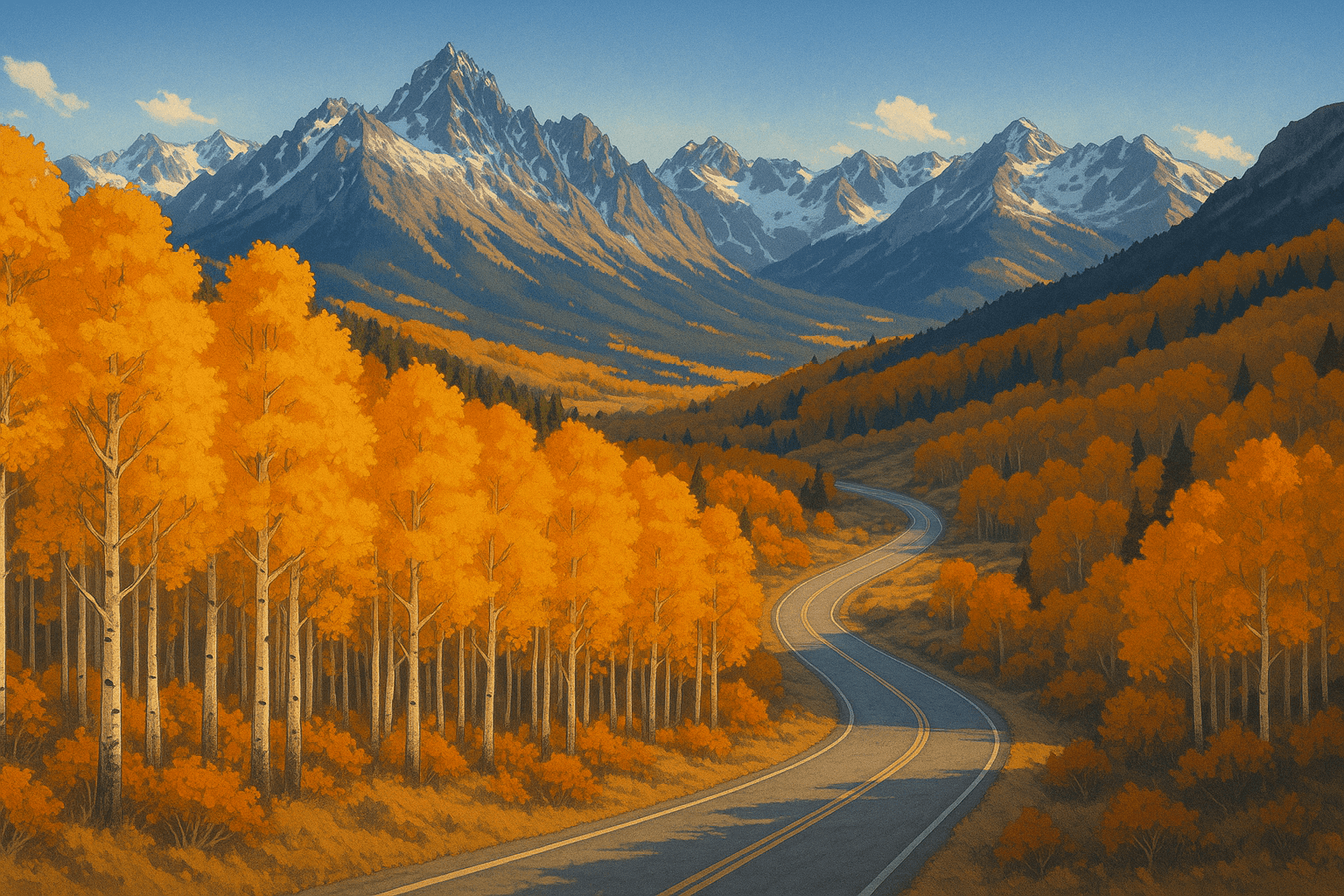
Here's the short answer up front: Colorado's fall colors peak from roughly mid-September through mid-October, moving downhill from high elevations (9,000–11,000 feet) to the foothills. The show is dominated by quaking aspen, which turn a bright, almost electric gold. In 2026, forecasters expect the peak to arrive about a week earlier than normal because a hot, dry summer has stressed many trees into turning early.
The smart way to see it all is to think of Colorado's fall as a wave, not a single date. Chase it by elevation and you can string together three or four weekends of near-peak gold from the San Juan Mountains down to Denver's doorstep. This guide covers exactly when to go, the best scenic drives and aspen hikes, how to handle permits and crowds, and what to pack.
When Is Peak Fall Color in Colorado?
Peak fall color in Colorado runs from mid-September to mid-October, with the highest elevations turning first and the foothills turning last. Aspens at 10,000+ feet begin their shift around the second week of September; the towns of the high country glow through late September; and the lower foothills and Front Range hold color into early or mid-October.
The reason is elevation. A change of just 2,000 feet can shift peak timing by a week or more, which is why two spots an hour apart can be at completely different stages. Here's the rough timeline to plan around:
| Elevation band | Typical timing | Where to go |
|---|---|---|
| 9,500–11,500 ft (high country) | Mid- to late September | Aspen, Leadville, Crested Butte, Collegiate Peaks, high passes |
| 8,000–9,500 ft (mountain valleys) | Late September–early October | Telluride, Vail, Steamboat Springs, Kebler Pass, RMNP, Peak-to-Peak |
| 6,000–8,000 ft (foothills & Front Range) | Early to mid-October | Denver foothills, Boulder, Golden, southern passes like Wolf Creek |
A useful rule of thumb: if the peaks above you are bare, you're too late — drive lower. If the aspens around you are still fully green, go higher. Leaf-peeping across the country follows the same descending-elevation logic, but Colorado compresses it into a shorter, punchier window because the altitude changes so fast.
Why 2026 Is Trending a Week Early
A hot, dry summer means Colorado's fall colors are expected to peak about a week earlier than usual in 2026. Several regional forecasts have pointed to early-season stress — drought and record heat — pushing aspens to change color ahead of the historical norm.
What does that mean for you? If you've always booked for the last weekend of September, consider pulling your trip forward to the third weekend. The practical move is to build in flexibility rather than gamble on a single date: book lodging in a central town (Buena Vista, Salida, Frisco, or Carbondale all work), then use foliage reports and webcams to decide which direction to drive each morning.
Drought-stressed trees sometimes also drop their leaves faster once they turn, which compresses the window between "gold" and "gone." That's one more reason the elevation-chasing strategy below beats picking a single can't-miss day.
The Elevation Trick: How to Chase the Colors Downhill
Colorado's fall color is not a place — it's a schedule. Aspens at the highest elevations turn first, then the wave rolls downslope over three to four weeks. Once you understand this, you stop asking "when is peak?" and start asking "which elevation is peaking this week?"
The bands work like this:
- Above 10,500 feet — the treeline zone — turns earliest, but there's less aspen up here and more krummholz and open tundra. These areas are best for sweeping mountain views rather than dense golden groves.
- 8,000–10,000 feet is the sweet spot. This is where the vast aspen forests live: Kebler Pass, the flanks of Maroon Bells, the roads around Crested Butte and Telluride.
- 6,000–8,000 feet gives you mixed groves plus gambel (scrub) oak, which is Colorado's main source of red and orange. The lower foothills are where you'll find the deepest contrast of green pine, gold aspen, and red oak.
The gold color comes mostly from quaking aspen (Populus tremuloides), the most widespread tree in North America and the undisputed star of a Colorado autumn. Because a single aspen grove is often one giant connected root system, whole hillsides turn in near-perfect unison — a wall of gold rather than a speckled mix. Red and orange are rarer here than in the Northeast; you'll find them mostly in scrub oak, cottonwoods, and a few maples along river corridors.
The Best Scenic Drives for Colorado Fall Colors
Colorado does fall best through a windshield. The state's mountain passes and byways thread directly through the highest aspen forests, which means the road itself is the destination.
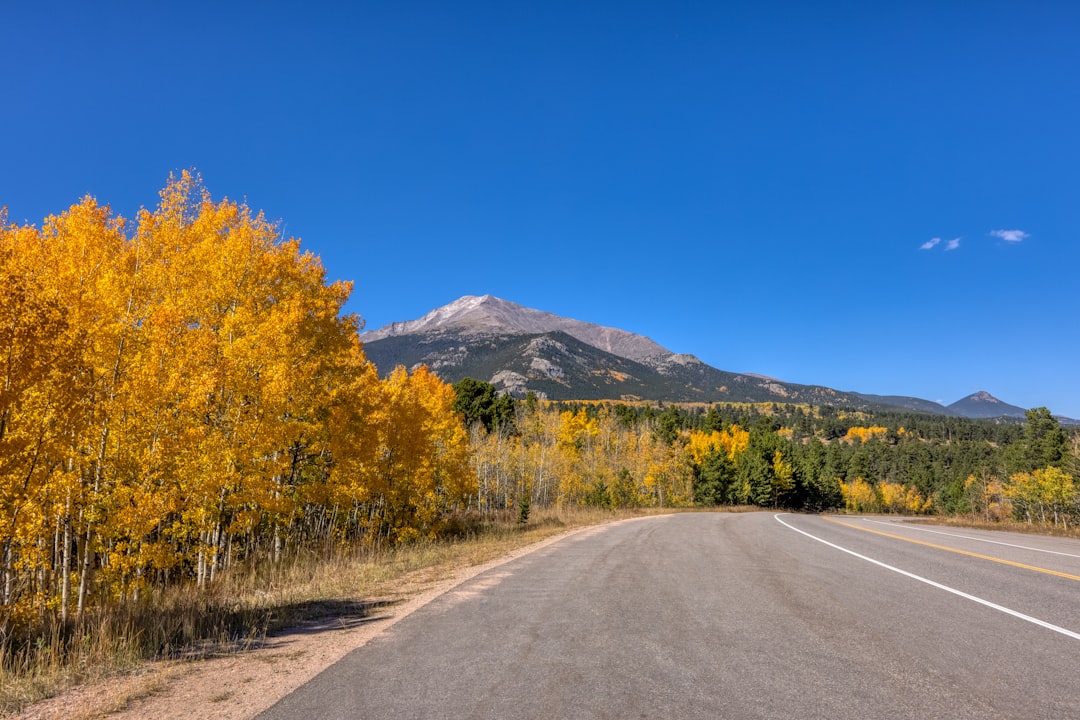
Photo by Sonja Wilkinson on Unsplash
Kebler Pass (dirt road, between Crested Butte and Highway 133) is home to one of the largest contiguous aspen groves in North America and is widely considered Colorado's single best drive for fall color. It's unpaved but well-graded and passable in a normal car in dry conditions. Peak is usually the last week of September; go midweek if you can, because even this dirt road gets a mini rush-hour during leaf season.
Guanella Pass is the closest major aspen hotspot to Denver — a quick day trip from Georgetown — which makes it one of the busiest. The payoff is dense gold on both sides of the pass and the Abyss Lake Trail (below). Arrive early, park only in designated areas, and expect towing if you leave your car where you shouldn't.
The Peak-to-Peak Scenic Byway (Highway 72/7, from Black Hawk to Estes Park) was established in 1918 and delivers the classic Front Range show: gold aspen groves with the Continental Divide as a backdrop, without leaving the paved road. It pairs naturally with an entry into Rocky Mountain National Park.
The San Juan Skyway is the big-swing option — a 236-mile loop through the San Juan Mountains that includes the famous Million Dollar Highway (US 550 between Ouray and Silverton). This is the best place in Colorado for dramatic, jagged, snow-dusted peaks rising above seas of gold. It peaks a bit later and runs into October at lower elevations.
Also worth the detour: Trail Ridge Road in Rocky Mountain National Park (the highest continuous paved road in North America) for alpine views above the treeline; Independence Pass (Highway 82 between Aspen and Twin Lakes) for a high-altitude wall of color; McClure Pass (Highway 133) and Dallas Divide near Ridgway for sunrise shots of the Sneffels Range.
If you love a windshield-and-mountains trip, this is one of the strongest entries on our list of America's best scenic drives.
The Best Hikes to Walk Through the Aspens
Driving gets you the panorama; hiking gets you inside the gold. These four walks put you under a canopy of quaking aspen at peak.
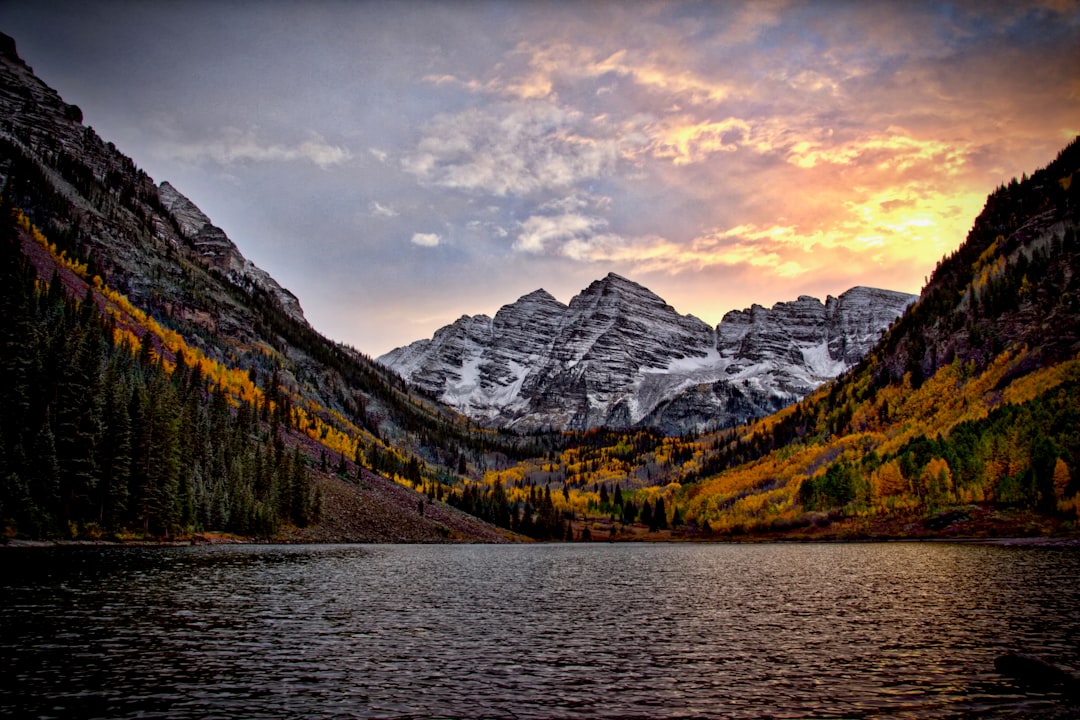
Photo by Mike Scheid on Unsplash
Maroon Bells (near Aspen) is the most photographed mountain scene in Colorado for a reason: two striped peaks reflected in Maroon Lake, ringed by golden aspens. The short Maroon Lake loop is easy and crowded; the Crater Lake Trail climbs a few miles deeper for the same views with a fraction of the people. Know the catch before you go: it's permit-controlled during fall, and the shuttle doesn't run before sunrise, so the famous "first light" shot requires either camping or a very early parking reservation (more below).
Abyss Lake Trail (Guanella Pass) starts among a wall of aspen and climbs toward treeline. You don't need to go far — the first couple of miles are the payoff, with whole slopes of gold rising above the trail. It's the most accessible "big aspen" hike from Denver.
Cathedral Lake (via Castle Creek Road, Aspen) is a longer, steeper option, but the drive up Castle Creek Road alone is worth it: twenty minutes of dense, dreamlike aspen tunnels. The trailhead area has color, though the highest portions of the hike sit above the aspen zone.
Gothic Road and Washington Gulch (Crested Butte) are a two-for-one: drive Gothic Road past the old mining town of Gothic, then hike the gentle trails around Washington Gulch where the aspens are famously intense. It's a great base if you want to combine Kebler Pass with a longer, quieter stay.
Permits, Reservations & the Practical How-To
A little logistics work goes a long way in September, because Colorado's best fall spots are also its busiest.
Maroon Bells requires a reservation. Between roughly mid-May and late October you can't simply drive to the trailhead: you either reserve a limited parking spot (which sells out) or take the shuttle from Aspen Highlands for a modest per-person fee. If your goal is the sunrise reflection, a personal-vehicle parking reservation is the only reliable route — the shuttles start after sunrise. Book through Recreation.gov as early as possible.
Rocky Mountain National Park uses timed-entry reservations during its busy season (late May through mid-October) for the Bear Lake Road corridor and the rest of the park. A timed entry costs a couple of dollars on top of the standard entrance or park pass. If you're pairing Peak-to-Peak with Trail Ridge Road, grab both windows in advance. An annual "America the Beautiful" pass covers entry fees at RMNP and every other federal site — we break down exactly how to save with it here.
Guanella Pass parking is strict. The shoulder gets towed aggressively on weekends. Arrive before 8 a.m., or come in from the Highway 285 side and park at an official trailhead lot. Cell service is spotty on many passes, so download offline maps and screenshot your reservation confirmation before you leave town.
How to Time It Right: Maps, Reports & Webcams
You don't have to guess. Colorado has unusually good free tools for tracking the color in real time.
- Foliage maps and "leaf reports" — the U.S. Forest Service and Colorado tourism publish rolling reports by region, and several news outlets run a fall colors map that's updated weekly through the season. Search "Colorado fall colors map 2026" in late August for the current one.
- Webcams — check live cams for Aspen, Telluride, Estes Park, and the high passes a few days before you go. A quick look tells you more than any forecast: you'll see exactly how much gold has arrived and whether the peaks above it are already bare.
- Social search — a fast search of recent posts tagged with the town name is the cheapest "on the ground" report available.
The practical play is to book a flexible base, then each morning pick the elevation that's peaking that week. This is the same "pick your window, then pick your spot" logic behind choosing where to travel in October.
How to Beat the Crowds
Fall color and crowds arrive together in Colorado, especially on weekends. A few tactics make the difference between a postcard day and a traffic jam.
- Go midweek. Tuesday-to-Thursday traffic on Kebler Pass, Guanella Pass, and the Maroon Bells shuttle line is a fraction of Saturday's. If you can take a single weekday off, do it.
- Go early — or stay late. The golden hour after sunrise is when the light is best and the crowds are thinnest. Sunset works too, and many people leave by mid-afternoon.
- Take the "back side." Guanella Pass is far less congested if you approach from Highway 285 rather than Georgetown. Kebler Pass from the Crested Butte side is generally calmer than from Highway 133.
- Skip the icon, keep the view. Maroon Bells and Guanella are famous for a reason, but Castle Creek Road, McClure Pass, and Gothic Road deliver equal color with a tenth of the people.
What to Pack
September in the mountains is a three-season day compressed into eight hours — sunny and 65°F at noon, snowing at 10,000 feet by evening. Plan for all of it.
- Layers — a warm mid-layer and a windproof shell matter more than a heavy parka. You'll shed and add layers repeatedly.
- Snow gear — early-season dustings on high passes are normal and can close or ice over roads like Independence Pass and Trail Ridge Road temporarily. Check conditions and carry tire chains if you're heading over a 10,000-foot pass late in the season.
- Sun protection — at altitude the sun is intense even when the air is cold. Bring sunscreen, sunglasses, and more water than you think you need; dry mountain air dehydrates fast.
- Vehicle basics — several of the best drives (Kebler Pass, parts of the San Juans) are unpaved. A normal car handles most of them in dry weather, but check your spare, keep the tank full, and know that dirt roads can get slick after rain or snow.
- Reservations on your phone — screenshots, offline maps, and downloaded permits, because signal disappears fast once you climb.
FAQ
What is the best time to see fall colors in Colorado?
Mid-September through mid-October, depending on elevation. The high country (9,500 feet and up) peaks in mid- to late September; mountain valleys and the Front Range foothills peak from late September into October. In 2026, expect it roughly a week early due to the hot, dry summer.
What fall colors will the aspens be in Colorado in 2026?
Mostly brilliant gold — that's the signature quaking-aspen color. Some trees shift through yellow into a pale orange, and lower elevations add red from gambel oak and cottonwoods. True reds and scarlets are rarer in Colorado than in the Northeast, so if you're after crimson, head to the foothills rather than the high aspen zone.
What are some of the best places to see fall colors in Colorado?
The classics are Kebler Pass (the largest aspen grove in North America), Maroon Bells near Aspen, Guanella Pass near Denver, the Peak-to-Peak Scenic Byway, and the San Juan Skyway/Million Dollar Highway in the southwest. Quieter gems include Castle Creek Road, McClure Pass, Dallas Divide, and Gothic Road outside Crested Butte.
What part of Colorado is best to visit in October?
The lower elevations. By October the high passes have largely dropped their leaves, but the foothills, the Front Range, the southern San Juans, and passes like Wolf Creek still hold strong color into early and mid-October. October is also when you get the best red-oak contrast against green pine.
Do I need a reservation to see Maroon Bells in the fall?
Yes. Maroon Bells is permit-controlled from roughly mid-May through late October. You either reserve a limited parking spot or ride the shuttle from Aspen Highlands; parking reservations for sunrise sell out quickly, and the shuttle doesn't run before sunrise.
Is Kebler Pass drivable in a regular car?
Yes, in dry weather. It's a well-graded dirt road and a standard two-wheel-drive car handles it fine. It can get muddy after rain and icy after early snow, so check conditions before you go.
The Bottom Line
Colorado's fall colors are among the best in the world — and unlike a New England leaf tour, you can catch them in a single long weekend from Denver if you play the elevation game. Book a flexible base in the high country, watch the webcams, and chase the gold downhill from the passes in late September to the foothills in mid-October.
Go in 2026 with the early-peak forecast in mind, front-load your trip a week, and you'll walk away with the whole hillside lit up gold. For more autumn planning, start with the best U.S. cities to visit in fall or make Denver your home base for the Front Range.
Envie de créer ta propre liste de spots ?
Rejoins Spotli.st et partage tes bonnes adresses avec le monde entier.
Créer mon compte gratuit